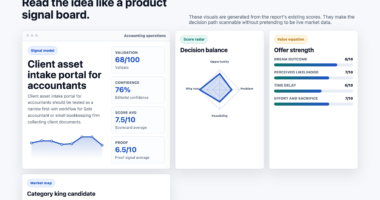

📊 Full opportunity report: Capital: The Lever Beneath the Levers on ThorstenMeyerAI.com — validation score, market gap, and execution plan.
TL;DR
Major AI companies like SpaceX, Anthropic, and OpenAI have gone public in 2026, raising nearly $4 trillion. This exposes the central role of capital in AI development and its inherent fragility due to circular funding and debt reliance.
Major AI firms including SpaceX (with xAI), Anthropic, and OpenAI have recently listed on public markets, raising over $4 trillion in combined valuations. This marks a significant shift in how capital underpins AI infrastructure and development, making it a key leverage point that influences the entire industry.
On June 12, SpaceX, now containing xAI, listed on the Nasdaq with a valuation near $1.77 trillion. The offering was heavily oversubscribed, with a 30% retail share, and briefly pushed SpaceX’s valuation past $2 trillion. Simultaneously, Anthropic filed confidentially with a valuation around $965 billion, having recently closed a $65 billion funding round. OpenAI is reportedly preparing for a fall IPO valued between $730 billion and $850 billion, with a 2026 cash burn estimated at $27 billion.
These listings are part of a broader wave, with the three companies representing roughly $4 trillion in private value set to enter public markets within 18 months. Bank of America describes this as a large-scale transfer of risk from early investors to the public, with over $6.6 billion worth of stock sold by OpenAI staff in secondary markets prior to listing.
The flow of capital is circular: Microsoft, Amazon, and Google invest heavily into Nvidia, which supplies AI chips; Nvidia then funds data centers that support OpenAI, Anthropic, and others. These companies, in turn, spend on cloud credits and hardware, creating a loop that amplifies demand but also introduces systemic fragility.
Capital: The Lever Beneath the Levers
Every chokepoint costs money — so whoever can fund the buildout decides who builds at all. In 2026 the bill came due in public: a trillion-dollar IPO wave, financed by a circle of firms paying each other, now sold to everyone else.
The meta-chokepoint: it gates the other five, because you can’t build any of them without clearing the capital bar. A synchronized machine has no natural brake — no one can slow first — and the IPO wave moves the risk to the public as insiders take gains. The hedge is solvency that doesn’t depend on the music playing: sane burn, own what’s cheap, self-host where you can.
Impact of Capital Circles on AI Industry Stability
This pattern of interconnected investments and debt-financed infrastructure creates a fragile financial ecosystem. As the industry approaches a point where demand signals are internally generated and capacity is mispriced, a slowdown or correction could trigger widespread instability. The recent public listings expose the risks of this circular funding model, especially as private gains are redistributed onto the public market at top valuations, heightening the potential for a market correction if confidence wanes.
AI Data Center Infrastructure Engineering: Power Distribution, Liquid Cooling, High-Density Networking, and Energy Efficiency for GPU Training … Hardware & Compiler Engineering Series)
As an affiliate, we earn on qualifying purchases.
As an affiliate, we earn on qualifying purchases.
Private Funding and Market Dynamics in AI
Throughout 2026, private AI firms have amassed enormous valuations, with companies like SpaceX, Anthropic, and OpenAI leading the charge into public markets. The trend reflects a rapid accumulation of risk and capital, driven by a small group of mega-corporations and early investors. Historically, AI infrastructure investments have been funded privately, often through debt and internal demand, but the scale and circular nature of current funding cycles are unprecedented.
Experts warn that this concentration of private capital, combined with thin end-user demand—only about 3% of consumers pay for AI services—creates systemic vulnerabilities. A sudden pullback in investment or demand could cascade through the entire ecosystem, affecting not only tech stocks but broader economic indicators.
In addition, the reliance on debt and internal demand signals has led to concerns about mispricing capacity and overextension, with some companies already showing signs of caution, such as Microsoft stepping back from full compute commitments, signaling potential cracks in the funding model.

ASUS Dual NVIDIA GeForce RTX 5060 Ti 16GB GDDR7 OC Edition Graphics Card, (PCIe 5.0, DLSS 4, HDMI 2.1b, DisplayPort 2.1b, 2.5-Slot, Axial-tech Fan, 0dB Technology), 3 Year Warranty
- AI Performance: 767 AI TOPS
- OC Mode Speed: 2632 MHz
- Default Mode Speed: 2602 MHz
As an affiliate, we earn on qualifying purchases.
As an affiliate, we earn on qualifying purchases.
Unclear Risks of Circular Funding and Market Correction
It remains uncertain how vulnerable the AI funding cycle is to a sudden slowdown or market correction. While signs of caution are emerging, such as Microsoft’s reduced compute commitments, the full impact of the circular capital flow and potential systemic failure has yet to be tested in a downturn. Economists warn that the reliance on debt and internal demand signals could amplify shocks, but no definitive trigger has yet materialized.
AI Data Center Infrastructure Engineering: Power Distribution, Liquid Cooling, High-Density Networking, and Energy Efficiency for GPU Training … Hardware & Compiler Engineering Series)
As an affiliate, we earn on qualifying purchases.
As an affiliate, we earn on qualifying purchases.
Upcoming Market Movements and Regulatory Scrutiny
In the coming months, further public listings are expected, potentially revealing more about the valuation and risk exposure of AI companies. Regulators may also begin scrutinizing the circular funding models and the systemic risks they pose. Investors and industry watchers will closely monitor whether the industry can sustain its current growth trajectory or if signs of stress will prompt a reevaluation of valuations and investment strategies.

Opengear OM2248-10G Infrastructure Management Equipment
- Autosensing Capability: Impressive autosensing feature
- Caller ID Support: Supports various caller ID formats
As an affiliate, we earn on qualifying purchases.
As an affiliate, we earn on qualifying purchases.
Key Questions
Why are AI companies going public now?
They are seeking to capitalize on high valuations and raise capital to fund infrastructure and growth, amid a broader trend of private-to-public valuation transfers in the industry.
What is the main risk of this circular funding model?
The primary risk is systemic fragility: a slowdown or correction could cascade through the interconnected investments, causing widespread market instability.
How does private debt influence AI infrastructure growth?
Much of the capital expenditure is financed through private credit, which amplifies leverage and potential vulnerability if demand weakens.
Will regulators intervene in this funding cycle?
It is not yet clear, but increased scrutiny of valuation practices and systemic risks is possible as the industry’s influence grows.
Source: ThorstenMeyerAI.com