
TL;DR
Listen free for 30 days with Audible
Thousands of audiobooks and originals — cancel anytime.
As an affiliate, we earn on qualifying purchases.
A developer has built a fully functional computer the size of a credit card using an ESP32-C3, e-paper display, and NFC. This prototype demonstrates potential applications in security, wallets, and IoT devices. The project is still in development, with further testing planned.
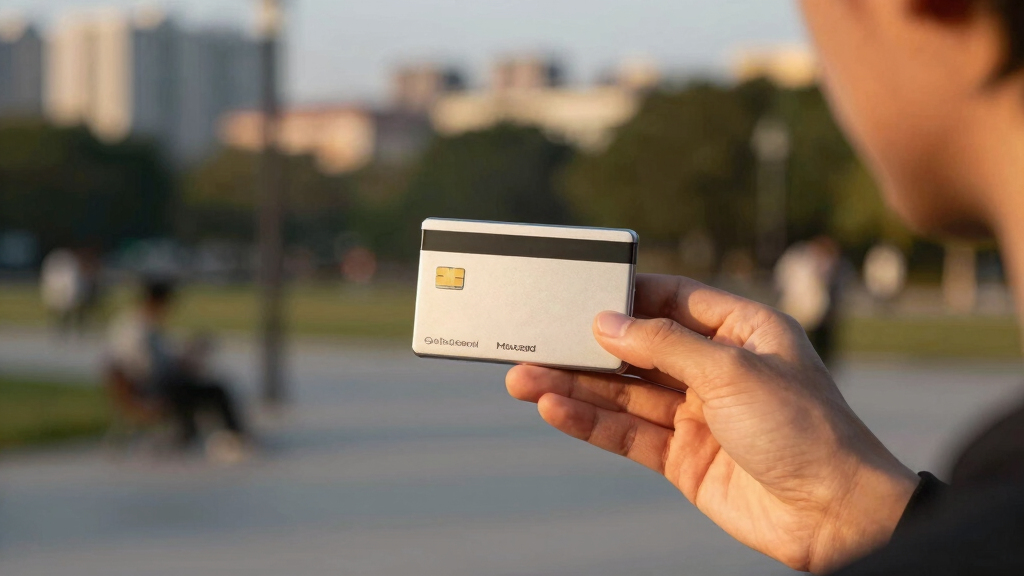
A developer has created a fully functional computer the size of a credit card, built around an ESP32-C3 microcontroller, an e-paper display, and NFC technology. This prototype aims to maintain the size and thickness of a standard credit card, opening possibilities for minimalist digital wallets, security tools, and IoT applications.
The project was driven by the challenge of fitting a complete computing device into the dimensions of a traditional credit card, including the thickness limit of approximately 1mm. The developer used a carved-out NFC card frame, custom-made flexible PCBs, and a combination of DIY fabrication techniques to achieve this feat. The current prototype is fragile but demonstrates that a fully working, miniature computer can exist within strict size constraints.
The hardware includes an ESP32-C3 microcontroller, an e-paper display, and NFC capabilities, all assembled on a custom flexPCB. The developer built the flexPCB using a DIY lithography process with a 3D printer and copper foil, overcoming challenges related to trace durability and bending stress. The prototype is still in testing, with plans to evaluate durability, battery life, and potential real-world applications.
Why It Matters
This development is significant because it pushes the boundaries of miniaturized electronics, demonstrating that a complete computer can be embedded in a form factor comparable to a credit card. Such devices could revolutionize digital wallets, security tokens, and portable IoT gadgets, offering high functionality in a minimal footprint.
For security and privacy, this could enable offline password managers, 2FA tokens, and crypto wallets that are physically compact and tamper-resistant. The project also highlights the DIY maker movement’s potential to innovate hardware at the extreme limits of space and thickness.
credit card size microcontroller
As an affiliate, we earn on qualifying purchases.
As an affiliate, we earn on qualifying purchases.
Background
Previous attempts at credit-card-sized electronics have often fallen short of feeling like a real, usable device, mainly due to size and thickness constraints. Commercial products like AirTag trackers or RFID cards are typically passive or limited in capability. This project, initiated by an individual maker, aims to demonstrate that a fully functioning computer can be built within the strict size of a standard credit card, challenging existing notions of miniaturization in embedded systems.
The developer has been iterating for months, facing setbacks related to component height, PCB fabrication, and durability. The concept builds on prior ideas of smart cards and NFC devices but advances them into a fully operational computing device.
“The core concept works. No external power. No hidden electronics outside the card. Just a ridiculously thin computer.”
— the developer
“Seeing it almost disappear when I remove all fixtures and hold it to the side was a magical moment.”
— the developer
As an affiliate, we earn on qualifying purchases.
What Remains Unclear
It remains unclear how durable the prototype will be under daily use, including handling, bending, and environmental factors. Battery life and long-term stability are also still under evaluation. The project is still in testing phases, and commercial viability or mass production details have not been announced.
As an affiliate, we earn on qualifying purchases.
What’s Next
The developer plans to continue testing the prototype for durability and battery performance. Future steps include refining the design, improving robustness, and possibly launching a crowdfunding campaign or commercial version. Additional features and applications are also under consideration based on user feedback.
credit card size e-paper display
As an affiliate, we earn on qualifying purchases.
As an affiliate, we earn on qualifying purchases.
Key Questions
What are the main components used in the Muxcard prototype?
The core components include an ESP32-C3 microcontroller, an e-paper display, NFC chip, and a custom-made flexPCB fabricated through DIY lithography techniques.
What potential uses does the creator envision for this device?
Possible applications include minimalist digital wallets, NFC keys, tickets, boarding passes, offline password and 2FA tokens, crypto wallets, and portable security devices.
Is this device ready for commercial use?
No, the current prototype is in development and testing. Durability, battery life, and manufacturing scalability are still being evaluated before any commercial release.
How was the flexPCB fabricated DIY?
The developer used a 3D printer as a lithography tool, employing copper foil laminated onto Kapton tape, with UVTools software for patterning, and created a stencil from photoresist film for applying solder paste.
Source: Hacker News
NFL season / tailgating Picks
team gear
As an affiliate, we earn on qualifying purchases.