
🔍 Read the full analysis: AI, AGI, And ASI: Checking 50 Signs Of Superintelligence on ThorstenMeyerAI.com

Get hardware and tech essentials delivered free with Prime
- Fast, free delivery on millions of items
- Prime Video, Amazon Music and more included
- Member-only deals all year
TL;DR
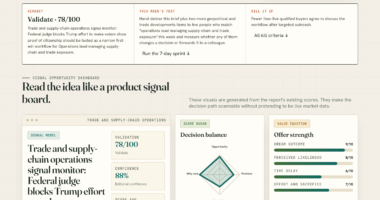
A review published by ThorstenMeyerAI.com on October 26 examined 18 claims drawn from researcher Alan D. Thompson’s 50-indicator artificial-superintelligence tracker. It classified seven claims as verified, five as vendor claims, three as based on a single source and three as disputed or contradicted; the tracker itself lists two indicators as achieved, 33 as partially achieved and 15 as not achieved.
A review published by ThorstenMeyerAI.com on October 26 checked 18 prominent claims from AI consultant Alan D. Thompson’s 50-indicator superintelligence tracker, finding seven verified, five based on company claims, three relying on a single source and three disputed or contradicted. The review says the tracker records two indicators as achieved, while its broad definition of superintelligence differs from definitions used by major AI labs.
Thompson’s public checklist ranges from recursive code self-optimization to speculative milestones such as faster-than-light travel. Its status grid, last updated October 26, marks 33 indicators as partially achieved and 15 as not achieved, in addition to the two achieved. In an August correction note cited by the review, Thompson said “partially” can include funded programs, research infrastructure, formal scientific missions and other enabling work. It does not necessarily mean a milestone is close to completion.
The review’s classifications distinguish independently checked findings from claims that have not been independently reproduced. The verified examples it highlights include contributions to mathematical problems, a scientific calculation and regulatory filings. In mathematics, it cites assessments by Terence Tao, Don Knuth and Tim Gowers, while retaining caveats about human guidance, existing literature and the kinds of problems involved.
Other claims receive more limited support. The review labels OpenAI’s account of ten results on decade-old problems, reportedly produced for about $2,000 and formalised in Lean, a vendor claim; it says the Lean certificates are public but the work involved human preparation. It also points to Anthropic’s account of AI-assisted research and development: the company’s best internal model scored 62.8% on a test Anthropic said would require at least 85% for a full replacement for its researchers. Anthropic estimated its R&D was faster with AI, “but not yet by a factor of 2.”
Whose superintelligence?
One word, very different bars
Dr Alan D. Thompson's ASI starts where Google DeepMind's scale puts "Expert AGI". The same model can be "early ASI" on one scale and a strong but narrow AGI candidate on another.
- Median human50th percentileThompson: AGIa machine at the level of an average (median) humanDeepMind: Competent AGIat least the 50th percentile of skilled adults
- Expert90th percentileThompson: ASIexpert-human level in practically any fieldDeepMind: Expert AGIat least the 90th percentile of skilled adults
- Virtuoso99th percentile—DeepMind: Virtuoso AGIat least the 99th percentile of skilled adults
- Beyond every human100%—DeepMind: Superhuman (Level 5)outperforms 100% of humans
- Beyond organisations2026 report—DeepMind: ASImore capable than large organisations of humans
Thompson’s tracker status as of 26 October 2026. DeepMind rows: “Levels of AGI” (2023) and, for the last row, “From AGI to ASI” (June 2026). OpenAI’s Charter: AGI = “highly autonomous systems that outperform humans at most economically valuable work”.
Sources: LifeArchitect.ai ASI checklist (26 Oct 2026), AGI countdown, Morris et al., Levels of AGI (2023), Genewein et al., From AGI to ASI (2026), OpenAI Charter.
Powered by Thorsten Meyer AI
Why the Definition Changes the Claim
The dispute is not only about whether individual systems can solve hard problems. It is also about what counts as superintelligence. Thompson defines artificial general intelligence as performance at the level of an average human and artificial superintelligence as expert-human performance in practically any field. Under that framing, strong results in specialist tasks can support the label “early ASI.”
That wording should not be treated as a shared scientific threshold. Google DeepMind’s 2023 framework uses “Expert” for performance at the 90th percentile of skilled adults and distinguishes it from “Superhuman,” which exceeds human performance. Its June 2026 report describes superintelligence as more capable than large organisations of humans. OpenAI’s charter, meanwhile, defines AGI around highly autonomous systems that outperform humans at most economically valuable work. The review argues that the same model can receive different labels depending on the yardstick.
For readers, the distinction affects how claims about progress should be interpreted. A mathematical result can be meaningful evidence of capability without showing that a system can independently perform expert work across fields, operate reliably in the physical world or replace a research team. Separating demonstrated results from broad labels helps prevent a striking task result from being mistaken for proof that a much wider milestone has been reached.
Products Worth Considering

Ledger Flex + Folio Crypto Hardware Wallet

Ledger Stax Crypto Wallet with Touchscreen

Ledger Flex Crypto Wallet with 2.8-Inch E Ink Touchscreen
As an affiliate, we earn on qualifying purchases.
How the 50-Sign Tracker Works
Thompson, an Australian AI consultant who publishes The Memo newsletter, maintains the 50-item public tracker and a separate countdown to AGI. The review describes his October video, “ASI: A better world – 2026,” as a montage covering entries from January through October. Thompson calls Claude Mythos Preview and GPT-6 Astra “early ASI” in the tracker; those are his assessments, not a consensus classification established by the review.
The tracker’s orange, partially achieved category is deliberately broad. The review gives the example of two exoplanet candidates reportedly found with Claude Code being listed under an indicator about colonising a planet beyond Earth. That placement records activity related to the indicator, not evidence that colonisation has occurred. The separate countdown stands at 99% according to Thompson; he says the remaining step depends on a robot completing multi-step fine assembly, such as putting together flat-pack furniture, with average-human reliability.
The review assessed selected claims rather than independently reproducing every result. Its 18-item sample offers a check on some headline entries, not a full audit of all 50 indicators. It also notes that even verified mathematical contributions can involve coaching or human-written proofs, details that matter when judging how much work a system completed on its own.
“documented material progress toward an indicator, including funded programs, research infrastructure, formal scientific missions, and enabling work”
— Alan D. Thompson, in an August correction note cited by ThorstenMeyerAI.com
What the Evidence Cannot Establish
The review’s findings do not show that artificial superintelligence has arrived. Its classifications cover 18 selected claims, not every tracker entry, and the source material does not provide enough detail to independently assess each underlying paper, test or filing here. The distinction between a publicly checkable result and a company-reported performance figure remains important.
It is also unclear how reliably today’s systems can perform extended work without human direction, transfer skills across fields or complete complex physical tasks. The review says household robots are not operating at scale, identifies no verifiably billion-dollar AI-run company, and reports no visible break in the U.S. unemployment rate. Those observations do not, by themselves, settle broader questions about AI’s economic effects or future capabilities.
Claims that named models are “early ASI” remain Thompson’s interpretation. The article’s account of the different AGI and ASI definitions shows why no single label can be inferred from one benchmark or achievement. The review does not establish a universally accepted test for when a system crosses from advanced AI into superintelligence.
Evidence to Watch in Future Updates
The immediate next step is further scrutiny of the claims that remain company-reported, single-sourced or disputed. Public Lean certificates, research papers, independent replications and detailed descriptions of human involvement can help clarify what a model did and what people contributed. Future tracker updates may also change individual statuses as evidence becomes available.
Physical-world reliability is another milestone to watch. Thompson’s countdown identifies a robot assembling furniture with average-human reliability as its remaining condition, while the review says household robots have not reached scale. Readers should distinguish demonstrations and funded development from repeatable performance in ordinary settings.
For now, the October review supports a measured conclusion: some AI contributions are independently checkable, but the status of many broader claims is less settled, and labels for superintelligence depend on differing definitions. The tracker’s next revision and any independent verification of its claims will show whether the evidence changes; no timeline for that is established in the material reviewed.
Key Questions
Did the review conclude that superintelligence has arrived?
No. It checked selected claims and reported mixed evidence. Calling current models “early ASI” is Thompson’s view, not a conclusion established by the review as a general consensus.
What does Thompson’s tracker count as partially achieved?
According to an August correction note cited in the review, the category can include funded programs, research infrastructure, formal scientific missions and enabling work. It does not necessarily mean the milestone is close.
How many claims did the review verify?
Of the 18 claims examined, the review classified seven as verified, five as vendor claims, three as based on a single source and three as disputed or contradicted.
Why do definitions of ASI matter?
Thompson defines ASI as expert-human performance in practically any field, while Google DeepMind describes superintelligence in relation to the capabilities of large human organisations. A result can therefore support one label without meeting another framework’s threshold.
What evidence does the review say is still missing?
The review points to the lack of household robots operating at scale, a verifiably billion-dollar AI-run company and a visible break in the U.S. unemployment rate. These observations do not resolve every question about AI’s impact, but they identify claimed milestones not demonstrated in the review.
Source: ThorstenMeyerAI.com