
TL;DR

Get hardware and tech essentials delivered free with Prime
- Fast, free delivery on millions of items
- Prime Video, Amazon Music and more included
- Member-only deals all year
Siemens announced a strategic partnership with NVIDIA to develop an Industrial AI Operating System, centered on AI models tailored for manufacturing data. This initiative aims to create fully AI-driven factories, starting with a pilot in Germany in 2026. The move highlights Siemens’ focus on physical AI, leveraging proprietary industrial data and domain expertise.
Siemens and NVIDIA announced a strategic partnership at CES 2026 to develop an Industrial AI Operating System aimed at embedding AI across manufacturing processes. This platform will leverage Siemens’ industrial data and NVIDIA’s AI and simulation technologies to transform factory automation and design, marking a significant shift toward physical AI on the shop floor.
Siemens’ core initiative, the Industrial Foundation Model (IFM), is designed to process complex industrial data, including 3D models, engineering drawings, sensor telemetry, and automation logic. The model aims to optimize engineering, automate decision-making, and enhance manufacturing efficiency. Siemens first announced the IFM at Hannover Messe 2025, emphasizing its focus on domain-specific AI rather than general-purpose language models.
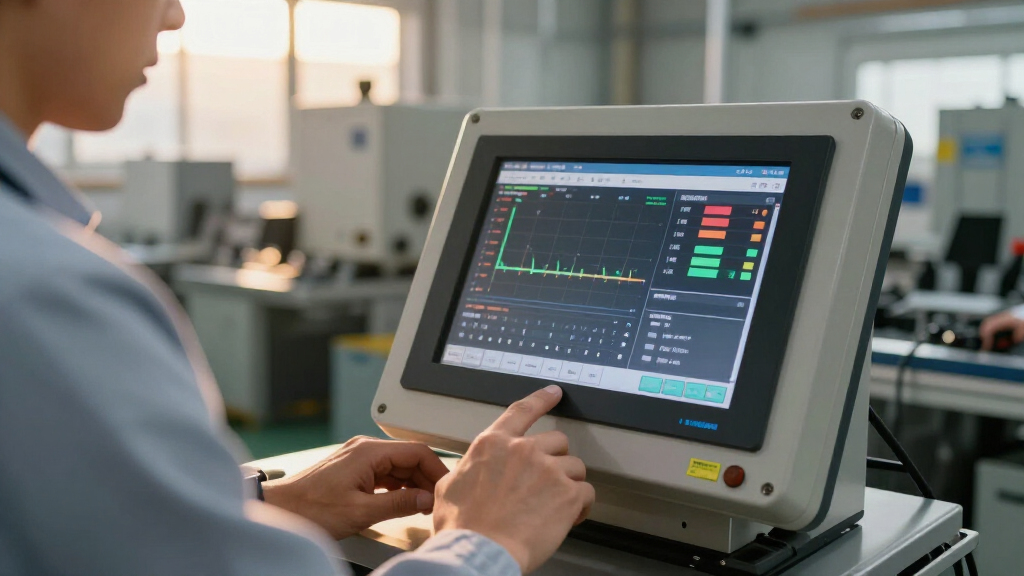
The partnership with NVIDIA involves GPU-accelerated simulation, physics-based AI models, and generative digital twins. Siemens plans to deploy a fully AI-driven, adaptive factory at its Electronics Factory in Erlangen in 2026, which will serve as a blueprint for global rollouts. Additional tools like Digital Twin Composer and industrial copilots are also part of the strategy, with early use cases including facility upgrades for PepsiCo.
Siemens’ advantage lies in its extensive proprietary industrial data, decades of domain expertise, and established customer relationships with major manufacturers such as PepsiCo and Audi. The company asserts that physical AI’s success depends on domain-specific knowledge and data, which Siemens uniquely possesses.
Why Siemens’ Industrial AI Shift Matters for Manufacturing
This initiative signals a major shift in manufacturing toward physical AI, where AI models are tailored to specific industrial data and physics rather than relying on general-purpose language models. Siemens’ approach could accelerate factory automation, improve operational efficiency, and enable real-time optimization, impacting global manufacturing competitiveness. The partnership underscores the importance of domain expertise and proprietary data in advancing industrial AI, potentially setting new standards for factory digitalization.
industrial AI software for manufacturing
As an affiliate, we earn on qualifying purchases.
As an affiliate, we earn on qualifying purchases.
Industrial AI Development and Siemens’ Strategic Position
While AI has largely been associated with chatbots and digital assistants, Siemens’ focus is on applying AI directly to physical manufacturing environments. The company’s announcement builds on its Hannover Messe 2025 reveal of the IFM, a model designed to understand and optimize industrial data. Siemens has long been a leader in automation and industrial software, and its recent moves aim to integrate AI into core manufacturing workflows. The partnership with NVIDIA reflects broader industry trends toward GPU-accelerated simulation and digital twins, but Siemens emphasizes its proprietary data and domain expertise as key differentiators.
Despite the promise, the initiative remains in early stages, with the first fully AI-driven factory slated for 2026 and performance metrics yet to be disclosed. The broader industrial AI landscape is becoming increasingly crowded, with competitors like Palantir and Qualcomm also investing in edge and factory AI solutions.
“”Industrial AI is no longer a feature; it’s a force that will reshape the next century.””
— Roland Busch, Siemens CEO
As an affiliate, we earn on qualifying purchases.
Unconfirmed Aspects of Siemens’ Industrial AI Rollout
Details about the specific hardware configurations, deployment timelines, and performance results of the AI-driven factory remain undisclosed. The effectiveness of the Digital Twin Composer and industrial copilots, including their real-world impact, has not yet been validated publicly. Additionally, the extent to which Siemens’ reliance on NVIDIA’s infrastructure could influence its sovereignty or competitive advantage remains uncertain.
industrial sensors for factory automation
As an affiliate, we earn on qualifying purchases.
As an affiliate, we earn on qualifying purchases.
Next Steps for Siemens’ Industrial AI Strategy
Siemens plans to launch its fully AI-driven factory in Erlangen in 2026, serving as a prototype for global replication. The company will also roll out Digital Twin Composer and industrial copilots, with early customer pilots such as PepsiCo. Monitoring performance metrics and real-world results over the coming months will be critical to assessing the platform’s success and scalability. Siemens will likely continue to refine its models and expand partnerships to maintain its leadership in industrial AI.
AI-powered factory automation systems
As an affiliate, we earn on qualifying purchases.
As an affiliate, we earn on qualifying purchases.
Key Questions
What is Siemens’ Industrial Foundation Model?
The Industrial Foundation Model (IFM) is Siemens’ AI model designed to process and understand complex industrial data, including 3D models, drawings, and sensor telemetry, to optimize manufacturing processes and engineering tasks.
How does Siemens’ partnership with NVIDIA enhance its AI capabilities?
The partnership provides GPU-accelerated simulation, physics-based AI models, and digital twin technology, enabling Siemens to develop more accurate, real-time, and adaptive manufacturing solutions.
When will the fully AI-driven factory be operational?
Siemens aims to launch its first fully AI-enabled, adaptive factory at its Erlangen site in 2026, with further deployments to follow globally.
What are the main challenges Siemens faces in this initiative?
Key challenges include validating performance metrics, integrating AI into existing industrial systems, and managing dependencies on NVIDIA’s infrastructure, while maintaining data sovereignty and industry standards.
Why is physical AI considered more valuable than chat AI for manufacturing?
Physical AI directly models and optimizes factory physics, processes, and sensor data, making it more relevant and effective for automating and improving manufacturing operations than general-purpose chat or language models.
Source: ThorstenMeyerAI.com
Halloween Picks
halloween
As an affiliate, we earn on qualifying purchases.