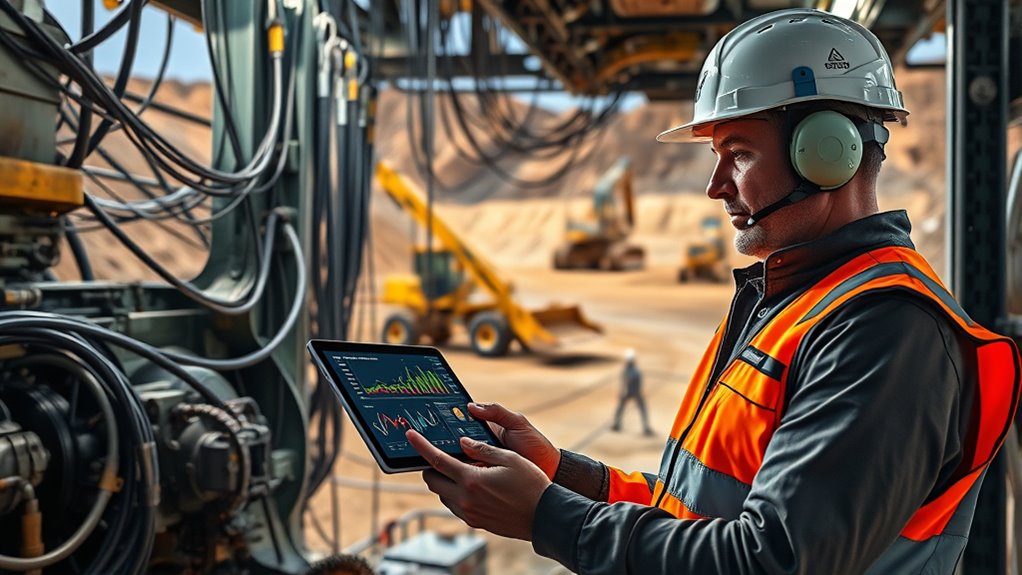

Using machine learning for predictive maintenance on mining rigs helps you prevent unexpected failures and costly downtime. By collecting real-time data from sensors and ensuring their accuracy through regular calibration, you get reliable insights. Machine learning models analyze this data to identify early signs of issues, allowing you to schedule maintenance proactively. This approach boosts equipment lifespan, safety, and productivity—if you’re curious about implementing these techniques, you’ll discover more effective ways to keep your rigs operational.
Key Takeaways
- Machine learning models analyze sensor data to detect early signs of equipment failure, enabling proactive maintenance in mining rigs.
- Accurate sensor calibration ensures reliable data input, preventing false alarms and improving predictive model accuracy.
- Data preprocessing cleans and normalizes raw sensor signals, enhancing the detection of meaningful patterns for maintenance predictions.
- Real-time data collection from embedded sensors allows continuous monitoring and timely maintenance interventions.
- Implementing predictive maintenance reduces unexpected downtime, extends equipment lifespan, and improves overall safety in mining operations.
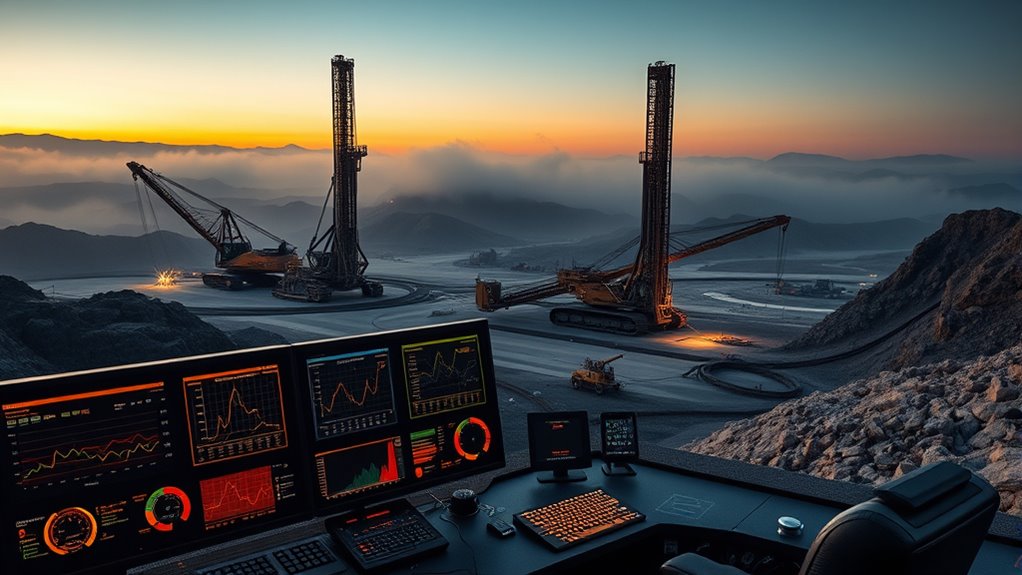
Mining operations demand high equipment uptime, and traditional maintenance methods often lead to unexpected failures and costly downtime. When your rigs break down unexpectedly, it disrupts schedules, inflates repair costs, and can even jeopardize safety. That’s where predictive maintenance, powered by machine learning, becomes a game-changer. It allows you to anticipate issues before they escalate, ensuring your equipment stays operational longer and reducing unplanned outages.
Predictive maintenance keeps mining equipment running longer and reduces costly unplanned downtime.
At the core of this approach is the collection of real-time data from sensors embedded in your mining rigs. However, for machine learning models to deliver accurate predictions, the data must be clean and reliable. This is where sensor calibration and data preprocessing play essential roles. Sensor calibration ensures that the data captured accurately reflects the true condition of the equipment. Over time, sensors can drift or become inaccurate, leading to misleading readings. Regular calibration corrects these discrepancies, maintaining the integrity of your data. Without proper calibration, your predictive models could generate false alarms or miss critical faults, defeating the purpose of predictive maintenance.
Data preprocessing, on the other hand, involves cleaning and transforming raw sensor data into a format suitable for analysis. It includes tasks such as removing noise, handling missing values, and normalizing data ranges. For example, vibration sensors on a drill might pick up extraneous signals from external sources or experience temporary glitches. Preprocessing filters out these anomalies, ensuring that the machine learning algorithm focuses on relevant patterns rather than misleading artifacts. This step is essential because the quality of your input data directly impacts the accuracy of your predictive models. Additionally, integrating security measures can protect your sensor data from tampering or unauthorized access, safeguarding the integrity of your predictive maintenance system.
Once the data is calibrated and preprocessed, you can feed it into machine learning algorithms designed to detect early signs of wear or failure. These models analyze historical and real-time data to identify subtle patterns that humans might overlook. When an impending issue is detected, you receive a timely alert, allowing you to schedule maintenance proactively. This minimizes downtime, extends equipment lifespan, and optimizes resource allocation.
Implementing sensor calibration and data preprocessing might require an initial investment in training and tools, but the payoff is significant. You gain a deeper understanding of your equipment’s condition, reduce emergency repairs, and enhance overall safety. As you refine your data collection and analysis processes, your predictive maintenance system becomes more accurate and reliable, empowering you to make smarter maintenance decisions. Ultimately, this proactive approach keeps your mining operations running smoothly, saving you money and boosting productivity in an increasingly competitive industry.
Frequently Asked Questions
What Are the Costs Involved in Implementing Machine Learning for Mining Rigs?
When considering the costs involved, you should look at implementation costs like hardware, software, and data infrastructure. You’ll also need to factor in training and ongoing maintenance. Conducting an ROI analysis helps determine if the benefits outweigh the expenses. While initial investments might seem high, the improved efficiency and reduced downtime can lead to significant savings over time, making the project worthwhile.
How Does Predictive Maintenance Impact Safety in Mining Operations?
You see how predictive maintenance improves safety by reducing unexpected failures and preventing accidents. It helps you keep workers safe by identifying equipment issues early, allowing timely repairs and avoiding hazardous breakdowns. This proactive approach minimizes accidents, protects workers from injury, and ensures smoother operations. Implementing predictive maintenance demonstrates your commitment to safety, fostering a safer work environment and reducing risks associated with equipment failure in mining operations.
Can Small Mining Companies Afford Machine Learning-Based Maintenance Systems?
You might wonder if small mining companies can afford machine learning-based maintenance systems. Cost barriers and technology accessibility are common concerns, but affordable options are emerging. Cloud-based solutions and scalable tools make it easier for smaller firms to implement predictive maintenance without massive investments. By choosing flexible, cost-effective systems, you can improve equipment reliability and safety without exceeding your budget.
What Are the Challenges in Integrating Sensors Into Existing Mining Rigs?
When integrating sensors into existing mining rigs, you face challenges like ensuring proper sensor calibration for accurate data. Data transmission can also be problematic, especially in remote or harsh environments, risking data loss or delays. You need to upgrade or modify rigs to support new sensors, which can be costly and complex. Overcoming these hurdles requires careful planning to maintain operational safety and efficiency while ensuring reliable data flow.
How Do Weather Conditions Affect Machine Learning Model Accuracy?
Weather variability can notably impact your machine learning model accuracy by introducing data noise, which makes it harder for your models to identify true patterns. Sudden changes in temperature, humidity, or precipitation can skew sensor readings, leading to less reliable predictions. To combat this, you should incorporate weather data into your models and apply filtering techniques to reduce data noise, ensuring more consistent and accurate maintenance insights.
Conclusion
By leveraging machine learning for predictive maintenance, you can detect potential issues before they lead to costly downtime. This approach helps you optimize rig performance, reduce unexpected failures, and extend equipment lifespan. With real-time data insights, you stay ahead of maintenance needs, ensuring smoother operations. Embracing these technologies empowers you to make smarter decisions, saving time and money while maintaining safety standards. Ultimately, machine learning transforms maintenance from reactive to proactive, boosting your mining efficiency.