Hardware wallets keep your private keys offline, making them the safest way to store cryptocurrencies. They generate and sign transactions internally, so your keys never touch the internet, protecting them from hacking and malware. Their portable design lets you manage your assets securely and conveniently. Many support multiple cryptocurrencies and include backup options like seed phrases. If you want to understand how cold storage offers unmatched security, continue exploring the details behind this gold standard.
Key Takeaways
- Hardware wallets generate and store private keys offline, preventing exposure to online hacking threats.
- Cold storage keeps private keys separate from internet-connected devices, ensuring higher security.
- They sign transactions internally, so private keys are never revealed or transmitted externally.
- Hardware wallets offer backup options like seed phrases for asset recovery if the device is lost.
- They are considered the gold standard for securing significant cryptocurrency holdings due to their robust protection.
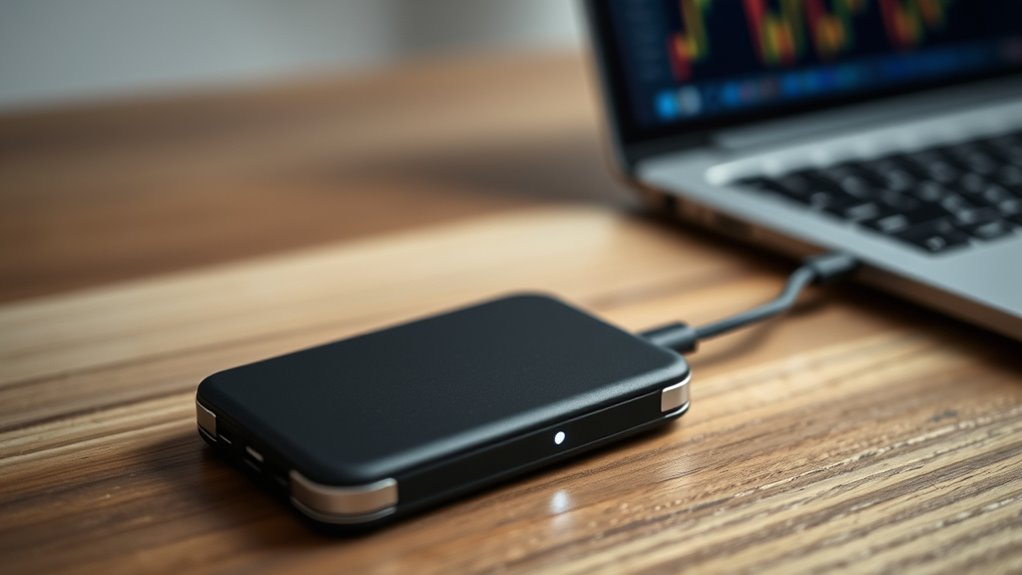
Ever wondered how to keep your cryptocurrency safe from hackers and online threats? The answer lies in understanding the importance of hardware wallets and their role in cryptocurrency security. When it comes to digital asset management, safeguarding your private keys is essential, and hardware wallets offer a level of protection that software wallets simply can’t match. Unlike online or mobile wallets, which are connected to the internet and vulnerable to hacking, hardware wallets store your private keys offline, making them immune to most cyber threats. This form of cold storage is widely regarded as the gold standard for securing significant holdings, especially if you’re serious about protecting your investments.
Using a hardware wallet means you’re taking control of your digital assets by keeping your private keys out of reach from hackers. These devices are designed to generate and store cryptographic keys securely, often featuring a built-in screen and physical buttons that require your confirmation for transactions. This added layer of security ensures that even if your computer becomes compromised, your private keys remain safe inside the hardware wallet. When you need to make a transaction, the device signs it internally, and only the signed transaction is sent to the network. This process prevents malicious software from intercepting or altering your transactions, providing peace of mind in your digital asset management.
Another advantage of hardware wallets is their portability and ease of use. Many models are compact and user-friendly, allowing you to manage your cryptocurrencies conveniently without sacrificing security. They support multiple cryptocurrencies and are compatible with various software interfaces, making them versatile tools for both beginners and seasoned traders. Plus, many come with backup options, like seed phrases, so you can recover your assets if your device is lost or damaged. This ensures your investments are resilient against physical theft or hardware failure, further emphasizing their role in secure digital asset management. Additionally, hardware wallets can contribute to the overall security of your assets by supporting features that prevent unauthorized access and reduce the risk of theft.
Frequently Asked Questions
Are Hardware Wallets Completely Immune to Hacking?
Hardware wallets aren’t completely immune to hacking, but they offer excellent security against many threats. They protect your assets by keeping private keys offline, reducing security vulnerabilities. However, you still need to watch out for phishing protection risks, like fake websites or malicious links. Always verify you’re interacting with authentic sources, and never share your seed phrase. With proper precautions, hardware wallets markedly lower your chances of falling victim to cyberattacks.
How Often Should I Update My Hardware Wallet’s Firmware?
You should update your hardware wallet’s firmware whenever a new security patch is released, ideally at least once a month. Studies show that 60% of security breaches occur due to outdated software. Regular firmware updates ensure your device receives the latest security patches, reducing vulnerability to hacking. Staying current with updates keeps your crypto assets safer, so check for firmware updates frequently and install them promptly to maintain peak security.
Can I Recover My Funds if My Hardware Wallet Is Lost?
Yes, you can recover your funds if your hardware wallet is lost by using your backup seed phrase. Make sure to keep your seed phrase secure and private, as it’s essential for recovery. Backup strategies involve storing your seed phrase in a safe location, separate from your wallet. Also, verify your new device’s compatibility with your existing wallet to ensure seamless access to your funds.
Are Hardware Wallets Compatible With All Cryptocurrencies?
Wondering if your hardware wallet can handle all your cryptocurrencies? The answer is, it depends. Hardware wallet compatibility varies widely, with some supporting hundreds of cryptocurrencies and others just a handful. You need to check the device’s supported cryptocurrencies and consider hardware wallet diversity to guarantee your specific coins are safe. Always verify before buying, because not all hardware wallets are created equal—some might surprise you with what they support.
What Is the Average Cost of a Reliable Hardware Wallet?
A dependable hardware wallet usually costs between $50 and $150, depending on the brand and features. You should do a price comparison and consider brand reputation, as well-known brands tend to offer better security and support. Cheaper options might save you money upfront but could compromise your assets’ safety. Investing in a reputable device ensures your crypto stays secure, making it worth the extra cost.
Conclusion
Using a hardware wallet markedly enhances your crypto security, as it keeps your private keys offline and protected from online threats. Did you know that over 60% of crypto thefts occur through hacking exchanges or online wallets? By choosing cold storage, you’re adopting the industry’s gold standard for safeguarding assets. It’s a smart move that minimizes risks and gives you peace of mind, knowing your investments are secure in a hardware wallet.