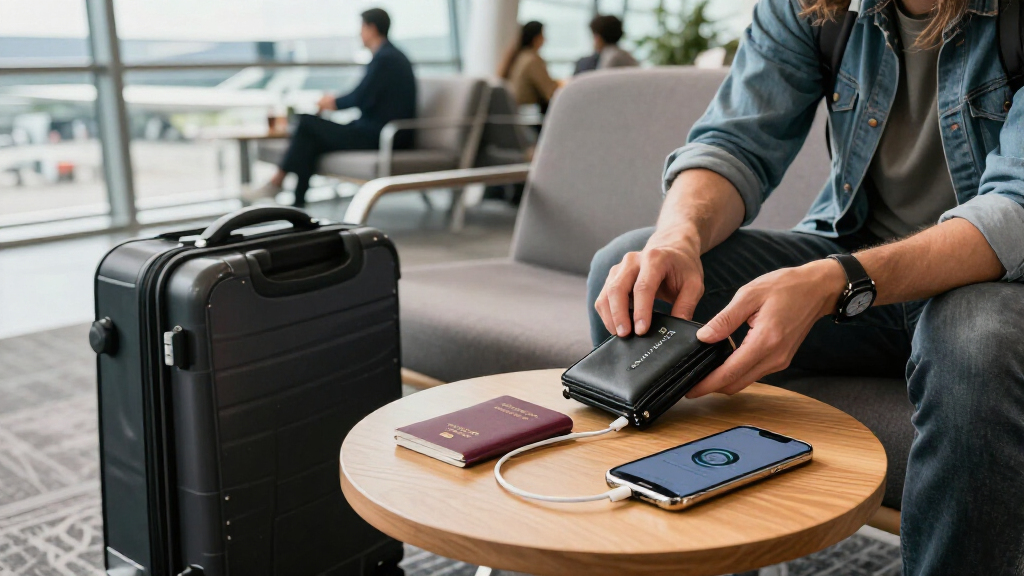

This checklist is for travelers who want to think through phone privacy, account access, and physical security while carrying crypto or Bitcoin. It covers everyday travel gear alongside a wallet-planning slot, so you can consider both what to buy and what to prepare before a trip.

Get hardware and tech essentials delivered free with Prime
- Fast, free delivery on millions of items
- Prime Video, Amazon Music and more included
- Member-only deals all year
The sections follow the items listed: a Faraday phone pouch, portable hardware wallet advice, a privacy screen protector, an RFID-blocking travel wallet, a USB data blocker, and a portable door lock. Each product pick is presented in its own slot, with practical fit and compatibility points to check before choosing.
Use the checklist to compare each item with your devices and travel setup. Confirm phone model, connector type, passport fit, and door configuration where relevant; for the hardware-wallet slot, use the guidance to plan what features matter to you before selecting a device.
Faraday phone pouch
A phone pouch belongs on a travel checklist when you want a dedicated place for a phone during moments when you prefer it separated from wireless signals. The listed pick is the SLNT Faraday Phone Sleeve in black and medium. Before buying, check the sleeve’s dimensions against your phone, including any case you plan to leave on. A snug fit may be convenient to carry, while a case or larger phone can change whether it fits comfortably. A common mistake is assuming the product name alone settles fit or intended use. Check the manufacturer’s specifications for supported dimensions and instructions, and consider how often you would need to take the phone out while traveling. Think through whether your phone needs to remain accessible for navigation, boarding details, or account authentication during the same part of the trip. Keep recovery information and access plans separate from the phone so one pouch does not become your only point of access. Consider how the sleeve will sit in your bag or pocket and whether its closure suits your routine. Choose based on verified dimensions, your phone and case combination, and the moments when you expect to use it. A little planning helps the pouch fit into a broader travel routine rather than becoming an item you carry without a clear purpose.What to look for:
- Compare the sleeve’s listed dimensions with your phone, including its case.
- Check the manufacturer’s instructions for use and closure.
- Consider how quickly you may need to remove the phone during travel.
- Plan a separate way to access essential account and recovery information.
- Choose a size that fits your device without forcing it into the sleeve.
SLNT Faraday Phone Sleeve – Signal Blocking Pouch (Black, Medium)
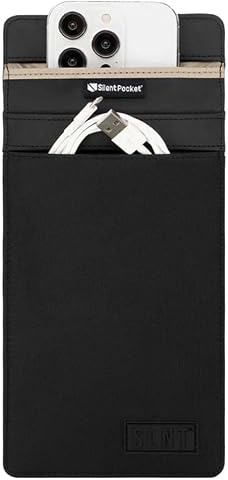
The SLNT Faraday Phone Sleeve features advanced signal-blocking technology to protect devices from cellular, WiFi, Bluetooth, GPS, RFID, NFC, EMF, and satellite signals. Made from durable weatherproof nylon or sleek leather, it offers versatile, discreet protection with dual pockets for organization, suitable for various device sizes.
Pros:
- Effectively blocks multiple signals to protect privacy
- Available in durable weatherproof nylon or sleek leather
- Multiple sizes accommodate various devices
- Compact and lightweight for everyday carry
Cons:
- May be more expensive than basic sleeves
- Requires proper closure to ensure signal blocking
- Limited color options
Best for: Travelers seeking a phone sleeve for planned periods of separation from wireless signals.
Not ideal for: People who need uninterrupted, immediate phone access throughout their routine.
Bottom line: Confirm your phone and case fit, then decide when a signal-blocking sleeve fits your travel habits.
Portable hardware wallet
No product is specified for this slot, so treat it as a planning step rather than a product recommendation. A portable hardware wallet may be part of your travel setup if you already use one, but first consider whether taking it is appropriate for your trip and how you will manage access. The right choice depends on your existing wallet setup, supported assets, and the recovery process you understand and can follow. A frequent buying mistake is choosing a device based only on portability or assuming every wallet supports the same assets, apps, or connection methods. Check compatibility with your current setup and read the maker’s instructions before relying on a device away from home. Make sure you understand how setup, authentication, updates, and recovery work. Avoid making a first-time setup or recovery-plan change in the middle of travel if you have not practiced it beforehand. Think about physical handling as well as device features: where the wallet will be kept, who could access it, and what you would do if it were lost or unavailable. Keep recovery details protected and separate from the device, following the wallet maker’s guidance. A useful purchase decision starts with your own asset and compatibility requirements, then narrows to a device whose operation and recovery steps you can confidently manage.What to look for:
- Confirm support for the assets and services in your existing setup.
- Check device, phone, and computer compatibility before travel.
- Read setup, authentication, update, and recovery instructions.
- Understand how recovery information should be stored separately.
- Practice the recovery process before relying on a device on a trip.
Privacy screen protector
A privacy screen accessory can be useful to consider when using a phone in shared travel spaces. The listed pick is the Phone Distraction Blocker for iPhone and Android. Its product name alone does not identify which phone models or screen sizes it fits, so check the listing carefully before buying. Confirm whether the item is a physical protector, a software feature, or another type of accessory, and use the maker’s description to understand how it works. One common mistake is relying on a broad iPhone and Android label without checking the exact device. Screen dimensions, camera placement, case edges, and whether the phone uses a flat or curved display can affect fit and usability. Check the model list and installation instructions, and consider whether a case could lift or overlap the edges. Also review whether the accessory changes touch response or visibility in the way you need. Consider where you most often view sensitive information, such as in transit or in a crowded waiting area, and whether the accessory’s viewing behavior suits that setting. Do not assume the name means it blocks every kind of distraction or protects account credentials. Compare the product’s stated function with your needs and prioritize exact model compatibility before placing an order.What to look for:
- Verify the exact phone model and screen size supported.
- Clarify from the product listing whether it is a physical screen protector or another feature.
- Check camera, edge, and case compatibility.
- Review installation and removal instructions.
- Confirm that the described viewing behavior suits your use.
Phone Distraction Blocker for iPhone and Android – Screen Time Lock

Brick is a physical phone blocker that uses a magnetic, anti‑slip silicone device to create a small friction step before you can access distracting apps. You set up blocked apps in the companion app, tap your phone to the Brick to lock it, and track focus time with built‑in timers.
Pros:
- Physical blocker adds a tangible pause to break mindless scrolling
- Customizable modes for work, school, and family time
- Focus‑time tracking shows how much time is regained
- No batteries or charging needed
Cons:
- Requires the Brick device to be nearby each time you want to unlock
- Limited compatibility to iOS 18+ and Android 12+
- May not block all system notifications depending on app settings
Best for: Travelers who want to assess a screen privacy accessory for their phone.
Not ideal for: Buyers whose device model or the product’s function is not clearly confirmed.
Bottom line: Verify the accessory type and exact phone compatibility before relying on it for screen privacy.
RFID blocking travel wallet
A travel wallet combines document organization with a dedicated place for travel essentials. The listed pick is the Bellroy Travel Folio, a leather passport wallet in navy. Before choosing it, check the maker’s dimensions and pocket layout against the passport and cards you intend to carry. Consider whether you want room for additional documents, and how the folio will fit in the bag or clothing you use while traveling. A common buying mistake is treating “RFID blocking” as a substitute for checking the actual product details. Confirm whether the listing for this exact folio describes RFID protection and which compartments or items it applies to. Also check how many cards and documents the layout accommodates; the product name does not establish capacity. If you use a protective passport cover, check whether that combination fits without making the folio difficult to close. Think through how you will access your passport at check-in and keep it secure between uses. Leather care and handling guidance can also help you decide whether the material suits your travel conditions. Select a folio based on document fit, organization, and confirmed protection details rather than assuming every travel wallet offers the same features.What to look for:
- Confirm the folio’s dimensions and passport fit.
- Check the exact listing for RFID protection details and coverage.
- Review card and document capacity against what you carry.
- Consider fit with any passport cover or protective sleeve.
- Check care guidance for the leather material.
Bellroy Travel Folio Leather Passport Wallet – Navy

This zip-around leather travel folio organizes up to two passports, cards, cash, boarding passes, receipts, a spare SIM, and the included Micro Pen. It features RFID shielding, multiple pockets, and a back slip pocket for quick access to travel documents; the eco-tanned leather develops a patina with use.
Pros:
- Organizes passports, cards, cash, and travel documents in multiple pockets
- RFID shielding helps protect personal data
- Includes a Micro Pen and storage for a spare SIM
- Compact design with a quick-access back slip pocket
Cons:
- Larger-format passports may not fit in the designated sleeve
- Leather requires dry-cloth cleaning
Best for: Travelers who want a folio-style place for a passport and travel cards.
Not ideal for: People who need a confirmed RFID feature or capacity that the listing does not specify.
Bottom line: Check the folio’s dimensions, layout, and stated RFID details against your travel documents.
USB data blocker
A USB data blocker is a compact accessory to consider when charging from a USB port you do not control. The listed pick is the PortaPow USB Data Blocker in a five-pack. Before buying, check the connector type and charging compatibility with your phone, cable, and any other device you plan to use. A blocker that does not match the port or cable arrangement in your kit may be inconvenient when you need it. A frequent mistake is assuming that every data blocker works with every charger, cable, and device. Check the product listing for supported connectors and the maker’s guidance on charging. Consider whether the pack’s connector configuration matches the cables you actually carry, and whether you need blockers for multiple devices. Keep in mind that adding an adapter can introduce another compatibility point, so check each link in the charging setup before travel. Plan where you will keep the blockers so one is accessible when needed, and test the combination of blocker, cable, and device before leaving. Do not infer charging speed or device support from the product name alone; consult the specifications. A straightforward connector check can prevent buying a pack that does not suit your everyday travel kit.What to look for:
- Check connector types against your devices, cables, and charging ports.
- Review the maker’s supported device and charging guidance.
- Confirm the pack configuration matches the number of devices you intend to use.
- Account for any adapters in your charging setup.
- Test the blocker with your cable and device before traveling.
PortaPow USB Data Blocker (Black, 5 Pack) – Protect Against Juice Jacking

The PortaPow USB Data Blocker plugs between your charger and device to physically block data transfer while allowing fast charging up to 2.4 A. It features a SmartCharge chip that automatically switches between Apple, Universal and Samsung standards.
Pros:
- Physically blocks data transfer to prevent juice‑jacking attacks.
- SmartCharge chip provides up to 2.4 A fast charging across Apple, Universal and Samsung standards.
- Visibly indicates when data blocking is active for added confidence.
Cons:
- Only available in a USB‑A version; USB‑C devices require a separate adapter.
- Limited to five units per pack, which may be insufficient for larger teams or multiple locations.
Best for: Travelers who want USB data blockers for compatible charging setups.
Not ideal for: People whose devices or cables use connectors the blocker does not support.
Bottom line: Confirm connector compatibility across your device, cable, and port before packing a blocker.
Portable door lock
A portable door lock can be considered as an added travel item when you want a security aid suited to a particular door. The listed pick is the AceMining Adjustable Door Security Bar. Door designs vary, so check the product’s dimensions, adjustment range, and instructions against the doors you expect to encounter. The product name does not establish compatibility with every hotel, rental, or home door. A common mistake is buying a security bar without checking the space and surfaces where it will sit. Review the manufacturer’s requirements for door type, floor contact, clearance, and installation. Consider whether luggage or furniture could obstruct placement, and whether you can position and remove the bar easily. If you travel with someone else, consider how the device may affect their ability to enter or exit in an ordinary situation. Practice using the bar at home with a compatible door before relying on it while traveling. Follow the product instructions and avoid assuming it replaces the door’s own lock or other safety measures. Base the decision on door compatibility and how the bar fits into your accommodation routine, then pack it where it remains accessible without obstructing your other belongings.What to look for:
- Check the adjustment range and product dimensions.
- Verify compatibility with the door and floor surfaces you expect to use.
- Read placement, use, and removal instructions.
- Consider clearance and whether the bar could obstruct movement.
- Practice setup with a compatible door before travel.
AceMining Adjustable Door Security Bar

This adjustable security bar provides peace of mind for homes, apartments, and hotel rooms by reinforcing sliding glass doors and windows. It features a quick-deploying three-stage structure with high-strength alloy connections and rubber feet, capable of withstanding up to 400 pounds of force.
Pros:
- Lightweight and portable, ideal for travel
- Durable construction withstands up to 400 pounds of force
- Easy to install and quickly deploy
Cons:
- May not be 100% effective in preventing entry in all situations
- Requires careful placement to ensure no gaps between rubber foot and ground
Best for: Travelers who want to assess an adjustable security bar for compatible doors.
Not ideal for: Anyone whose accommodation doors or floor layout have not been checked for fit.
Bottom line: Verify door compatibility and practice placement before depending on the security bar.
If you are buying gradually, start with the items that match a clear, immediate need in your travel setup. Check phone and cable compatibility first, then confirm document fit and whether a door bar suits the accommodation doors you use. Add a hardware wallet only after reviewing your existing assets, compatibility, and recovery plan. Prioritize fit and clear purpose over filling every slot at once.
Use the manufacturer’s specifications to resolve questions about dimensions, connectors, protection, and setup before packing. A short compatibility check and a familiar routine can make travel gear easier to use when you need it. Choose the pieces that fit your devices and habits, and keep your account and recovery planning deliberate and organized.
Evergreen bestsellers Picks

Dyson V15 Detect Cordless Vacuum

LG 77-Inch OLED evo C6 4K Smart TV

Vitamix VX1 Professional-Grade Blender, 64 oz, Black
As an affiliate, we earn on qualifying purchases.