
🔍 Read the full analysis: The 10 Best Workstation Laptops For AI Professionals In 2027 on ThorstenMeyerAI.com

Get hardware and tech essentials delivered free with Prime
- Fast, free delivery on millions of items
- Prime Video, Amazon Music and more included
- Member-only deals all year
TL;DR
The supplied source presents a buyer’s guide to 10 workstation laptops, led by Lenovo’s ThinkPad P1 Gen 7, P14s Gen 7 and Dell’s Precision 7680. It does not provide a complete list of 10 models or verify 2027 availability, pricing, configurations or AI benchmarks, so the recommendations should be treated as unconfirmed rather than a definitive 2027 ranking.
The supplied buyer’s guide names the Lenovo ThinkPad P1 Gen 7, ThinkPad P14s Gen 7 and Dell Precision 7680 as workstation options for professional computing, but it does not substantiate a ranking of 10 laptops for 2027. According to the guide, its advice focuses on balancing GPU capability, sustained performance, portability and display needs. The supplied material does not independently verify the guide’s assessments or establish current model availability and AI-specific performance.
In the supplied buyer’s guide, the ThinkPad P1 Gen 7 is named the best overall pick, with the guide citing a relatively sleek design and dedicated NVIDIA RTX graphics. The guide describes the 14-inch ThinkPad P14s Gen 7 as a compact option with AMD Ryzen AI performance, and positions the Precision 7680 for demanding engineering workloads, noting that a larger chassis can provide more room for cooling. These are the source’s assessments, not independently verified test results in the material supplied.
The guide says its selection criteria include sustained performance under extended workloads, thermal behavior, build quality, serviceability, professional software compatibility and everyday features such as the keyboard and webcam. It also describes tradeoffs: newer Intel Core Ultra and AMD Ryzen AI chips may improve battery efficiency, while some older HX-series processors may deliver stronger peak multi-core performance for rendering. The supplied material provides no comparable benchmark figures, prices or configuration details to substantiate these comparisons.
The source also names the ThinkPad P16s Gen 4 as an example of a model with an OLED display, but does not identify seven other laptops needed to complete the promised top 10. Its discussion of NVIDIA RTX Ada and Blackwell professional graphics, ISV certifications and ports is general buying guidance; the material does not establish which specific configurations are available or certified for particular software versions.
The 10 picks
- 1
 Dell Precision 7680 16-Inch Workstation Laptop, Intel Core i7-13850HX, NVIDIA…View on Amazon →
- 2
 Dell Precision 7680 Laptop, NVIDIA RTX 2000 Ada 8GB, Intel i7-13850HX, 32GB DDR5View on Amazon →
- 3
 Lenovo ThinkPad P1 Gen 7, w/ Ultra 7, NVIDIA RTX 3000, 16" 2.8K, 32GB RAMView on Amazon →
- 4
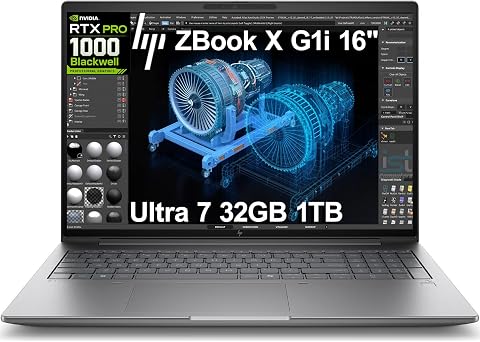 HP ZBook X G1i 16-inch Laptop, Intel Core Ultra 7 265H, NVIDIA RTX PRO 1000 B…View on Amazon →
- 5
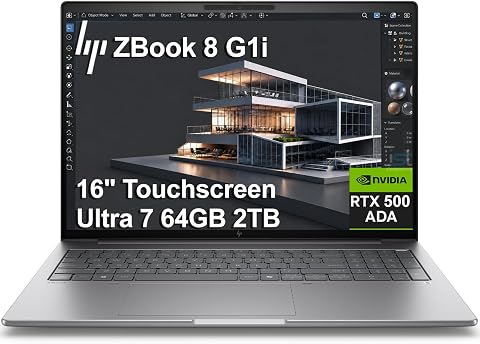 HP ZBook 8 G1i AI Mobile Workstation Laptop (16" FHD+ Touchscreen, Intel Ultr…View on Amazon →
- 6
 HP ZBook 8 G1i AI Mobile Workstation Laptop (16" 4K 120Hz, Intel Ultra 7 265H…View on Amazon →
- 7
 Lenovo ThinkPad P16s Gen 4 16-inch OLED Touchscreen Mobile WorkstationView on Amazon →
- 8
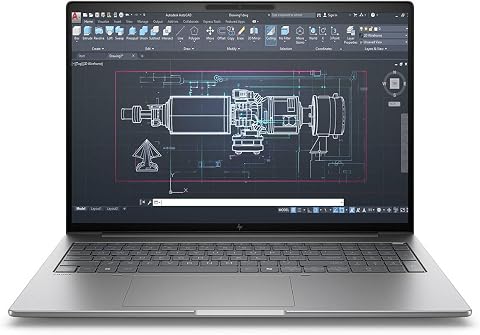 HP ZBook 8 G1i 16" Mobile Workstation – WUXGA – 60 Hz – Intel Core Ultra 7 25…View on Amazon →
- 9
 Lenovo ThinkPad P16s Gen 4 16-Inch Business LaptopView on Amazon →
- 10
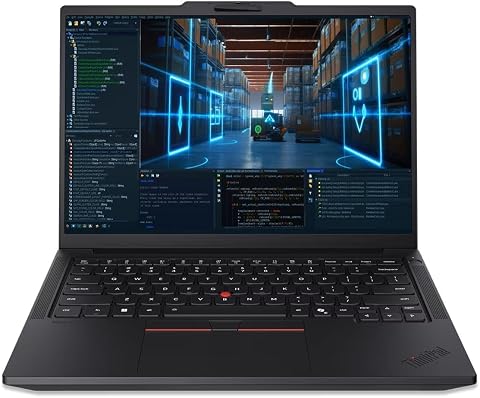 Lenovo ThinkPad P14s Gen 7 Mobile Workstation (2026) – 14" Touch, AMD Ryzen A…View on Amazon →
Choosing Hardware for AI Workloads
The supplied guide argues that laptop choice can affect whether work is practical on-device or must run on a workstation, remote server or cloud platform. It highlights GPU memory, software support and sustained cooling as factors that may matter more for prolonged model development or inference than a short burst of peak speed. The guide provides no AI training or inference tests, however, to show how the named machines perform.
The source also discusses the portability tradeoff: a thinner, lighter laptop may be easier to carry, while a thicker system may sustain heavier CPU and GPU loads for longer. It identifies display accuracy, battery life and available ports as additional considerations for day-to-day use. These are general points from the source, not evidence that any one machine is suitable for every AI workflow.
Products Worth Considering

Apple MacBook Pro 16.2-inch with M5 Pro, 18-core CPU, 20-core GPU, Nano-Texture Display, 48GB Memory, 1TB SSD, Space Black

Ledger Flex Crypto Wallet

Logitech MX Master 4 Ergonomic Wireless Mouse with Haptic Feedback, Graphite
As an affiliate, we earn on qualifying purchases.
The Source’s Three Named Models
The supplied article frames its recommendations around a shift toward Intel Core Ultra and AMD Ryzen AI processors and professional NVIDIA RTX graphics. It says newer chips can favor efficiency, while older HX-class processors may remain competitive in some heavy multi-core tasks. The source provides no dates, controlled comparisons or system configurations to support those observations.
The article also contrasts OLED and IPS displays and emphasizes that chassis design can affect performance over long workloads. It says docks may be needed when a thin model lacks legacy connections such as HDMI or Ethernet. The publication date, testing methodology and complete product list are absent from the supplied material, limiting its value as a 2027 buying guide.
What the 2027 List Cannot Confirm
The supplied material does not establish whether the named laptops are available in 2027, whether their specifications remain current, or whether newer models have replaced them. It also does not supply all 10 picks, prices, configurations, measured battery results, thermal tests or AI workload benchmarks. The source presents claims about graphics stability, cooling and display advantages as guidance or evaluation, without supporting citations or attributed expert quotes in the text provided.
The source does not specify which exact processors, GPUs, memory capacities or software versions its recommendations refer to. Those details can substantially affect a workstation’s performance and suitability. Buyers would need current manufacturer specifications and independent testing tied to their intended applications to verify the guide’s recommendations.
Verify Models Before Buying
A complete 2027 comparison would need to identify all 10 laptops and state their tested configurations, prices and release or availability status. It should include sustained CPU and GPU results, battery measurements, thermal behavior and application-specific AI tests, while distinguishing local model workloads from tasks run remotely. The supplied source does not provide this information.
Readers evaluating a purchase can check current manufacturer listings and certification databases for their software, then compare memory, GPU, display and port options against their workflow. Workstation hardware varies by configuration, and performance claims should be checked against independent tests. Laptop choice does not remove the financial and operational risks of AI development, including cloud costs and project uncertainty.
Key Questions
Does the source confirm 10 workstation laptop picks for 2027?
No. The supplied material names three models and does not identify the remaining seven or verify that the products are current for 2027.
Which laptops does the source specifically recommend?
It names the Lenovo ThinkPad P1 Gen 7 as its overall pick, the ThinkPad P14s Gen 7 as a compact option and the Dell Precision 7680 for heavier engineering work. These recommendations are attributed to the source, not independently confirmed here.
What matters most when choosing a laptop for AI work?
Check the intended workload, GPU and memory configuration, software compatibility, cooling under sustained load and battery needs. The source offers general criteria but no AI benchmarks for the named systems.
Are professional workstation GPUs always better than consumer GPUs?
Not necessarily. The source says professional drivers and certifications can help with certain engineering and creative applications, but suitability depends on the software and workload. Check the certification for the exact application version and compare tested configurations.
Source: ThorstenMeyerAI.com