When it comes to emergency preparedness, a portable power station with 2000Wh capacity offers a reliable backup for essential devices and appliances. The Jackery Explorer 2000 v2 stands out as the best overall choice with its robust capacity and versatile outputs. For those seeking a more affordable but still powerful option, the Anker SOLIX S2000 offers impressive peak wattage, ideal for heavy-duty needs. Tradeoffs in this category include balancing capacity, weight, and recharging options, making it crucial to choose based on your specific emergency scenarios. Keep reading to find the detailed breakdown of these top contenders.

Get hardware and tech essentials delivered free with Prime
- Fast, free delivery on millions of items
- Prime Video, Amazon Music and more included
- Member-only deals all year
Complete the kit


Key Takeaways
- The top picks balance capacity, weight, and recharge options to suit different emergency needs.
- While larger capacity is essential, portability remains a key consideration for on-the-go use.
- Peak wattage matters for powering high-demand appliances, but continuous wattage capacity is more critical for sustained use.
- Battery chemistry impacts longevity and safety; LiFePO4 options tend to last longer and be safer.
- Recharging options like solar compatibility can extend runtime during prolonged outages.
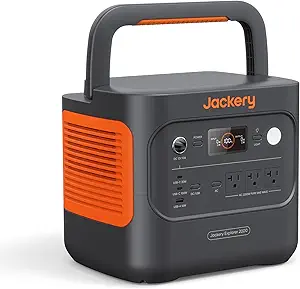


| portable power station 2000wh for emergencie | Capacity | Weight | Battery Type | Charging Time |
|---|---|---|---|---|
| Jackery Explorer 2000 v2 Porta | 2042Wh | 39.5 lbs | LiFePo4 | 66 minutes (AC Fast Charging), 102 minutes (Super Charging), 6 hours (solar) |
| Jackery Explorer 1000 v2 Porta | 1070Wh | 23.8 pounds | LFP | 1 hour |
| EBL 2400W Portable Power Stati | 1843.2Wh | 55 pounds | LiFePO4 | 2 hours (fast charge) |
| Anker SOLIX S2000 Portable Pow | 2010Wh | 35.7 lbs | — | — |
| 1000W Portable Power Station 1 | 1024Wh | 27.73 lbs | LiFePO4 | — |
| OUPES Mega 1 Portable Power St | 1024Wh | — | LiFePO4 | — |
More Details on Our Top Picks
Jackery Explorer 2000 v2 Portable Power Station, 2042Wh, 2200W AC Output
The Jackery Explorer 2000 v2 stands out as the most balanced choice for those who need a large capacity with portability. Its 2042Wh battery and 2200W AC output make it suitable for serious home backup, outdoor camping, or small business needs. Compared to the Anker SOLIX S2000, it offers slightly more capacity but weighs more, which could be a concern for frequent transport. The fast charging features and long-lasting LiFePo4 batteries ensure reliable power with minimal downtime. However, its weight of nearly 40 pounds and inability to be shipped to PO boxes might limit some users. This pick is ideal for users who prioritize capacity and reliability over ultra-lightweight design or low shipping restrictions.
Pros:- High-capacity 2042Wh battery supports extended use
- Lightweight and compact for a high-capacity unit
- Fast charging with long battery lifespan
Cons:- Relatively heavy at 39.5 pounds, less suited for frequent carrying
- Cannot be shipped to PO Box addresses, limiting delivery options
Best for: Homeowners or small business owners seeking reliable, high-capacity backup that can handle multiple devices for extended periods
Not ideal for: Frequent travelers or users needing ultra-light gear, due to its weight and shipping restrictions
- Capacity:2042Wh
- AC Output:2200W
- Weight:39.5 lbs
- Charging Time:66 minutes (AC Fast Charging), 102 minutes (Super Charging), 6 hours (solar)
- Battery Type:LiFePo4
- Noise Level:Less than 30dB
Our verdict“This is best suited for users who need robust power capacity with portability for occasional transport and reliable backup.”
Jackery Explorer 1000 v2 Portable Power Station, 1070Wh, 1500W
The Jackery Explorer 1000 v2 offers a manageable size and capacity for those new to portable power stations, providing 1070Wh and 1500W output. While it doesn’t match the Jackery Explorer 2000 v2 in capacity, it excels in ease of use, quick recharge, and portability, making it an excellent entry-level choice. Its app control and fast charging in just one hour simplify operation, but it requires compatible Jackery solar panels for solar charging, which could limit flexibility for off-grid use. Compared with the EBL 2400W, it’s lighter and easier to handle, though less powerful for demanding appliances. This model makes the most sense for users who want reliable backup without the bulk and complexity of larger units.
Pros:- Lightweight and portable at just 23.8 pounds
- Fast charging in only one hour
- Durable LFP battery with over 10 years lifespan
Cons:- Requires compatible Jackery solar panels for solar charging
- Limited runtime for high-power appliances
Best for: Casual users or beginners needing reliable backup for small devices and moderate power needs
Not ideal for: Heavy-duty users or those with high power demands, due to limited capacity and runtime
- Wattage:1500 watts
- Capacity:1070Wh
- Weight:23.8 pounds
- Charging Time:1 hour
- Battery Type:LFP
- Output Ports:7
Our verdict“Ideal for beginners or casual users seeking a straightforward, portable power solution for everyday needs.”
EBL 2400W Portable Power Station LiFePO4 Battery for Home Use
The EBL 2400W is designed for serious power needs, boasting 1843.2Wh and a robust 2400W output suitable for off-grid and backup scenarios. Its high wattage makes it capable of running multiple devices simultaneously, a step above smaller units like the 1000W Portable Power Station. The tradeoff is its weight—55 pounds—making it less portable, especially for users who need frequent movement. Its large size could also be restrictive in tight spaces. Compared to the Jackery Explorer 2000 v2, it offers similar capacity but with less emphasis on portability. This station is best for those who prioritize raw power and durability over ease of transport.
Pros:- High capacity and powerful output for multiple devices
- Supports many devices simultaneously
- Long-lasting LiFePO4 batteries with over 3500 cycles
Cons:- Heavy at 55 pounds, challenging for frequent moving
- Large footprint may limit placement options
Best for: Outdoor enthusiasts or backup power users who need high wattage and long-term durability
Not ideal for: Travelers or users requiring lightweight, portable solutions due to its weight
- Capacity:1843.2Wh
- Output Power:2400W
- Weight:55 pounds
- Charging Time:2 hours (fast charge)
- Battery Type:LiFePO4
- Charging Cycles:Over 3500
Our verdict“Best suited for users who need maximum power and durability and are less concerned with portability.”
Anker SOLIX S2000 Portable Power Station, 2010Wh, 3000W Peak
The Anker SOLIX S2000 provides an impressive 2010Wh capacity and a peak power of 3000W, enabling it to handle essential appliances with ease. Its compact and lightweight design, at just over 35 pounds, makes it more portable than many larger units like the EBL 2400W. The high-efficiency LiFePO4 batteries and multiple recharging options, including solar, make it flexible for various scenarios. However, the absence of a 12V DC port limits some applications, and the runtime can vary depending on the load. Compared to the Jackery Explorer 2000 v2, it offers similar capacity but with a shorter runtime if running high-wattage devices. This choice is ideal for users who need a powerful, portable station for essential appliances and outdoor adventures.
Pros:- High capacity of 2010Wh in a compact form
- Peak power of 3000W handles tough appliances
- Multiple recharging options including solar input
Cons:- Limited to essential appliances due to power output constraints
- No 12V DC port available
Best for: Active users who require a compact yet powerful station for outdoor activities or emergency backup
Not ideal for: Heavy-duty power users needing extended run times for high wattage appliances
- Capacity:2010Wh
- Peak Power:3000W
- Continuous Output:1500W
- Weight:35.7 lbs
- Recharging Options:AC, solar, generator, car outlet
- Solar Input:up to 400W
Our verdict“Best for outdoor enthusiasts or emergency users seeking a balance of power and portability in a compact form.”
1000W Portable Power Station 1024Wh LiFePO4 for Outdoor & Home
The 1000W Portable Power Station offers 1024Wh of capacity paired with a 1000W continuous output, making it a versatile option for outdoor trips and basic home backup. Its 27.73-pound weight is manageable but still heavier than smaller portable units, which could be a concern for frequent outdoor use. Its multiple fast-charging ports, including USB-C, add convenience, and solar compatibility extends its off-grid potential. Compared with the Jackery Explorer 1000 v2, it provides similar capacity but at a more affordable price point, sacrificing some compactness and runtime. This station is tailored for budget-conscious users who want reliable power without excess bulk.
Pros:- Good capacity for its price and size
- Supports multiple fast-charging ports
- Solar compatible for off-grid use
Cons:- Relatively heavy for frequent transport
- Limited to 1000W continuous power, restricting high-wattage devices
Best for: Outdoor adventurers or small households needing reliable, affordable backup power
Not ideal for: Heavy-duty or high-power applications, as it’s limited to 1000W continuous output
- Power Output:1000W
- Capacity:1024Wh
- Battery Type:LiFePO4
- Charging Ports:2×110V AC, 1×60W PD USB-C, 2×USB-A
- Solar Compatibility:Supports up to 300W solar input
- Weight:27.73 lbs
Our verdict“A solid choice for budget-conscious users seeking reliable backup for small devices and outdoor use, with some portability considerations.”
OUPES Mega 1 Portable Power Station 1024Wh 2000W (4500W Surge)
The OUPES Mega 1 stands out for its professional-grade pure sine wave output and rapid recharge capabilities, making it an excellent choice for those who need reliable, high-demand power in off-grid or emergency situations. Compared with Jackery Explorer 2000 v2, which offers a slightly larger capacity, the Mega 1’s fast 36-minute recharge time gives it a significant edge for quick turnaround in emergency scenarios. Its modular design allows expansion up to 5120Wh, ideal for users planning long-term off-grid setups or needing backup power for sensitive electronics with its UPS integration. However, this power and flexibility come with a higher price point and a larger size, which could limit portability for some users. This pick is best suited to professionals, emergency responders, or serious outdoor enthusiasts who prioritize power quality and scalability over compactness.
Pros:- Rapid recharge times—up to 80% in just 36 minutes
- Modular design allows capacity expansion up to 5120Wh
- Pure sine wave output ensures safe power for sensitive electronics
- Reliable UPS technology for critical equipment
Cons:- Higher cost, especially with expansion batteries
- Large size may hinder portability for some users
- Requires familiarity with advanced features for optimal use
Best for: Professionals and serious off-grid users needing scalable, high-power support for sensitive equipment and critical loads
Not ideal for: Casual campers or users with limited space who need a lightweight, portable option
- Capacity:1024Wh
- Continuous Power:2000W
- Surge Power:4500W
- Recharge Time (AC 0-80%):36 minutes
- Recharge Time (AC + Solar):26 minutes
- Expandable Capacity:up to 5120Wh with two B2 Extra Batteries
- Battery Type:LiFePO4
- Lifecycle:3500+ cycles
- Outputs:dual 100W USB-C PD, four QC3.0 USB-A, 12V DC, AC outlets
Our verdict“This model is perfect for those who need a professional, scalable power solution for emergencies or off-grid use but accept a larger footprint and higher investment.”

How We Picked
The products included in this roundup were evaluated based on their capacity, build quality, usability, and versatility. Performance in real-world emergency scenarios was considered, especially how well they support essential devices like refrigerators, medical equipment, and communication tools. We prioritized models with reliable battery chemistry, multiple charging options, and user-friendly interfaces. The ranking reflects a balance between power output, portability, durability, and value, ensuring each product offers a distinct advantage for different emergency situations.| portable power station 2000wh for emergencie | Battery Type |
|---|---|
| Jackery Explorer 2000 v2 Porta | LiFePo4 |
| Jackery Explorer 1000 v2 Porta | LFP |
| EBL 2400W Portable Power Stati | LiFePO4 |
| Anker SOLIX S2000 Portable Pow | — |
| 1000W Portable Power Station 1 | LiFePO4 |
| OUPES Mega 1 Portable Power St | LiFePO4 |
Factors to Consider When Choosing Portable Power Station 2000wh For Emergencies
Choosing the right portable power station with 2000Wh capacity involves weighing several key factors. Beyond capacity, consider how easy it is to transport, how you will recharge it, and what kind of devices you need to power. Understanding these considerations helps prevent common mistakes, such as overspending on capacity you don’t need or buying a model that’s too heavy for your intended use.Capacity and Power Output
While 2000Wh is a substantial capacity, the continuous wattage output determines how many devices and appliances you can run simultaneously. For example, high-wattage tools or medical devices require models with higher surge and sustained wattage. Evaluate your critical devices and choose a station that can support their startup and running wattages without issues.
Portability and Weight
Many 2000Wh units are fairly heavy, often over 40 pounds, which can limit portability during emergencies where you might need to move quickly. Look for models with carrying handles or wheels if mobility is a priority. Keep in mind that lighter models may compromise on some features or capacity, so balance your need for portability against power requirements.
Recharging Options
Emergency scenarios benefit from versatile recharging methods, including AC outlets, car chargers, and solar panels. Solar compatibility extends usability during extended outages, but not all models support fast or multiple solar inputs. Consider your typical recharge environment and whether you need rapid recharging or long-term solar support.
Battery Chemistry and Longevity
Battery chemistry significantly influences lifespan and safety. LiFePO4 batteries, present in some models like the EBL, tend to last longer and are safer under stress. However, they may come at a higher initial cost. Weigh longevity and safety against upfront investment, especially if you plan to use the station frequently or over many years.
Additional Features and Build Quality
Features such as multiple AC and DC outlets, USB ports, display screens, and rugged build quality enhance usability during emergencies. Some units include features like app control or advanced display metrics. Think about which features will genuinely improve your experience and how durable the station needs to be for your emergency environment.
Frequently Asked Questions
Can I run my refrigerator with a 2000Wh portable power station?
Running a refrigerator depends on its wattage and the power station’s continuous wattage capacity. Most standard refrigerators require around 100-200W, with higher startup surges. A 2000Wh station with a 1500-2000W continuous output can typically support a refrigerator for several hours, but it’s essential to check your fridge’s startup wattage to confirm compatibility. Consider also how long you need it to run during an outage to determine if the capacity is sufficient.
Is solar recharging practical for emergency use?
Solar recharging can be a game-changer during extended outages, but it depends on panel size, sunlight availability, and the station’s solar input capacity. Many units support solar charging, but the process can be slow, especially in less sunny conditions. For emergencies, having a dedicated solar panel setup that matches your power station’s input specifications allows for more reliable recharging, reducing reliance on grid power or vehicle charging.
How long will a 2000Wh power station last during an outage?
The duration depends on your devices’ power consumption. For example, if you power a 100W device continuously, the station could run it for about 20 hours (2000Wh / 100W). Higher wattage devices or multiple devices will reduce that time. Planning based on your essential devices’ combined wattage helps estimate how long the station will meet your needs during an outage.
Should I prioritize capacity or portability?
This depends on your typical emergency scenarios. If you need to move quickly or often, portability may be more important, even if it means slightly reduced capacity. Conversely, if your primary concern is powering multiple devices for an extended period in a fixed location, higher capacity units that are heavier might be preferable. Balancing these factors ensures your choice aligns with your expected use cases.
Are LiFePO4 batteries worth the extra cost?
LiFePO4 batteries generally last longer—often 3,000 to 5,000 charge cycles—and are safer due to their stable chemistry. While they tend to have a higher upfront cost, their durability may save money over time and reduce safety concerns. If you plan to rely heavily on your power station or need it to last for many years, investing in LiFePO4 technology can be a wise decision.
Conclusion
For most users, the Jackery Explorer 2000 v2 offers the best overall balance of capacity, portability, and reliability, making it ideal for those who want a dependable emergency backup. Budget-conscious buyers or those with lighter needs might prefer the 1000W portable options like the OUPES Mega 1, which still provide ample power without the bulk. For heavy-duty, long-term use, the EBL LiFePO4 stands out with its longevity and safety features. Beginners should look for models with straightforward interfaces and solid build quality, while those with specific appliances in mind should prioritize surge wattage and compatibility. Ultimately, selecting the right station hinges on your typical emergency scenario and power needs.