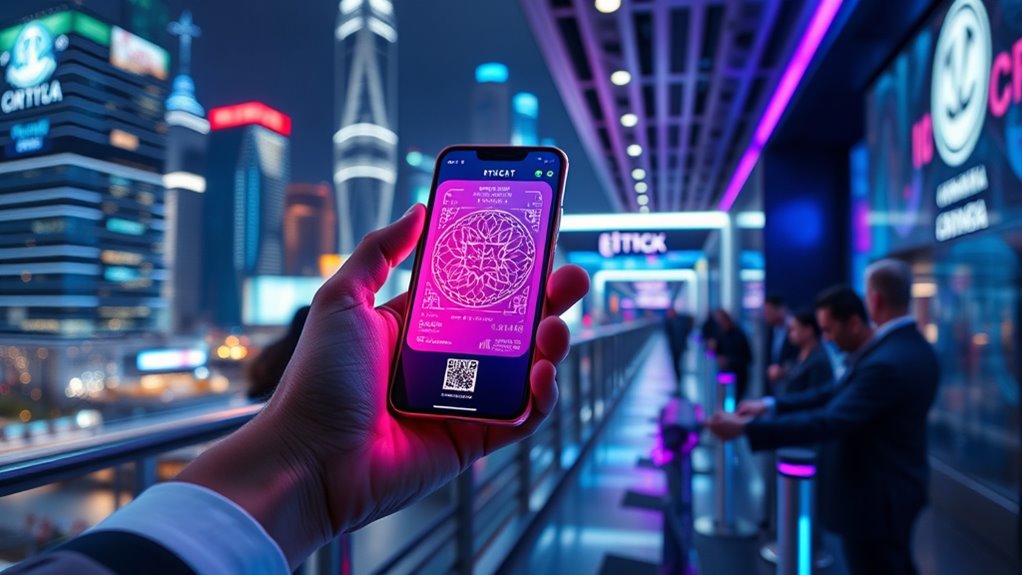

NFTs go far beyond art, offering practical solutions like secure event tickets that prevent counterfeiting and enable easy transfers. They also serve as digital identities, verifying your personal or professional credentials with transparency and security. These versatile assets support real estate, memberships, and access rights, transforming how we prove ownership and authenticity. If you explore further, you’ll discover even more innovative ways NFTs are shaping industries and everyday life.

Get hardware and tech essentials delivered free — and shop member deals
- Fast, free delivery on millions of items
- Access to Prime Big Deal Days deals on October 6–7
- Prime Video, Amazon Music and more included
Key Takeaways
- NFTs can serve as digital tickets for events, providing secure, tamper-proof access validation.
- They enable verified digital identities, ensuring secure and transparent personal authentication.
- NFTs manage ownership and provenance of digital or physical assets beyond art, such as luxury goods.
- They facilitate licensing, certification, and proof of authenticity in industries like education and healthcare.
- NFTs support virtual memberships and access rights within online communities and platforms.
Non-fungible tokens (NFTs) have moved beyond digital art and collectibles, finding practical applications across various industries. One of the most exciting developments is how NFTs are transforming the concept of digital collectibles. Unlike traditional digital files, these tokens prove ownership and authenticity, giving you a way to buy, sell, and trade unique items securely. For example, digital collectibles can range from rare in-game items to limited-edition virtual merchandise. When you own an NFT representing a digital collectible, you hold a verifiable proof of ownership that’s stored on the blockchain, making it impossible to counterfeit or duplicate. This opens up new revenue streams for creators and investors alike, as digital collectibles become highly sought-after assets.
Another fascinating use case involves virtual land, a form of digital real estate within metaverse platforms. Virtual land NFTs allow you to buy, sell, or develop parcels in digital worlds like Decentraland or The Sandbox. When you acquire virtual land as an NFT, you’re fundamentally purchasing a unique plot in a shared online universe, which you can customize or monetize. These land parcels are secured on the blockchain, giving you full ownership rights and the ability to transfer or lease them with confidence. Virtual land NFTs facilitate virtual events, storefronts, or even entire communities, blending entertainment, commerce, and social interaction. As the metaverse continues to grow, owning virtual land becomes a strategic investment — a digital asset you can develop, rent out, or trade for profit.
Additionally, space for organization in managing digital assets is crucial, and NFTs provide a structured way to keep track of ownership and provenance, especially as these assets increase in complexity and value.
Frequently Asked Questions
How Secure Are NFTS for Sensitive Personal Data?
NFTs aren’t very secure for sensitive personal data because of privacy concerns and encryption challenges. You might think they provide strong protection, but blockchain transparency can expose details unless you use additional privacy measures. Without proper encryption, your personal info could be vulnerable to hacking or unauthorized access. So, it’s best to avoid storing highly sensitive data directly on NFTs unless advanced privacy solutions are in place.
Can NFTS Be Easily Transferred Across Different Blockchain Platforms?
Think of NFTs as travelers with passports, enthusiastic to explore new borders. Transferring them across blockchain platforms isn’t always smooth sailing due to interoperability challenges and cross-chain compatibility issues. You might find your NFT stuck at the gate, needing bridges or specialized tools to cross over. While some platforms are working to streamline this, expect a few hurdles on the journey, making cross-platform transfers a bit of a digital adventure.
What Are the Environmental Impacts of NFT Transactions?
NFT transactions can markedly impact the environment due to high energy consumption and increased carbon footprint, especially on proof-of-work blockchains. When you buy or sell NFTs, it often requires energy-intensive mining processes that contribute to greenhouse gas emissions. To reduce this impact, consider platforms using eco-friendly consensus mechanisms like proof-of-stake, which consume less energy and have a smaller carbon footprint.
How Do NFT Scams and Frauds Operate in Real-World Applications?
Like wolves in sheep’s clothing, NFT scams and frauds lurk in the digital shadows. You might fall for fraudulent minting schemes or buy from scam marketplaces that mimic legitimate platforms. These frauds often involve fake listings, stolen identities, or fake NFTs, tricking you into losing money or personal data. Stay vigilant by verifying sources, avoiding suspicious links, and researching marketplaces before making transactions.
Are There Legal Regulations Governing Nft-Based Identity Verification?
Yes, there are legal regulations governing NFT-based identity verification. You need to guarantee legal compliance with privacy standards like GDPR or CCPA, which protect user data. Regulations vary by jurisdiction, so you should stay updated on local laws. Implement strong security measures to safeguard personal information, and obtain clear user consent. Staying compliant helps prevent legal issues and builds trust with users relying on your NFT-based identity solutions.
Conclusion
As you explore the many ways NFTs are transforming everyday life, it’s clear they’re more than just digital art. From secure tickets to verifiable identities, their potential is vast. Imagine a world where your digital assets streamline your experiences and protect your interests. So, aren’t you curious to see how these innovative use cases will shape the future? Embracing NFTs now could put you ahead in this exciting digital evolution.
Fall Picks
fall essentials
As an affiliate, we earn on qualifying purchases.