When considering Wi-Fi 6E mesh systems, it’s important to know that the 6GHz band offers faster, less congested connections, but only if your devices support it. Many older gadgets still rely on 2.4GHz or 5GHz, which means you’ll miss out on the full benefits. Interference mitigation features help maintain stable connections, but compatibility is key. To truly understand what your network can do, you’ll want to learn more about the latest device support and tech advancements.

Get hardware and tech essentials delivered free — and shop member deals
- Fast, free delivery on millions of items
- Access to Prime Big Deal Days deals on October 6–7
- Prime Video, Amazon Music and more included
Key Takeaways
- The 6GHz band offers less congestion, but many devices still lack Wi-Fi 6E support, limiting immediate benefits.
- Wi-Fi 6E Mesh systems provide higher speeds and stability, especially when devices are compatible with the 6GHz spectrum.
- Compatibility issues mean older gadgets will connect via 2.4GHz or 5GHz, not fully utilizing the 6GHz band.
- Interference mitigation technologies like OFDMA and Target Wake Time enhance connection reliability across devices.
- Choosing a Wi-Fi 6E-compatible system ensures future-proofing and maximizes the advantages of the 6GHz spectrum.
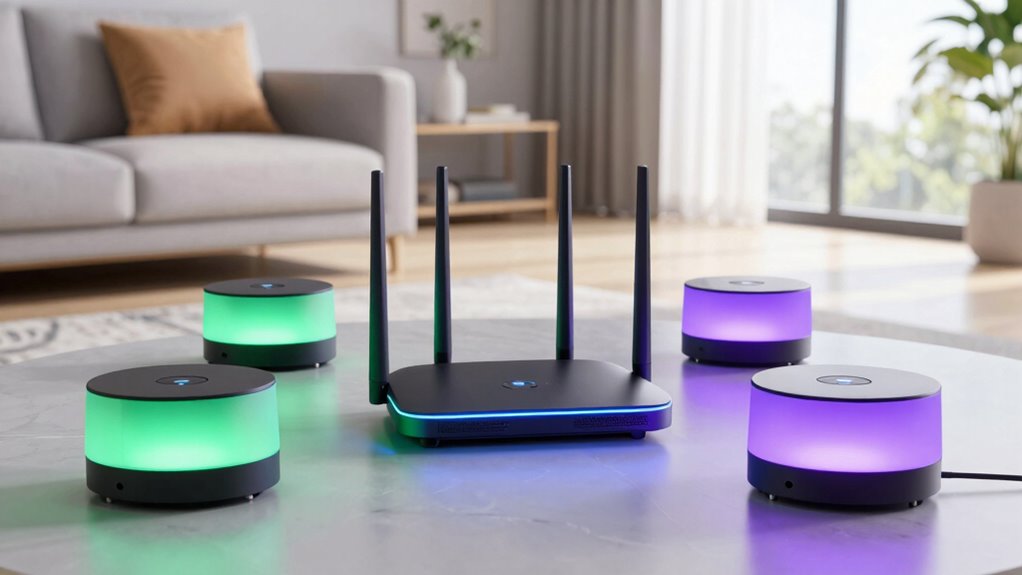
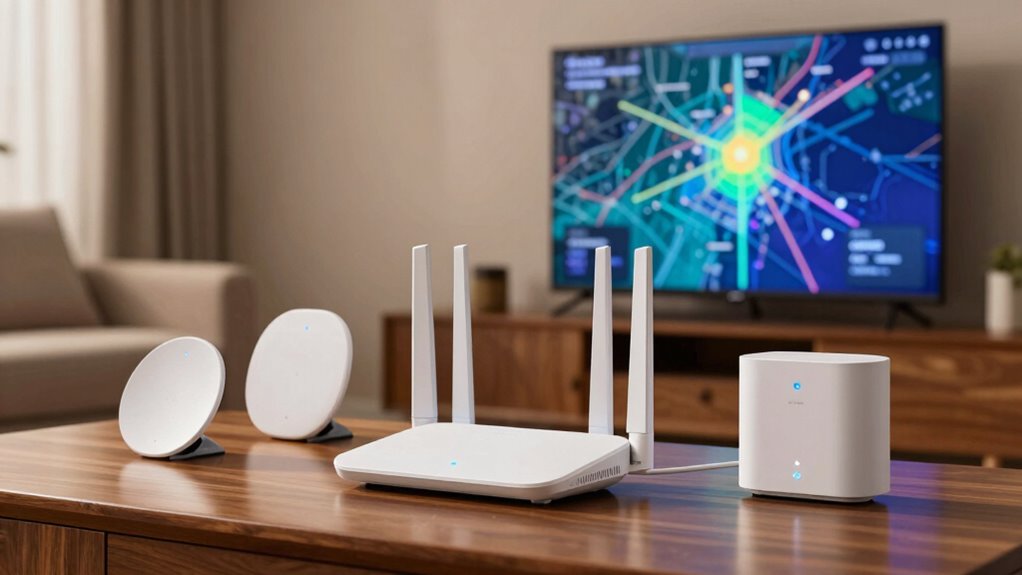
Wi‑Fi 6E Mesh is revolutionizing home and business networks by providing faster, more reliable internet connections. With the addition of the 6GHz band, you get a less congested spectrum, which translates to smoother streaming, quicker downloads, and more stable connections overall. However, before you invest, it’s vital to understand how Wi-Fi 6E Mesh handles interference mitigation and device compatibility, as these factors directly impact your experience.
Interference mitigation is a key advantage of Wi-Fi 6E Mesh systems. The 6GHz band offers a new, wider spectrum that’s less crowded than the traditional 2.4GHz and 5GHz bands. This means fewer devices competing for the same space, resulting in less signal interference and reduced latency. But it’s not just about having a new band; Wi-Fi 6E incorporates advanced technologies like Orthogonal Frequency Division Multiple Access (OFDMA) and Target Wake Time (TWT) that help manage interference more efficiently. These features allow your devices to communicate more effectively, even in environments with many connected gadgets, by scheduling data transmissions to avoid overlaps. As a result, you experience fewer dropouts and more consistent performance.
Device compatibility is another vital aspect to consider. Not all devices can connect seamlessly to the 6GHz band yet. Older smartphones, tablets, and laptops may only support Wi-Fi 5 or earlier standards, meaning they’ll stick to the 2.4GHz or 5GHz bands. This isn’t necessarily a drawback but highlights the importance of checking your current device lineup. Many new devices released in the past year are Wi-Fi 6E compatible, ensuring they can take full advantage of the 6GHz spectrum. To maximize your investment, you’ll want to verify your most-used devices support Wi-Fi 6E. Some systems also come with backward compatibility, allowing older gadgets to connect without issues, though they won’t benefit from the 6GHz spectrum’s advantages.
Furthermore, understanding wireless interference mitigation can help you optimize your network for peak performance. In essence, Wi-Fi 6E Mesh systems are designed to deliver a more stable, high-speed connection by mitigating interference and maximizing device compatibility where possible. The technology is ready to handle the growing number of connected devices in your home or business, but your experience will depend on whether your devices are compatible with the new band. When choosing a system, prioritize models that support Wi-Fi 6E and check your device specs to guarantee you’re not left behind. By doing so, you’ll enjoy the full benefits of the 6GHz spectrum—faster speeds, less interference, and a future-proof network that’s prepared for the evolving digital landscape.
As an affiliate, we earn on qualifying purchases.
Frequently Asked Questions
Will My Existing Devices Work Seamlessly With Wi-Fi 6E Mesh?
Your existing devices may not work seamlessly with Wi-Fi 6E mesh unless they support the new 6GHz band and device compatibility. You might need firmware updates for your devices to guarantee compatibility, especially for older models. Check with your device manufacturers and the router’s specifications. Keep firmware updated, and consider upgrading your devices if they don’t support Wi-Fi 6E features for peak performance.
How Does Wi-Fi 6E Impact My Device’s Battery Life?
Think of Wi-Fi 6E as a double-edged sword—while it offers faster speeds, it can cause your device’s battery drain to increase if not managed properly. However, with power optimization features, you can minimize this impact. Your device adapts intelligently, conserving energy during idle periods and optimizing connections. So, yes, Wi-Fi 6E might impact battery life, but smart settings help keep your device running longer.
Are There Security Concerns Specific to Wi-Fi 6E Mesh Networks?
Yes, there are security concerns specific to Wi-Fi 6E mesh networks. You need to guarantee your network uses strong encryption, like WPA3, to protect your data. Also, check device compatibility, as older devices may not support the latest security protocols, potentially creating vulnerabilities. Regularly update your firmware and settings to stay ahead of threats, and consider using a separate network for guests to enhance security.
Is Wi-Fi 6E Mesh Suitable for Outdoor or Large-Area Coverage?
Did you know Wi-Fi 6E mesh can cover up to 3,000 square feet per device? It’s highly suitable for outdoor coverage and large-area connectivity, making it ideal for sprawling yards, outdoor events, or extensive commercial spaces. You’ll enjoy fast, reliable internet across vast areas, thanks to the 6GHz band’s higher capacity. Just guarantee your mesh nodes are strategically placed to maximize outdoor coverage and prevent dead zones.
What Are the Cost Differences Between Wi-Fi 6E and Older Mesh Systems?
You’ll find Wi-Fi 6E mesh systems tend to be more expensive than older models. The pricing comparison shows higher upfront costs due to advanced technology and broader capabilities. Additionally, installation costs may be higher because of the need for compatible hardware and potential setup complexity. However, you gain faster speeds and better performance, especially on the 6GHz band, which can justify the extra investment for demanding or large-area coverage.
As an affiliate, we earn on qualifying purchases.
Conclusion
So, before you jump in, remember there’s more to Wi‑Fi 6E Mesh than meets the eye. The 6GHz band promises faster speeds and less interference, but what about the hidden challenges? Will your setup truly deliver on these promises, or is there a catch lurking in the background? The truth remains just out of reach—until you decide to explore further. Are you ready to uncover what’s really behind the 6GHz curtain? The choice is yours.
As an affiliate, we earn on qualifying purchases.
As an affiliate, we earn on qualifying purchases.
Fall Picks
fall essentials
As an affiliate, we earn on qualifying purchases.