TL;DR

Get hardware and tech essentials delivered free — and shop member deals
- Fast, free delivery on millions of items
- Access to Prime Big Deal Days deals on October 6–7
- Prime Video, Amazon Music and more included
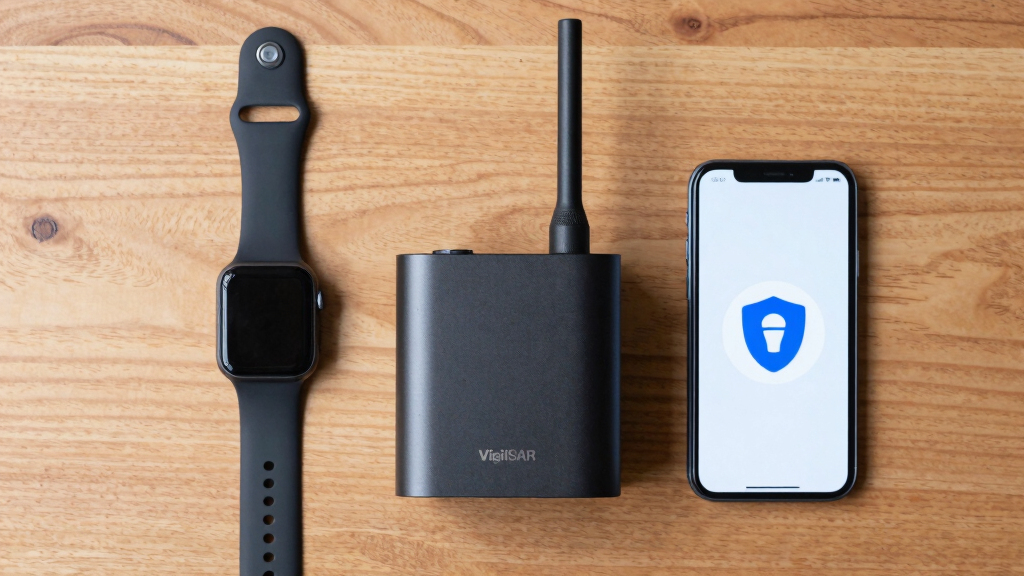
Thorsten Meyer AI’s Built in Public series has profiled VigilSAR, a SAR-based intelligence, surveillance and reconnaissance platform focused on finding objects visible in radar imagery but absent from AIS or ADS-B feeds. The confirmed basis is use of public Sentinel-1/Copernicus radar data; claims around commercial constellations and air-gapped deployment remain stated positioning rather than independently verified capability.
Thorsten Meyer AI has published a report on VigilSAR, describing it as a synthetic-aperture radar intelligence platform designed to spot objects that appear in satellite radar imagery but are not matched by vessel or aircraft transponder data, a capability aimed at maritime awareness, defense monitoring and other ISR use cases.
The report says VigilSAR uses synthetic-aperture radar, or SAR, to detect and classify objects in radar imagery, then fuses those detections with public signals such as AIS vessel broadcasts, ADS-B aircraft data and open-source information. The core idea is subtraction: account for every object with a known transponder, then flag what remains.
The confirmed technical foundation cited in the report is Sentinel-1/Copernicus, the European Space Agency’s free public SAR data source. That matters because it gives the concept a checkable base: developers, analysts and researchers can build and test workflows on the same open radar data without relying only on private claims.
Other parts of the positioning are less settled. The source material says references to commercial SAR constellations and air-gapped or sovereign deployment should be read as product positioning or roadmap language, not as independently demonstrated or contracted capability. It also says no public pricing is available; VigilSAR is presented through a request-briefing sales motion rather than a self-serve plan.
VigilSAR — the object that isn’t transmitting
Radar sees through cloud and darkness, when cameras can’t. Fuse it with transponder data and the signal is the one detection no transponder explains.
Independent commentary on public positioning, produced with AI assistance under human editorial oversight. The views are the author’s own and may change. This does not verify or endorse VigilSAR’s capabilities, contracts, or performance. Capabilities on Sentinel-1 / Copernicus reflect a free, public data foundation; commercial-constellation and air-gapped-deployment references reflect stated positioning, not independently demonstrated fact. ISR and related technologies may be subject to export controls and dual-use regulations — lawful, ethical use is solely the operator’s responsibility. Nothing here is an offer, pricing, or operational/safety/legal advice. AI detection and classification can err and require human verification. Product and company names are trademarks of their respective owners; mention does not imply endorsement.
Dark Targets Drive Radar Demand
The issue VigilSAR targets is a practical one for governments, insurers, port authorities and security teams: many high-value monitoring problems occur when cameras are least reliable. Optical satellites need daylight and clear conditions, while SAR can collect imagery at night and through cloud, smoke or weather.
That makes radar fusion especially relevant in maritime monitoring. A vessel that appears in SAR imagery while broadcasting no AIS signal can indicate several possibilities, including lawful equipment failure, a vessel in distress, illegal fishing, sanctions evasion or deliberate concealment. The report does not claim VigilSAR proves intent; it frames the unmatched detection as a signal for human review.
The distinction is material. Automated detection can reduce the search area for analysts, but classification errors and incomplete transponder data can produce false positives. The source material states that AI detection and classification can err and require human verification.
satellite radar imagery analysis tools
As an affiliate, we earn on qualifying purchases.
As an affiliate, we earn on qualifying purchases.
Sentinel-1 Anchors The Claim
SAR imagery is not a conventional photograph. A radar sensor sends microwave signals toward the surface and records the return, producing an image based on how objects scatter radar energy. That gives SAR its all-weather, day-night advantage, but it also makes interpretation harder than reading a standard optical image.
The report places VigilSAR in Thorsten Meyer AI’s broader Defense / Intel product family and describes it as Day 16 in a 19-part Built in Public series. It frames the product around four ideas: local-first deployment, provider-agnostic data fusion, standard detect-then-classify methods and what it calls editing by subtraction.
The source also includes several limits around verification. It says the analysis is independent commentary on public positioning, produced with AI assistance under human editorial oversight, and does not verify or endorse VigilSAR’s contracts, performance or operational readiness.
“Radar sees through cloud and darkness, when cameras can’t.”
— Thorsten Meyer AI report
As an affiliate, we earn on qualifying purchases.
Performance Claims Still Need Proof
It is not yet clear from the source material whether VigilSAR has paying defense customers, operational deployments, published accuracy benchmarks or contracts with commercial SAR providers. The report does not provide test results, procurement records, customer names or independent evaluations.
Pricing is also undisclosed. The report says the product is sold through a request-briefing process, which is common in defense and intelligence markets, but leaves readers without public information about cost, service levels or deployment timelines.
Several operational questions remain open: how often the system can refresh detections, how it handles crowded waters, how false alarms are reviewed, and what legal controls apply when the platform is used for defense, border or sanctions-related monitoring.
As an affiliate, we earn on qualifying purchases.
Briefings And Verification Follow
The next step for prospective users would be a direct briefing, since the report says VigilSAR does not publish a self-serve pricing plan. Buyers would likely seek proof of detection accuracy, supported data sources, deployment options, audit controls and compliance with export-control or dual-use rules.
For readers tracking the Built in Public series, the report positions VigilSAR as part of a larger operator portfolio rather than a standalone launch with verified performance metrics. Independent validation, public benchmarks or named deployments would be the key developments to watch.
synthetic aperture radar (SAR) equipment
As an affiliate, we earn on qualifying purchases.
As an affiliate, we earn on qualifying purchases.
Key Questions
What is the actual news development?
Thorsten Meyer AI published a Built in Public report profiling VigilSAR as a SAR-based ISR platform that flags radar detections without matching AIS or ADS-B transponder signals.
What is confirmed about VigilSAR?
The report identifies Sentinel-1/Copernicus public radar data as the demonstrable technical foundation. It also confirms that no public pricing is provided in the source material.
What remains unverified?
The source does not independently verify commercial constellation access, air-gapped deployment, customer contracts, operational performance or accuracy benchmarks.
Why does a missing transponder matter?
A radar-visible object with no matching transponder can warrant human review because it may reflect equipment failure, distress, illegal activity or deliberate concealment. The detection alone does not prove intent.
Is this financial or operational advice?
No. The report is a news-style account of public product positioning. ISR systems can be subject to export controls, dual-use rules and human verification requirements.
Source: Thorsten Meyer AI
Fall Picks
fall essentials
As an affiliate, we earn on qualifying purchases.