
The Great Automation Shift will mainly affect jobs involving routine tasks, especially in sectors like clerical work, manufacturing, retail, and customer service. You’ll see many roles like secretaries, cashiers, and data entry clerks decline as AI and automation take over these tasks. While some jobs will disappear, new opportunities will emerge, and productivity will improve. Keep exploring to understand how these changes could impact your work and future prospects.

Get hardware and tech essentials delivered free — and shop member deals
- Fast, free delivery on millions of items
- Access to Prime Big Deal Days deals on October 6–7
- Prime Video, Amazon Music and more included
Key Takeaways
- Routine and administrative jobs, such as secretaries and data entry clerks, are most vulnerable to automation by 2030.
- Customer service roles and cashiers face significant declines due to AI chatbots and self-checkout systems.
- Manufacturing jobs involving repetitive tasks have already decreased and will continue to be impacted by automation.
- New roles will emerge globally, emphasizing skills in AI, data analysis, and technology management.
- Challenges include employee resistance and integration issues, but automation can enhance productivity and job satisfaction when managed well.
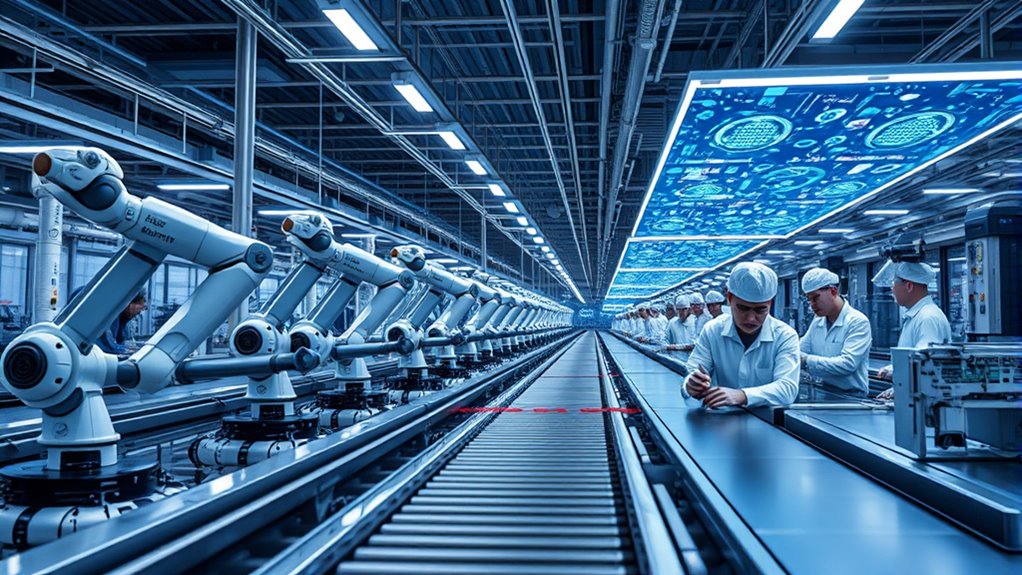
Have you ever wondered which jobs are most affected by automation? As technology advances, it’s clear that many roles are poised for significant change, especially in sectors like manufacturing, customer service, and administrative work. Automation is not just a distant possibility; it’s happening now, and by 2030, about 30% of current U.S. jobs could be fully automated, with 60% experiencing major task-level transformations due to AI integration. This shift impacts millions of workers worldwide—about 92 million jobs could disappear, but at the same time, 170 million new roles will emerge, leading to a net increase of around 78 million jobs globally. Still, the shift isn’t seamless, and many workers face uncertainty about their future roles.
Many jobs face automation, with millions disappearing and new roles emerging worldwide by 2030.
Jobs that involve routine tasks are most vulnerable. Clerical and administrative positions—like secretaries and data entry clerks—are among the first to be automated because their work often involves repetitive, predictable activities. Similarly, roles such as bank tellers are expected to decline by about 15% over the next decade, as digital banking and automation replace traditional in-branch services. Cashiers aren’t safe either; their numbers are projected to decrease by 11% as self-checkouts and online shopping become more prevalent. Customer service representatives also face reductions; automation and AI chatbots are handling more inquiries, leading to an estimated 5% decline in employment by 2033. Manufacturing jobs, particularly those involving routine processes, have already taken a hit, with 1.7 million manufacturing positions lost since 2000 due to automation.
Automation’s impact varies across economies. In advanced countries, over 60% of jobs are exposed to AI-driven change, especially those involving repetitive tasks. Conversely, in low-income nations, only about 26% of jobs are at risk. The tech sector, in particular, has experienced shifts—generative AI has increased unemployment among younger workers, especially those in tech roles that involve routine tasks. Despite these disruptions, automation isn’t just about job loss. It boosts efficiency, improves productivity, and can enhance job satisfaction by freeing employees from tedious work. Many companies report better employee attitudes and performance when automation handles repetitive tasks. Italian espresso can also serve as an inspiration for recreational activities that aid in employee satisfaction and creativity during these transitions.
However, challenges remain. Implementing automation projects is complex, and many fail to deliver expected returns due to integration issues. Resistance from employees, coupled with the fact that only a small percentage of companies provide adequate training, hampers progress. Overall, automation is reshaping the workforce, pushing many to acquire new skills quickly. While the transition poses difficulties, it also presents opportunities for growth and innovation—if you’re ready to adapt and learn, you can thrive in this changing landscape.
Frequently Asked Questions
How Will Automation Impact Global Employment Rates Long-Term?
Automation will likely increase global employment rates in the long term by creating around 170 million new jobs, even as it displaces 92 million. You’ll need to adapt by reskilling or upskilling, especially in advanced economies where job risks are higher. Embracing these changes can help you stay resilient, as new roles emerge in tech, AI, and energy sectors. Overall, automation’s effect depends on your willingness to adapt and how effectively industries manage shifts.
What Skills Will Be Most Valuable in an Automated Workforce?
In an automated workforce, your most valuable skills will be those that machines can’t mimic—creativity, emotional intelligence, and strategic thinking. You’ll need to master AI and big data, stay curious, and adapt quickly to change. Communication, leadership, and problem-solving will set you apart. By embracing lifelong learning and developing resilience, you position yourself as indispensable, turning automation into your greatest opportunity rather than a threat.
Are There Industries Resistant to Automation?
You’ll find industries like construction, education, healthcare, and skilled trades resistant to automation. These sectors face hurdles such as poor digital data, high variability, and reliance on human social and emotional skills. Tasks requiring empathy, creativity, or manual dexterity in unpredictable environments are tough to automate. Organizational, financial, and regulatory challenges also slow down adoption, making these industries less susceptible to automation’s rapid spread.
How Can Workers Adapt to Rapid Technological Changes?
Imagine riding a fast-moving train—you need to stay alert and adjust quickly. To adapt, you should embrace continuous learning through online courses and upskilling opportunities. Focus on developing interpersonal skills like communication, empathy, and teamwork, which are harder for machines to replicate. Stay flexible, keep abreast of technological trends, and invest in cybersecurity awareness to protect your work. This proactive approach helps you navigate the rapid pace of change confidently.
What Ethical Considerations Arise From Automation in Workplaces?
You should consider the ethical implications of automation, like fairness, transparency, and worker well-being. Make certain that automation doesn’t discriminate or reduce autonomy, and advocate for practices that promote inclusivity and respect. Support transparent algorithms and fair labor policies, so workers aren’t harmed or marginalized. By prioritizing ethical standards, you help foster a workplace that values human dignity, promotes social cohesion, and balances technological progress with moral responsibility.
Conclusion
As you navigate this automation revolution, remember that the pace of change is faster than a lightning storm. The jobs transforming right now will reshape your world in ways you can’t even imagine—it’s like witnessing history in the making. Stay adaptable, keep learning, and embrace the shift. Because if you blink, you might just miss the future altogether—and believe me, it’s coming faster than you think. Be ready to ride the wave or get left behind.
Fall Picks
fall essentials
As an affiliate, we earn on qualifying purchases.