
TL;DR
Thorsten Meyer AI reports that the old rule that DIY AI workstations are cheaper no longer holds in every case in 2026. Component shortages have pushed up prices for GPUs, DDR5 RAM and SSDs, while some prebuilt vendors may benefit from bulk purchasing, burn-in testing and warranty support.
Thorsten Meyer AI says the cost case for building an AI workstation has changed in 2026, with component shortages pushing some DIY systems above prebuilt alternatives and forcing buyers to compare exact configurations before choosing how to acquire a local AI machine.
The guide says the long-running assumption that building a workstation is always cheaper has weakened because the AI hardware boom has raised prices for the same parts used in local AI rigs, including GPUs, DDR5 memory and SSDs. According to the source material, a build that previously came in under $1,000 can now cost $1,250 or more before an operating system license.
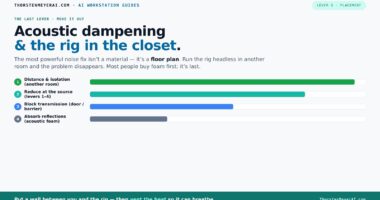
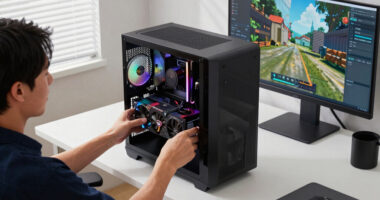
Thorsten Meyer AI frames the decision around sustained load, heat and noise. A DIY builder must handle GPU undervolting, cooler selection, case airflow, fan tuning and physical placement. A prebuilt buyer pays a vendor to handle some or all of that thermal work before the machine ships.
The article identifies Puget Systems, BIZON and Lambda as AI-workstation vendors focused on validated systems, while describing the Mac Studio as a quiet prebuilt option for buyers who do not want to manage tower thermals. The source says some vendors run 24 to 48 hours of burn-in testing under GPU load and may offer water-cooling, tuned fan curves and longer warranty coverage.
Why It Matters
The shift matters for readers because local AI workstations are expensive, power-hungry systems that often run under sustained GPU load. The wrong buying decision can mean higher upfront cost, more heat, more noise, added troubleshooting time or weaker warranty support.
For buyers with a tight budget, DIY may still offer control over every part and a path to learning the system. For buyers who need a machine ready for inference or training with less setup work, a prebuilt system may reduce thermal and support risk. The main change is that price alone no longer settles the decision.

WIWB Gaming PC Desktop Core I9-14900HX, RTX 5060 Ti 8G, 1TB NVME SSD
- Powerful Processor: Intel Core i9-14900HX with 24 Cores
- High-Performance Graphics: GeForce RTX 5060 Ti 8GB GDDR7
- Fast Memory & Storage: 16GB DDR5 RAM, 1TB NVMe SSD
As an affiliate, we earn on qualifying purchases.
As an affiliate, we earn on qualifying purchases.
Background
For years, the usual tradeoff was simple: build to save money, buy prebuilt to save time. Thorsten Meyer AI says that pattern has been disrupted by AI-related demand for high-end components and by vendor bulk purchasing that can make some prebuilt systems hard to match part by part.
The guide is positioned as a companion to the site’s broader AI workstation coverage, including advice on reducing heat and noise in high-power GPU towers and a separate comparison of Mac systems and GPU towers for local large language models.
“Building is no longer automatically cheaper.”
— Thorsten Meyer AI
“You can no longer assume DIY is the bargain.”
— Thorsten Meyer AI
“The build-vs-buy question is really: do you pull those levers, or does the vendor?”
— Thorsten Meyer AI
“up to 30% lower noise and temperature”
— Thorsten Meyer AI, citing BIZON marketing claims

Kinupute Mini PC AI Server, AI Computing Workstation, AI MAX+ 395(126TOPS,16C/32T), Win-11 Pro, Radeon 8060S GPU, 128G LPDDR5X-8400, 8T M.2 SSD, 10G+2.5G LAN, Quad Screen, 4xM.2 PCIe 4.0 Slots, WiFi 7
- High-Performance AI Workstation: 16 cores, 32 threads, up to 5.1 GHz
- Powerful AI Acceleration: 126 TOPS total, 50+ TOPS NPU
- Integrated Radeon 8060S GPU: RDNA 3.5, 40 CUs, close to RTX 4060/4070
As an affiliate, we earn on qualifying purchases.
As an affiliate, we earn on qualifying purchases.
What Remains Unclear
Exact prices remain unclear because component costs and vendor quotes change quickly. The source material does not provide a full bill of materials for the $1,250 estimate, and vendor claims about noise, temperature and burn-in testing are not independently verified in the provided text.
It is also unclear which buyer profiles will see a prebuilt system beat DIY on price. The answer depends on GPU choice, memory capacity, storage, warranty terms, cooling, operating system costs and local availability.
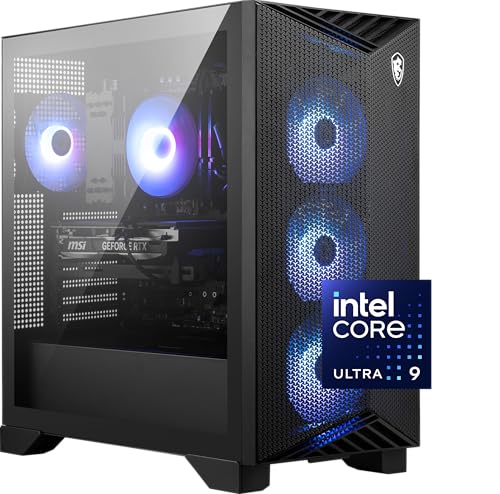
msi Aegis R2 AI Gaming Desktop: Intel Core Ultra 9 285, Geforce RTX 5070Ti, 32GB DDR5, 2TB M.2 NVMe SSD, Air Cooling, USB Type C, VR-Ready, Window 11 Home: C2NVR9-1452US
- Processor: Intel Core Ultra 9 285
- Design: Sleek, simple design
- Operating System: Windows 11 Home
As an affiliate, we earn on qualifying purchases.
As an affiliate, we earn on qualifying purchases.
What’s Next
Buyers comparing options should price a specific DIY parts list against quotes from prebuilt workstation vendors, then compare warranty coverage, burn-in testing, cooling design, expected noise under load and support terms before ordering.
As an affiliate, we earn on qualifying purchases.
Key Questions
Is building an AI workstation still cheaper in 2026?
Sometimes, but Thorsten Meyer AI says it is no longer safe to assume that. GPU, memory and SSD prices have risen, while some vendors may have better component pricing through bulk purchases.
Why would a prebuilt AI workstation cost less than DIY?
The source material says some manufacturers bought parts in volume before price spikes. That can let them offer complete systems at prices that may be difficult for an individual buyer to match part by part.
What does a prebuilt vendor handle that a DIY builder must manage?
According to Thorsten Meyer AI, serious vendors may validate thermals, run GPU burn-in tests, tune fan curves, offer water-cooling and provide system-level warranty support.
Who should still build their own AI workstation?
DIY may fit buyers who want full control over parts, enjoy tuning hardware, need to stretch a fixed budget or want to understand how the system handles heat, airflow and noise.
Who should buy a prebuilt AI workstation?
A prebuilt system may fit buyers who need a machine running quickly, want factory validation, prefer one support contact and are willing to pay for reduced setup and thermal-tuning work.
Source: Thorsten Meyer AI