
TL;DR

Get hardware and tech essentials delivered free with Prime
- Fast, free delivery on millions of items
- Prime Video, Amazon Music and more included
- Member-only deals all year
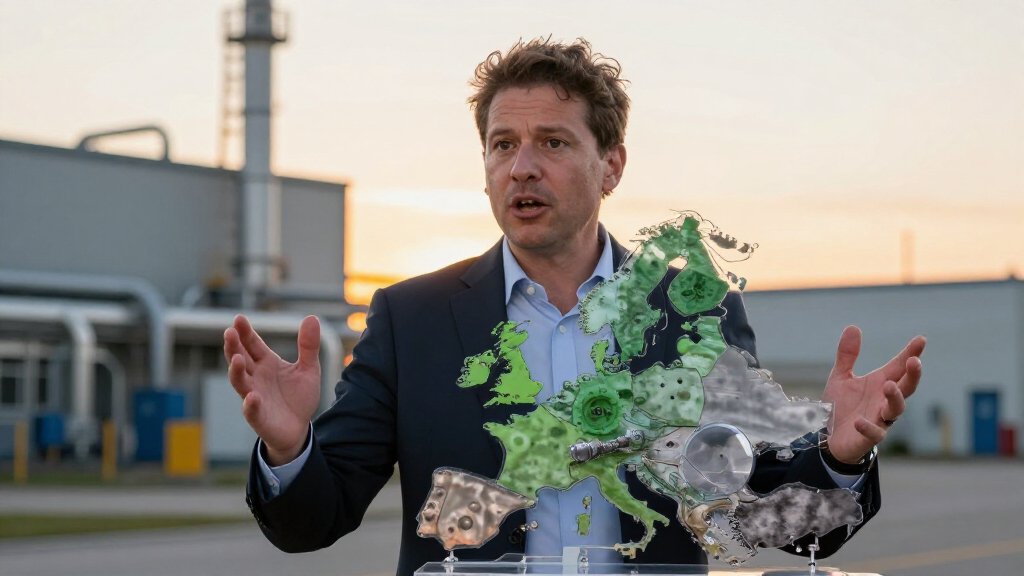
EU Commissioner Hoekstra officially launched Europe’s largest carbon capture and storage project at Yara Sluiskil, Netherlands. The development marks a significant step in Europe’s climate strategy, with officials emphasizing its potential impact.
European Commissioner for Environment, Climate and Communications, Hoekstra, announced the official launch of Europe’s largest carbon capture and storage (CCS) project at Yara Sluiskil in the Netherlands. For more details, see the Keynote Speech By Commissioner Hoekstra. The project aims to significantly reduce industrial CO2 emissions and marks a major milestone in Europe’s climate policy efforts.
The project, which is now operational, involves capturing CO2 emissions from Yara’s fertilizer production facility and storing them underground in geological formations. Commissioner Hoekstra described it as a ‘pioneering step’ towards achieving Europe’s climate targets, emphasizing its potential to serve as a model for future industrial decarbonization efforts.
According to the EU Commission, this CCS initiative is the largest of its kind in Europe, capable of capturing several hundred thousand tons of CO2 annually. The project received funding from the European Union and national governments, reflecting a shared commitment to climate change mitigation. Hoekstra highlighted that the project aligns with the EU’s broader climate strategy, including the Fit for 55 package aiming to cut emissions by 55% by 2030.
Implications of the Largest CCS Deployment in Europe
This project signifies a major advancement in Europe’s efforts to reduce industrial emissions, which are among the largest sources of greenhouse gases. Its successful implementation could accelerate the adoption of CCS technology across other sectors and regions, helping Europe meet its climate targets. The project also demonstrates political and financial commitment at both EU and national levels, signaling a shift towards more ambitious climate action.
However, critics and environmental groups have raised concerns about the long-term safety, economic viability, and scalability of CCS technology. While the project is a step forward, its actual impact on Europe’s overall emission reductions remains to be fully assessed.
Products Worth Considering

LG UltraGear 32GX870A-B 32-inch 4K OLED Gaming Monitor

LG UltraGear 32GX850A-B 32-inch 4K UHD OLED Gaming Monitor

Logitech MX Mechanical Full-Size Wireless Mechanical Keyboard, Tactile Quiet Switches, Backlit Keys, Bluetooth, USB-C, Multi-Device, Graphit
As an affiliate, we earn on qualifying purchases.
European Climate Policy and CCS Development Timeline
Carbon capture and storage has been part of Europe’s climate strategy for over a decade, with pilot projects and smaller-scale deployments. The recent surge in interest stems from increasing pressure to meet the 2030 climate goals and reduce reliance on fossil fuels. The EU has allocated funding for CCS research and development, but large-scale projects have faced delays and skepticism regarding their economic and environmental sustainability.
The Yara Sluiskil project is positioned as a flagship initiative, reflecting a broader trend of deploying CCS in heavy industry, especially in sectors like cement, steel, and fertilizer manufacturing. This development follows several policy announcements aimed at incentivizing industrial decarbonization, though concrete operational projects have been limited until now.
Uncertainties About Long-Term Impact and Scalability
It is not yet clear how effectively the project will reduce overall emissions in practice, or whether the technology will be economically sustainable at a larger scale. Critics question the long-term safety of underground storage and potential environmental risks. Additionally, the project’s scalability across other industries and regions remains uncertain, with ongoing debates about cost-effectiveness and policy support.
Next Steps for Monitoring and Expanding CCS Efforts
Authorities will monitor the project’s operational performance and environmental impact over the coming months. Further investments and policy measures are expected to support the expansion of CCS technology, with evaluations scheduled to assess its effectiveness in meeting EU climate targets. Stakeholders will also watch for potential regulatory adjustments to facilitate wider deployment.
Key Questions
What is carbon capture and storage (CCS)?
CCS involves capturing CO2 emissions from industrial sources and storing them underground in geological formations to prevent their release into the atmosphere.
Why is this project significant for Europe?
It is the largest CCS project in Europe, representing a major step in decarbonizing heavy industry and helping the EU meet its climate targets.
What are the main concerns about CCS technology?
Critics raise concerns about long-term safety, environmental risks, high costs, and whether CCS can be scaled effectively across industries.
When will the project start reducing emissions?
The project is now operational, with initial CO2 capture expected to begin immediately, but full impact assessments will take months to evaluate.
What are the next steps for this initiative?
Monitoring of the project’s performance and environmental safety will continue, with plans for expansion and policy support to facilitate broader CCS deployment in Europe.
Source: primary