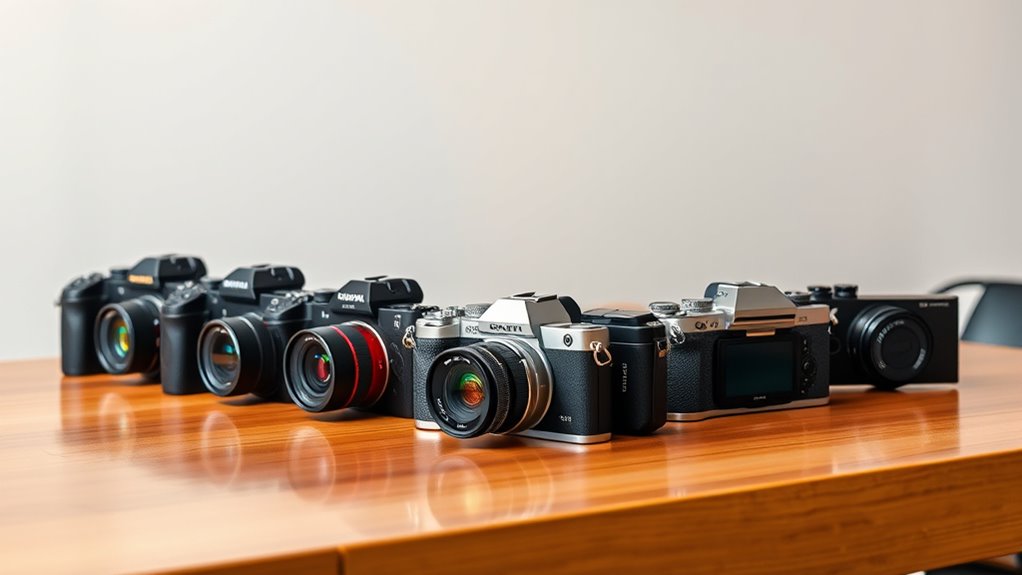

Choosing a mirrorless camera as a beginner can be overwhelming due to the variety of options and features. The Canon EOS R100 stands out as the best overall choice because of its user-friendly interface and solid image quality. For those interested in vlogging or casual shooting, the Canon EOS R50 V offers versatile video features, while the Sony Alpha a6400 provides a compact design with advanced autofocus. The main tradeoffs involve balancing ease of use, lens selection, and budget. Keep reading to see how these options compare and find the best fit for your needs.

Get hardware and tech essentials delivered free with Prime
- Fast, free delivery on millions of items
- Prime Video, Amazon Music and more included
- Member-only deals all year
Key Takeaways
- The best overall mirrorless beginner camera combines ease of use with versatile features, exemplified by the Canon EOS R100.
- Entry-level full-frame options like the EOS RP offer superior image quality but come at a higher price and complexity.
- Compact models such as the Sony a6400 excel in portability and autofocus but may lack some advanced video features.
- Vlogging-focused kits like the Canon EOS R50 V include built-in stabilization and microphones, catering to content creators.
- Price points vary widely; the most affordable options still deliver solid image quality but may lack advanced controls and lens options.
| Canon EOS R100 Mirrorless Camera with RF-S18-45mm F4.5-6.3 IS STM Lens Kit |  | Best Overall for Beginners and Content Creators | Sensor: 24.1 Megapixel APS-C CMOS | Lens: RF-S18-45mm F4.5-6.3 IS STM | Video: 4K at 24 fps, Full HD at 60 fps | VIEW ON AMAZON | See Our Full Breakdown |
| Canon EOS RP Full-Frame Mirrorless Interchangeable Lens Camera with RF24-105mm Lens Kit |  | Best for Travel and Vlogging Enthusiasts | Sensor: 24.1 Megapixel full-frame CMOS | Lens: RF24-105mm F4-7.1 IS STM | Video: 4K UHD 2160p | VIEW ON AMAZON | See Our Full Breakdown |
| Sony Alpha a6400 Mirrorless Camera with 16-50mm Lens |  | Best for Versatile Photography and Video in a Compact Body | Sensor: 20.1MP stacked back-illuminated CMOS | Lens: 16-50mm F1.8-2.8 | Video: 4K recording | VIEW ON AMAZON | See Our Full Breakdown |
| Canon EOS M50 Mirrorless Camera Kit with EF-M15-45mm Lens and 4K Video (Renewed) |  | Best Budget-Friendly Choice with Advanced Autofocus | Sensor: 24.1 MP APS-C CMOS | Video: 4K UHD 24p | Autofocus: Dual Pixel CMOS AF with Eye Detection | VIEW ON AMAZON | See Our Full Breakdown |
| Canon EOS R50 Mirrorless Camera RF-S18-45mm F4.5-6.3 IS STM Lens Kit |  | Best for Content Creators and Vloggers | Sensor: 24.2 Megapixel CMOS (APS-C) | Lens: RF-S18-45mm F4.5-6.3 IS STM | Video: 4K at 30 fps, Full HD at 120 fps | VIEW ON AMAZON | See Our Full Breakdown |
| Canon EOS R50 V Mirrorless Camera with RF-S14-30mm F4-6.3 IS STM PZ Lens, APS-C Sensor, 24.2 Megapixels, 4K Video, Vlogging Kit, Black |  | Best for Content Creators and Vloggers | Sensor Type: CMOS | Sensor Size: APS-C | Resolution: 24.2 Megapixels | VIEW ON AMAZON | See Our Full Breakdown |
| Canon EOS R50 Mirrorless Camera RF-S18-45mm F4.5-6.3 IS STM Lens Kit |  | Best Compact All-Rounder for Beginners | Sensor: 24.2 Megapixel CMOS (APS-C) | Processor: DIGIC X | Video Recording: 6K oversampled 4K at 30 fps | VIEW ON AMAZON | See Our Full Breakdown |
| mirrorless cameras for beginner | Sensor | Lens | Video | Autofocus |
|---|---|---|---|---|
| Canon EOS R100 Mirrorless Came | 24.1 Megapixel APS-C CMOS | RF-S18-45mm F4.5-6.3 IS STM | 4K at 24 fps, Full HD at 60 fps | Dual Pixel CMOS AF with face and eye detection |
| Canon EOS RP Full-Frame Mirror | 24.1 Megapixel full-frame CMOS | RF24-105mm F4-7.1 IS STM | 4K UHD 2160p | — |
| Sony Alpha a6400 Mirrorless Ca | 20.1MP stacked back-illuminated CMOS | 16-50mm F1.8-2.8 | 4K recording | Real-Time Eye AF |
| Canon EOS M50 Mirrorless Camer | 24.1 MP APS-C CMOS | EF-M15-45mm kit lens | 4K UHD 24p | Dual Pixel CMOS AF with Eye Detection |
| Canon EOS R50 Mirrorless Camer | 24.2 Megapixel CMOS (APS-C) | RF-S18-45mm F4.5-6.3 IS STM | 4K at 30 fps, Full HD at 120 fps | Dual Pixel CMOS AF II with 651 zones |
| Canon EOS R50 V Mirrorless Cam | — | RF-S14-30mm F4-6.3 IS STM PZ | — | — |
| Canon EOS R50 Mirrorless Camer | 24.2 Megapixel CMOS (APS-C) | — | — | Dual Pixel CMOS AF II |
More Details on Our Top Picks
Canon EOS R100 Mirrorless Camera with RF-S18-45mm F4.5-6.3 IS STM Lens Kit
The Canon EOS R100 stands out for its compact design combined with a high-quality 24.1MP APS-C sensor that offers crisp images, making it a strong choice for newcomers who want reliable results. Its 4K video at 24 fps and fast autofocus with face and eye detection cater well to content creators dabbling in both photography and videography. Compared to the Sony a6400, the R100’s simpler interface may appeal more to absolute beginners, though it sacrifices some advanced features like in-body stabilization. The limited lens options for RF-S mount could be a downside for those wanting future expandability. This model suits those prioritizing portability and straightforward operation, especially those starting with video content.
Pros:- Lightweight and portable for everyday use
- Excellent image clarity with 24.1MP sensor
- Versatile 4K video capabilities and fast autofocus
Cons:- Limited lens options for RF-S mount
- 4K video at only 24 fps may not suit all videographers
- F4.5-6.3 aperture range can limit low-light shooting
Best for: Beginners who want a lightweight, easy-to-use camera for photography and casual video creation
Not ideal for: Advanced hobbyists or professionals seeking extensive lens choices and low-light performance
- Sensor:24.1 Megapixel APS-C CMOS
- Lens:RF-S18-45mm F4.5-6.3 IS STM
- Video:4K at 24 fps, Full HD at 60 fps
- Autofocus:Dual Pixel CMOS AF with face and eye detection
- Continuous Shooting:Up to 6.5 fps
- Connectivity:Wi-Fi & Bluetooth
Our verdict“This camera is best for beginners wanting an easy, reliable entry into both photography and video, prioritizing portability over expandability.”
Canon EOS RP Full-Frame Mirrorless Interchangeable Lens Camera with RF24-105mm Lens Kit
The Canon EOS RP offers a full-frame sensor in a surprisingly compact package, making it ideal for travel and vlogging where image quality matters but size and weight still count. Its 24-105mm zoom lens provides versatile framing options, especially useful for varied scenes without changing lenses. While its aperture of f/4-7.1 may hinder low-light performance compared to APS-C models like the Sony a6400, it compensates with superior background separation and overall image quality. The camera’s 4K UHD video is excellent, but the need for additional software for webcam use can be a hassle. This makes the RP a smart pick for beginners ready to step into higher image quality and more flexible shooting, provided they don’t mind its slightly limited low-light ability.
Pros:- Compact size with full-frame sensor for superior image quality
- Versatile 24-105mm zoom lens with optical stabilization
- Excellent 4K video recording capabilities
Cons:- Aperture range of f/4-7.1 limits low-light performance
- Requires extra software for webcam functionality
- Price point may be high for absolute beginners
Best for: Travelers and vloggers seeking high-quality images and a portable full-frame experience
Not ideal for: Beginners on a tight budget or those wanting the easiest setup without extra software
- Sensor:24.1 Megapixel full-frame CMOS
- Lens:RF24-105mm F4-7.1 IS STM
- Video:4K UHD 2160p
- Image Stabilization:Yes
- Maximum Magnification:0.4x
- Minimum Focusing Distance:0.66 feet
Our verdict“Ideal for beginners eager to explore full-frame photography and vlogging, accepting some compromises on low-light shooting and setup complexity.”
Sony Alpha a6400 Mirrorless Camera with 16-50mm Lens
The Sony a6400 is a compact powerhouse, packing a 20.1MP stacked CMOS sensor that delivers crisp detail, along with real-time eye autofocus that excels in portraits and action shots. Its 4K video and tiltable LCD make it a favorite for vloggers who need flexibility in framing and quick, accurate autofocus. Compared to the Canon EOS M50, the a6400’s more robust autofocus system and faster continuous shooting (up to 11 fps) make it better suited for capturing fast-moving subjects. However, its APS-C sensor size, while versatile, might not produce the same depth of field as full-frame options like the EOS RP. Lack of in-body stabilization could be a downside for handheld videography. This camera is a smart choice for those who want quick performance in a small package, especially for street or action photography.
Pros:- High-quality 20.1MP sensor with excellent detail
- Fast, real-time eye autofocus and 11 fps shooting
- Tiltable LCD screen ideal for vlogging
Cons:- No in-body stabilization, affecting handheld videography
- Limited to APS-C sensor size, not full-frame
- Battery life details are unclear, which matters for extended shoots
Best for: Beginners interested in fast-paced photography and versatile vlogging capabilities
Not ideal for: Those seeking in-body stabilization or full-frame image quality for professional-level work
- Sensor:20.1MP stacked back-illuminated CMOS
- Lens:16-50mm F1.8-2.8
- Video:4K recording
- Autofocus:Real-Time Eye AF
- Continuous Shooting:Up to 11 fps
- Screen:Tiltable LCD
Our verdict“Best for beginners wanting quick autofocus and a compact form factor suited for fast action and vlogging.”
Canon EOS M50 Mirrorless Camera Kit with EF-M15-45mm Lens and 4K Video (Renewed)
The Canon EOS M50 offers a solid entry point for beginners, combining a 24.1MP APS-C sensor with 4K video recording and advanced autofocus that includes Eye Detection. Its built-in OLED EVF appeals to those who prefer composing through a viewfinder rather than LCD screens. While the kit lens provides decent flexibility, the limited lens compatibility compared to full-frame cameras can restrict future expansion. Being a renewed model, potential buyers should consider the condition and warranty aspects. Compared to the Canon EOS R100, the M50’s affordability and viewfinder make it more approachable for absolute beginners, though it trades some image quality and future-proofing.
Pros:- High-resolution 24.1 MP sensor for sharp images
- 4K UHD video recording with autofocus
- Built-in OLED EVF for comfortable composing
Cons:- Refurbished condition may affect durability
- Limited lens compatibility compared to full-frame options
- 4K video may have crop factor and rolling shutter issues
Best for: Entry-level photographers on a budget who want a versatile camera with viewfinder access
Not ideal for: Those seeking the latest tech or extensive lens options for long-term growth
- Sensor:24.1 MP APS-C CMOS
- Video:4K UHD 24p
- Autofocus:Dual Pixel CMOS AF with Eye Detection
- Viewfinder:Built-in OLED EVF
- ISO Range:100-25600
- Lens:EF-M15-45mm kit lens
Our verdict“A great budget-friendly choice for beginners wanting a balanced mix of stills and video with an electronic viewfinder.”
Canon EOS R50 Mirrorless Camera RF-S18-45mm F4.5-6.3 IS STM Lens Kit
The Canon EOS R50 combines a 24.2MP APS-C sensor with a high-speed autofocus system, making it a compelling choice for those focused on content creation. Its articulating touchscreen and built-in Wi-Fi/Bluetooth simplify vlogging and live sharing, distinguishing it from the others like the Canon EOS R100, which lacks a fully articulating screen. The 4K recording at 30 fps and fast 15 fps continuous shooting cater well to enthusiastic creators. The limited focal length of 18-45mm might restrict framing versatility, but the overall package emphasizes ease of use and connectivity. This model is ideal for beginners looking to grow their online presence with a camera that emphasizes features for video and social media.
Pros:- High-quality 24.2MP sensor for sharp images
- Fast Dual Pixel CMOS AF II with 651 zones
- Articulating touchscreen for flexible shooting angles
Cons:- Focal length limited to 18-45mm, restricting composition options
- Aperture range may be too narrow for low-light conditions
- Price not specified, potentially higher for beginners on a budget
Best for: Content creators and vloggers needing a flexible, connected camera with excellent autofocus
Not ideal for: Photographers who prefer longer zoom ranges or need more advanced video features
- Sensor:24.2 Megapixel CMOS (APS-C)
- Lens:RF-S18-45mm F4.5-6.3 IS STM
- Video:4K at 30 fps, Full HD at 120 fps
- Autofocus:Dual Pixel CMOS AF II with 651 zones
- Continuous Shooting:up to 15 fps
- Connectivity:Wi-Fi, Bluetooth
Our verdict“Best suited for new content creators who want a compact, connected camera with strong autofocus and vlogging features.”
Canon EOS R50 V Mirrorless Camera with RF-S14-30mm F4-6.3 IS STM PZ Lens, APS-C Sensor, 24.2 Megapixels, 4K Video, Vlogging Kit, Black
The Canon EOS R50 V stands out for its user-friendly interface tailored specifically for content creators, especially vloggers. Its 24.2 MP APS-C sensor ensures detailed images, while the 4K video capabilities with Dual Pixel CMOS AF II make it a strong choice for video-focused users. Compared with the smaller EOS R50 kit, this model’s included RF-S14-30mm PZ lens offers ultra-wide zoom with power zooming, which is perfect for dynamic shooting styles. However, the absence of a built-in flash and limited lens compatibility could be drawbacks for those wanting more versatility without additional investments. Its lightweight, travel-ready design combined with dedicated vlog features makes it ideal for on-the-go content production, though shorter battery life may limit extended shooting sessions.
Pros:- High-resolution 24.2 MP APS-C sensor delivers sharp, detailed images.
- 4K video with advanced autofocus enhances video quality for creators.
- Lightweight design makes it easy to carry during travel or on-the-move shoots.
- Vlogging-specific features like front record button and vertical mount.
Cons:- No built-in flash limits versatility in different lighting conditions.
- Limited to Canon RF-S lenses, restricting lens choice for future upgrades.
- Battery life may require extra batteries for longer shooting sessions.
Best for: Beginner vloggers and social media content creators who prioritize ease of use and portable design.
Not ideal for: Photographers seeking a broad lens ecosystem or long battery life for all-day shoots.
- Sensor Type:CMOS
- Sensor Size:APS-C
- Resolution:24.2 Megapixels
- Video Resolution:4K (3840p)
- Lens:RF-S14-30mm F4-6.3 IS STM PZ
- Weight:1.2 pounds
Our verdict“This camera is perfect for beginners who want an easy-to-use, portable option focused on video and vlogging, despite some lens and battery limitations.”
Canon EOS R50 Mirrorless Camera RF-S18-45mm F4.5-6.3 IS STM Lens Kit
The Canon EOS R50 offers a compelling combination of portability and performance, making it ideal for those new to mirrorless photography who want versatility without complexity. Its 24.2 MP APS-C sensor paired with the DIGIC X processor ensures high-quality images and 6K oversampled 4K video, surpassing some competitors like the EOS R100 in video output. The fast Dual Pixel CMOS AF II with deep subject detection guarantees sharp focus for both stills and video, even in unpredictable shooting conditions. While the kit’s RF-S18-45mm lens is versatile, its variable aperture of f/4.5-6.3 may struggle in low-light situations, and the absence of in-body stabilization means you might need to stabilize shots manually. Still, the compact size and high connectivity options make it a strong choice for everyday shooting and content creation.
Pros:- High image quality with a 24.2MP sensor and DIGIC X processor.
- Excellent autofocus with deep learning subject detection.
- Versatile 4K video capabilities including 6K oversampling.
- Compact, lightweight design with built-in Wi-Fi and Bluetooth.
Cons:- Limited lens options included in the kit, restricting immediate versatility.
- F/4.5-6.3 aperture may limit performance in low light or indoor settings.
- No in-body stabilization, potentially impacting video stability.
Best for: Beginners looking for a lightweight, all-purpose camera suitable for both photography and video, with a focus on ease of use and mobility.
Not ideal for: Photographers who want extensive lens choices from the kit or need strong low-light performance without additional gear.
- Sensor:24.2 Megapixel CMOS (APS-C)
- Processor:DIGIC X
- Video Recording:6K oversampled 4K at 30 fps
- Autofocus:Dual Pixel CMOS AF II
- Continuous Shooting:12 fps
- Viewfinder:2.36-million-dot EVF
Our verdict“This camera offers a balanced mix of portability, quality, and smart features, making it an excellent choice for beginners wanting an all-around starter mirrorless.”

How We Picked
Our evaluation focused on performance, ease of use, build quality, and value for beginners. We prioritized cameras with intuitive controls, good image quality, and a manageable learning curve. Compatibility with affordable lenses and accessories also influenced our rankings, ensuring new photographers can grow without immediate upgrades. Tradeoffs were considered, such as choosing slightly simpler models over more advanced options that might overwhelm novices. The ranking aims to balance beginner friendliness with future growth potential, helping newcomers make confident choices without overspending or feeling lost in complex features.| mirrorless cameras for beginner | Autofocus |
|---|---|
| Canon EOS R100 Mirrorless Came | Dual Pixel CMOS AF with face and eye detection |
| Canon EOS RP Full-Frame Mirror | — |
| Sony Alpha a6400 Mirrorless Ca | Real-Time Eye AF |
| Canon EOS M50 Mirrorless Camer | Dual Pixel CMOS AF with Eye Detection |
| Canon EOS R50 Mirrorless Camer | Dual Pixel CMOS AF II with 651 zones |
| Canon EOS R50 V Mirrorless Cam | — |
| Canon EOS R50 Mirrorless Camer | Dual Pixel CMOS AF II |
Factors to Consider When Choosing Mirrorless Cameras For Beginners
When selecting a mirrorless camera for beginners, it’s important to consider several factors that impact both usability and long-term satisfaction. Balancing features like sensor size, autofocus, video capabilities, and lens options ensures you get a camera that fits your current skills while allowing room to grow. Avoid the mistake of choosing a camera solely based on price—sometimes spending a bit more yields better control and quality. Understanding these factors helps you avoid future upgrades and makes your investment more worthwhile.Sensor Size and Image Quality
The sensor size significantly influences image quality, especially in low-light conditions. APS-C sensors are common in beginner cameras, offering a good balance between size, cost, and quality. Full-frame sensors deliver superior detail and dynamic range but come with higher prices and bigger bodies. For most beginners, an APS-C sensor provides excellent results without overwhelming complexity or expense, but those who prioritize professional-level images may lean toward full-frame options despite the increased investment.
Ease of Use and User Interface
Simplicity in controls, menus, and automatic modes is vital for beginners. Cameras with guided interfaces or helpful tutorials make learning photography less frustrating. Features like customizable buttons and quick access to shooting modes can speed up the learning curve. Avoid models with overly complex menus that might discourage new users; instead, look for devices that help you learn as you shoot, not just ones packed with features you won’t use initially.
Autofocus and Performance
Fast, reliable autofocus is essential for capturing moments without fuss. Entry-level cameras with phase-detection or hybrid autofocus systems tend to be more forgiving for beginners. Eye and subject tracking features help keep your subject sharp, especially useful for portraits or moving subjects. Cameras with less sophisticated autofocus systems may struggle with quick focus shifts, which can frustrate new photographers trying to capture candid or dynamic scenes.
Video Capabilities
Many beginners are interested in shooting videos alongside photos, so look for models with at least 4K recording, good stabilization, and microphone input if you plan vlogging. Some cameras include special modes or features designed for content creation, like flip-out screens or enhanced autofocus during video. However, higher video specs often mean higher price and complexity. If video isn’t a priority now, consider a model that can still handle basic recording and upgrade later.
Lens Ecosystem and Expandability
Choosing a camera with a broad selection of lenses and accessories helps future-proof your investment. APS-C systems like Canon’s M series or Sony’s E-mount offer affordable, versatile options. Full-frame systems tend to have more premium lenses, but these can be costly. For beginners, an ecosystem with affordable lenses and easy access to accessories reduces ongoing costs and allows you to adapt your gear as your skills improve.
Frequently Asked Questions
Is it better to start with a kit lens or buy additional lenses later?
Starting with a kit lens provides a good all-around option that simplifies your initial experience and reduces upfront costs. These lenses are versatile enough for most beginner scenarios, from portraits to landscapes. As your skills develop, investing in specialized lenses can expand your creative possibilities, but for most newcomers, the included kit lens is sufficient to learn and grow. Upgrading lenses later allows you to tailor your gear without overwhelming your early learning curve.
Should I prioritize camera size or image quality?
For beginners, a smaller, lighter camera often makes it easier to handle and carry around, encouraging more frequent shooting. However, smaller sensors can sometimes compromise image quality in challenging lighting. Balancing size and quality depends on your primary use—if portability matters most, a compact APS-C camera is ideal; if ultimate image quality is your goal, a full-frame model might be worth the extra size and weight. Consider your typical shooting environment and comfort when making this choice.
Are mirrorless cameras good for video, or should I buy a dedicated camcorder?
Many mirrorless cameras are well-suited for high-quality video thanks to features like 4K recording, good autofocus, and in-body stabilization. For casual or semi-professional content creation, a mirrorless camera often offers more flexibility and better image quality than dedicated camcorders. However, dedicated camcorders might have longer recording times or specific ergonomic features. For most beginners interested in both photography and video, a mirrorless camera with solid video features provides a versatile, all-in-one solution.
How important is lens interchangeability for a beginner?
Lens interchangeability offers significant flexibility, allowing you to adapt your gear to different styles and subjects as you learn. While it may add initial complexity and cost, it enables your camera to grow with your skills. Beginners can start with a versatile kit lens, but as you become more confident, adding specialized lenses—like macro or telephoto—can open new creative avenues. However, if you prefer simplicity, a fixed-lens camera may be less overwhelming initially.
Should I buy new or refurbished cameras for beginners?
Refurbished cameras can be a smart way to save money while still obtaining a reliable device, often backed by manufacturer warranties. They are typically tested and certified to meet quality standards, making them a safe choice for beginners on a budget. However, ensure you purchase from reputable sources to avoid issues with warranty or condition. Buying new offers the peace of mind and the latest features, but at a higher price. Balance your budget with your comfort level with used gear.
Conclusion
For those seeking the best overall experience, the Canon EOS R100 offers a user-friendly interface and solid image quality at a reasonable price. Beginners prioritizing value should consider the Canon EOS M50 with its intuitive controls and good video features. If portability and autofocus are key, the Sony Alpha a6400 makes an excellent choice. Content creators or vloggers will find the Canon EOS R50 V tailored to their needs. For future-proofing and a more advanced system, full-frame options like the EOS RP are worth considering as skills grow. Your ideal pick depends on your specific priorities, but this list covers the most common beginner needs effectively.Halloween Picks

10 ft Halloween Inflatable Archway with Built-in LEDs

Kalolary 12ft Halloween Witch Haunted House Inflatable Archway

Jenaai 5.3-Foot Motion-Activated Halloween Animatronic Skeleton
As an affiliate, we earn on qualifying purchases.