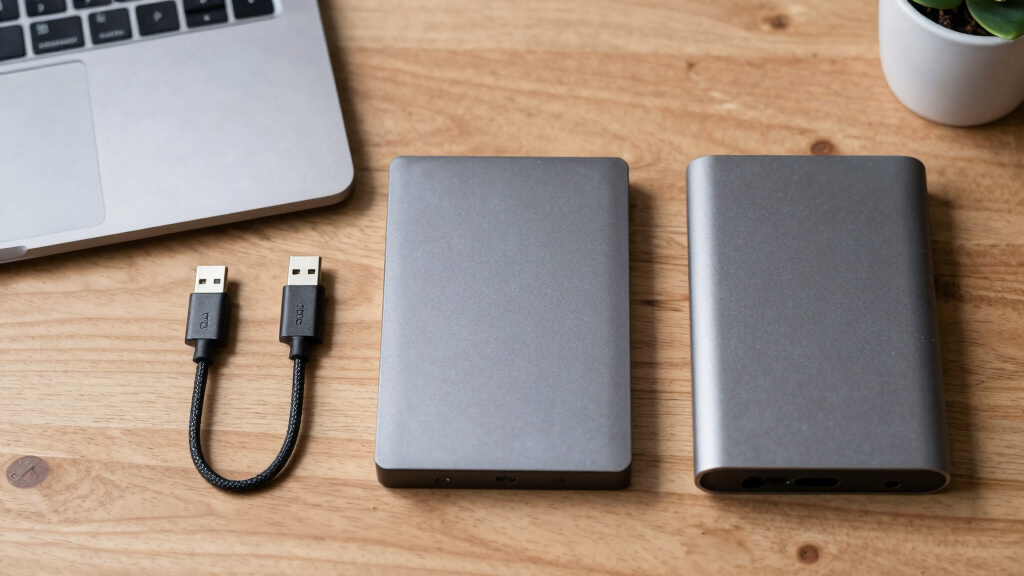

📊 Full opportunity report: The SSD Squeeze: Why Storage Joined The Party on ThorstenMeyerAI.com — validation score, market gap, and execution plan.
TL;DR
Storage, especially SSDs, is experiencing a significant price increase in 2026 driven by supply shortages. AI’s growing storage needs and wafer competition have tightened supply, affecting enterprise and consumer markets. The situation is unlikely to ease soon.
SSD prices are surging in 2026, with enterprise and consumer drives experiencing sharp increases due to a supply shortage driven by high demand from AI applications and wafer competition among leading manufacturers. This shift marks a departure from the previous era of declining storage costs and has significant implications for the tech industry and consumers alike.
Over the past nine months, contract prices for NAND flash memory have multiplied roughly four to four-and-a-half times, with enterprise SSD contract prices jumping 53–58% at the start of 2026, according to industry sources. Major manufacturers such as Samsung, SK Hynix, and Micron have scaled back wafer targets, citing profitability and market discipline, rather than capacity expansion. This has resulted in a tight supply environment, with Micron only able to satisfy about 55–60% of its main customer demand.
The demand for NAND is driven heavily by AI applications, which now require substantial storage capacity for training and inference. High-end AI GPUs can need up to 16TB of TLC or QLC flash, while AI server racks may demand over 1,000TB of NAND. As AI shifts from training to inference, new storage patterns—such as vector database queries and model caching—are further increasing demand, making storage a critical component rather than a passive data holder.
The SSD squeeze: storage joined the party
Storage was the last cheap thing in computing. Not anymore — a 2TB NVMe that was $120–150 in 2024 now lists at $300–480. And this time flash isn’t only collateral damage: AI eats storage directly.
both ways
Flash got hit twice — once as collateral sharing fabs with HBM, once directly as AI inference turned fast storage into something it consumes by the petabyte. That second force won’t fade; it grows with every model, every RAG pipeline, every cache that must live somewhere fast. Buy what you need now; favor TLC with DRAM cache, don’t overpay for Gen 5, watch for counterfeits. Relief isn’t forecast before late 2027. When the cheapest component in computing has a two-year waitlist, “commodity” no longer fits. Next: The High-End PC & Workstation Tax.
Impacts of Rising SSD Costs on Industry and Consumers
The surge in SSD prices affects multiple sectors, from enterprise data centers to everyday consumers. Enterprise buyers face higher costs for storage infrastructure, potentially slowing deployment and increasing operational expenses. Consumers are seeing doubled or tripled prices for SSDs and are experiencing reduced storage capacities in new PC models. Additionally, industries relying on long-term storage, such as archiving and automotive sectors, are experiencing extended lead times and supply shortages, which could impact product timelines and operational planning.
high performance NVMe SSD 2TB
As an affiliate, we earn on qualifying purchases.
As an affiliate, we earn on qualifying purchases.
Why Storage Became a Scarce Resource in 2026
Historically, storage was the last component to see cost increases, thanks to falling NAND prices. However, in 2026, two main factors changed that dynamic: first, NAND production lines share fabs with high-margin HBM and enterprise memory, which are prioritized by manufacturers like Samsung, SK Hynix, and Micron. Second, the explosive growth of AI applications has created unprecedented demand for storage capacity, with AI workloads consuming enormous amounts of NAND for training and inference. Major suppliers have scaled back wafer targets, citing profitability and market discipline, while new fabs are still years away, compounding the shortage.
This environment has led to a situation where supply is constrained, and prices are driven by both genuine shortages and strategic market discipline, with dominant firms benefiting from scarcity-driven margins.
“We can satisfy only about 55–60% of our main customers’ demand this year.”
— Micron spokesperson
enterprise SSD storage drives
As an affiliate, we earn on qualifying purchases.
As an affiliate, we earn on qualifying purchases.
Unresolved Questions About Future Storage Supply and Prices
While industry sources agree that shortages are likely to persist into 2027, the exact timeline for supply normalization remains uncertain. The impact of new fabs coming online in the next two to three years, and whether manufacturers will adjust wafer targets in response to market conditions, is still unclear. Additionally, the potential for new technologies or alternative storage solutions to alleviate shortages has not been confirmed.
AI optimized SSDs
As an affiliate, we earn on qualifying purchases.
As an affiliate, we earn on qualifying purchases.
Expected Developments in Storage Market and Industry Response
Manufacturers are expected to continue prioritizing high-margin markets, which may sustain elevated prices through 2026 and beyond. New fab projects are still in planning or early construction phases, with commercial production not expected before 2028. Buyers should prepare for ongoing supply tightness, consider stockpiling strategic capacity, and evaluate alternative storage options. Industry analysts will monitor how manufacturers adjust wafer targets and whether new technological innovations can mitigate shortages.
consumer SSD 1TB
As an affiliate, we earn on qualifying purchases.
As an affiliate, we earn on qualifying purchases.
Key Questions
Why are SSD prices rising so sharply in 2026?
Prices are increasing due to supply shortages caused by wafer competition among major manufacturers and soaring demand from AI applications, which require large amounts of NAND storage.
How long will the storage shortage last?
While exact timelines are uncertain, supply constraints are expected to persist into 2027, with new manufacturing capacity coming online gradually over the next few years.
Who benefits most from the current storage shortage?
Major memory manufacturers like Samsung, SK Hynix, and Micron benefit from higher margins driven by scarcity, especially in enterprise and AI-related markets.
How does AI impact storage demand?
AI workloads require enormous storage capacities for training and inference, significantly increasing demand for high-capacity NAND flash in data centers and servers.
What should consumers and businesses do now?
Buy only what is necessary now, consider higher-end TLC drives for durability, and be prepared for longer lead times and higher prices in the near future.
Source: ThorstenMeyerAI.com