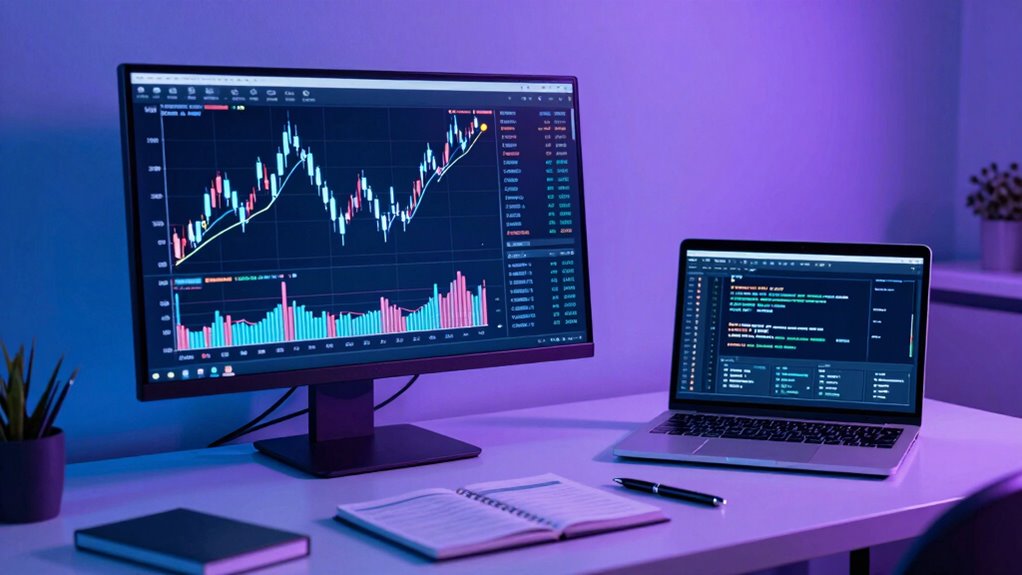

To instantly improve your crypto analysis, focus on questions that connect market sentiment to technical indicators. Instead of just asking if prices will go up or down, explore how emotional factors like investor confidence influence signals like RSI or moving averages. By refining your questions in this way, you’ll better understand underlying drivers and anticipate market shifts more accurately. Keep exploring how these ideas interplay, and you’ll discover strategies that truly elevate your analysis.
Key Takeaways
- Focus on how market sentiment influences technical indicators to identify genuine trend shifts.
- Formulate questions that explore underlying driver factors, not just surface price movements.
- Incorporate real-time sentiment analysis to adapt strategies amidst changing investor emotions.
- Ask how specific emotional states (e.g., fear, euphoria) impact technical signals and market reversals.
- Prioritize understanding the interplay between sentiment, volume, and technical patterns for accurate predictions.

Have you ever wondered how researchers are making crypto analysis more accurate? It all starts with refining the fundamental questions they ask. When you focus on the right research question, you unlock a clearer understanding of market behaviors, especially when analyzing complex factors like market sentiment and technical indicators. These elements are crucial because they directly influence price movements and investor decisions. By honing in on specific questions—such as how prevailing market sentiment impacts price trends—you can improve the precision of your analysis. Instead of relying solely on raw data, you begin to interpret the emotional and psychological states of traders, which can often lead to sudden shifts in the market.
In crypto analysis, market sentiment plays a huge role. It captures the collective mood of investors—whether they’re optimistic, fearful, or indifferent. When your research question emphasizes understanding sentiment, you start using tools like social media analytics, news sentiment scores, or sentiment-based indexes. These tools help you gauge whether the market is overheated or undervalued, giving you an edge in predicting short-term swings. Combining this with technical indicators—such as moving averages, RSI, or MACD—allows you to formulate a more holistic view. Instead of blindly trusting technical signals, you interpret them within the context of market sentiment, making your predictions more reliable.
The key to better crypto analysis lies in asking targeted, insightful questions. For example, instead of asking, “Is this coin’s price going up or down?” you might ask, “How does recent market sentiment influence the signals given by technical indicators?” This shifts your focus from surface-level data to underlying drivers. When you understand what influences technical indicators—like volume spikes or trend reversals—you can better anticipate market reactions. Recognizing the importance of market sentiment analysis can help you avoid common pitfalls like false breakouts or misleading signals that often lead traders astray. Additionally, understanding market sentiment shifts can help you adapt your strategies in real-time, making your analysis more dynamic and responsive to changing conditions. Incorporating market psychology into your approach enables a more comprehensive perspective, enhancing your ability to interpret market signals effectively.
As an affiliate, we earn on qualifying purchases.
Frequently Asked Questions
How Do I Formulate the Perfect Research Question for Crypto Analysis?
To formulate the perfect research question for crypto analysis, focus on understanding market trends and data patterns. Start by identifying specific aspects you want to explore, like price movements or trading volume. Then, craft a clear, focused question that aims to uncover insights about those patterns, such as “What market trends predict short-term price shifts?” This approach helps you target your analysis effectively and gain actionable insights.
What Common Mistakes Should I Avoid When Developing Research Questions?
Ever wonder what pitfalls can derail your crypto analysis? Avoid vague or overly broad questions that ignore market volatility and data reliability. Don’t assume data is always accurate; verify sources to prevent misleading conclusions. Steer clear of questions that lack specificity or overlook the dynamic nature of crypto markets. Instead, focus on clear, targeted questions that consider current trends and data integrity, helping you make better-informed decisions in volatile environments.
Can a Research Question Change During the Analysis Process?
Yes, your research question can evolve during analysis, especially when you encounter new insights into market volatility or regulatory impact. You might find that initial assumptions need refining or that focusing on different aspects provides clearer understanding. Adjusting your question helps you stay aligned with real-world complexities, ensuring your analysis remains relevant and exhaustive. Flexibility allows you to adapt to emerging trends and deepen your insights into crypto markets.
How Does the Research Question Influence Data Interpretation?
Your research question acts like a compass, guiding you through the fog of market sentiment and data accuracy. It sharpens your focus, influencing how you interpret data—highlighting trends or obscuring anomalies. When your question aligns with your goals, your analysis becomes clearer, making it easier to spot genuine signals amid noise. It’s the lens that shapes your understanding, ensuring your insights are rooted in the right context.
Are There Tools to Help Generate Effective Crypto Research Questions?
Yes, there are tools that help generate effective crypto research questions. Data visualization tools like TradingView or CoinGecko can reveal market patterns, guiding your questions. Market sentiment analysis tools, such as Santiment or LunarCrush, provide insights into investor mood, helping you craft more targeted inquiries. These tools streamline your research process, enabling you to develop sharper questions that improve your crypto analysis and decision-making.
Technical indicator analysis software
As an affiliate, we earn on qualifying purchases.
As an affiliate, we earn on qualifying purchases.
Conclusion
By honing your research question, you can significantly boost your crypto analysis skills. For example, focusing on how macroeconomic factors influence Bitcoin’s price can clarify complex market movements. Notably, studies show that over 60% of crypto traders who refine their questions see improved decision-making. So, next time you analyze, ask yourself, “What’s the key driver here?” sharpening your research question helps you see the bigger picture and make smarter moves in the crypto world.
As an affiliate, we earn on qualifying purchases.
Real-time crypto sentiment tracker
As an affiliate, we earn on qualifying purchases.
As an affiliate, we earn on qualifying purchases.