📊 Full opportunity report: Enhancing Machine Operation Skills With Virtual Reality Factory Training on IdeaNavigator AI — validation score, market gap, and execution plan.
TL;DR
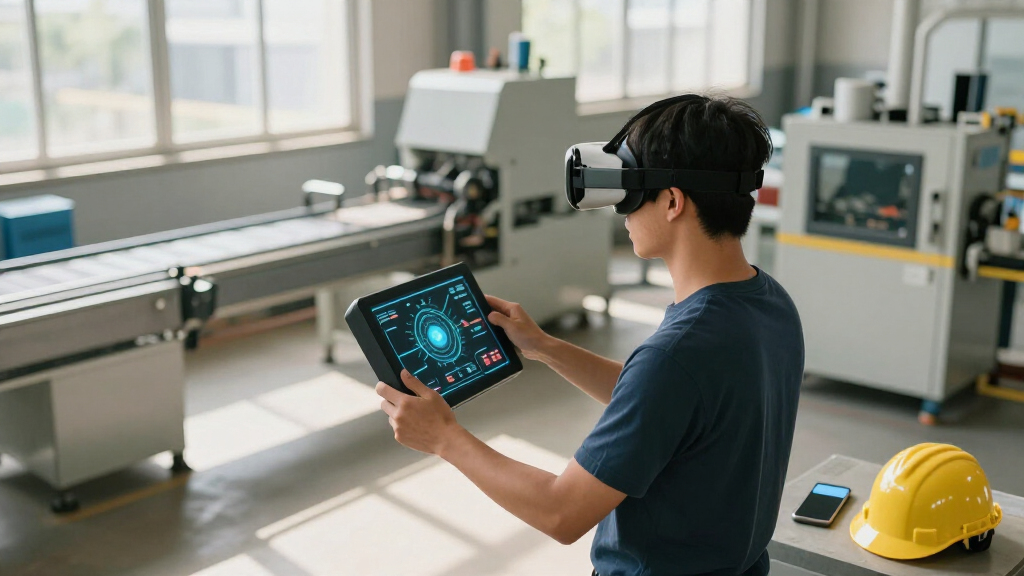
Manufacturing companies are piloting virtual reality training modules to improve onboarding and safety. Early tests focus on high-risk procedures, aiming to reduce incidents and speed up workforce readiness.
Manufacturers are beginning to test virtual reality (VR) training modules designed to improve onboarding efficiency and safety compliance for machine operators. This development aims to address critical labor shortages and safety risks in the manufacturing sector, with early pilots focusing on high-risk procedures like lockout/tagout and forklift safety. The initiative is driven by the declining costs of VR hardware and the urgent need for scalable, standardized training methods.
Manufacturers at mid-to-large scale are exploring VR as a tool for workforce development, especially in roles requiring complex or hazardous machinery operation. The initial focus is on deploying standalone Meta Quest headsets with a cloud-based dashboard that tracks individual progress, hazard recognition, and quiz scores. These pilots typically involve shipping 5-10 headsets to a single plant, with the goal of measuring improvements in time-to-competency and hazard detection compared to traditional classroom training.
According to industry sources, the VR modules are designed to simulate real-world scenarios, allowing workers to practice procedures in a safe, controlled environment. The modules can be customized for specific plant procedures and integrated with existing safety protocols. The pilot programs aim to generate data on training effectiveness, including hazard recognition accuracy and speed of skill acquisition, with success defined by measurable improvements over baseline classroom training.
Manufacturers see VR training as a way to address the current labor shortage—where the U.S. manufacturing sector had approximately 409,000 unfilled positions as of August 2025—and the projected need for 3.8 million new workers by 2033. The affordability of VR hardware, with devices like Meta Quest now costing less than $500, combined with growing market adoption, makes this approach increasingly feasible. The broader immersive enterprise training market is valued at around USD 14.55 billion in 2025, reflecting growing corporate investment in virtual training solutions.
Impact of VR on Manufacturing Workforce Development
This shift to VR training could significantly reduce onboarding times and improve safety outcomes, helping manufacturers fill skills gaps faster and with fewer incidents. By standardizing training across multiple plants, companies can ensure consistent safety practices and reduce variability in worker preparedness. If successful, these pilot programs could lead to widespread adoption, transforming traditional training paradigms and reducing costs associated with accidents and high employee turnover. The ability to rapidly scale training for new hires is especially critical given the current labor shortages and the increasing complexity of machinery in modern factories.
Meta Quest VR headset for industrial training
As an affiliate, we earn on qualifying purchases.
As an affiliate, we earn on qualifying purchases.
Background on Manufacturing Skills Gap and Training Challenges
The U.S. manufacturing industry faces a severe labor shortage, with approximately 409,000 unfilled positions as of August 2025, and projections suggest the need for 3.8 million new workers by 2033. Traditional training methods—classroom instruction and on-the-floor hands-on practice—are often slow, inconsistent, and pose safety risks when used on live equipment. These limitations contribute to longer ramp-up times for new hires, higher safety incident rates, and increased costs due to employee turnover and re-training.
Recent advances in virtual reality technology, including affordable standalone headsets and cloud-based content delivery, have opened new possibilities for industrial training. VR allows immersive, risk-free practice of complex procedures, with the potential to standardize training across multiple locations. Several early-stage pilots are now underway, testing the effectiveness of VR modules for high-risk procedures such as lockout/tagout and forklift safety, with initial results promising in improving hazard recognition and reducing training time.
Market analysts note that the immersive enterprise training sector is growing at approximately 20% CAGR, driven by the need for scalable, engaging, and cost-effective workforce development solutions. The focus on safety and compliance, alongside efficiency gains, makes VR an attractive option for manufacturers seeking to modernize their training programs.
virtual reality training modules for manufacturing
As an affiliate, we earn on qualifying purchases.
As an affiliate, we earn on qualifying purchases.
Uncertainties About Long-Term Effectiveness and Adoption
It is not yet clear how scalable or cost-effective VR training will be across diverse manufacturing environments. Long-term data on retention, safety improvements, and return on investment are still being collected, and broader industry adoption may depend on pilot success and vendor support.VR safety training equipment for factories
As an affiliate, we earn on qualifying purchases.
As an affiliate, we earn on qualifying purchases.
Next Steps for VR Training Pilot Programs
Manufacturers plan to conduct 60-90 day pilot programs focusing on specific high-risk procedures. These pilots will compare VR-trained cohorts against traditional classroom-trained groups, measuring metrics such as time-to-competency, hazard recognition scores, and supervisor assessments. If results demonstrate significant improvements, broader deployment across multiple plants is expected, alongside development of additional modules for other procedures and roles.
Industry stakeholders anticipate that positive pilot outcomes could accelerate the integration of VR into standard onboarding and safety training protocols, with potential for ongoing content customization and hardware management services. The results of these pilots will inform future investment and scaling decisions for the manufacturing sector’s immersive training initiatives.
standalone VR headsets for workforce development
As an affiliate, we earn on qualifying purchases.
As an affiliate, we earn on qualifying purchases.
Key Questions
How effective is VR training compared to traditional methods?
Initial pilot programs suggest VR can reduce training time and improve hazard recognition, but comprehensive data from larger, long-term studies are still pending.
What costs are involved in implementing VR training?
Costs include hardware (standalone headsets like Meta Quest), content development, and platform subscriptions. Hardware costs have decreased, making deployment more affordable for manufacturers.
Which procedures are best suited for VR training?
High-risk, complex procedures such as lockout/tagout, forklift safety, and machine start-up/shutdown are prime candidates for VR modules.
Will VR replace all traditional training methods?
It is unlikely VR will replace all methods; instead, it will complement classroom and on-the-floor training, especially for initial onboarding and hazard practice.
When can manufacturers expect wider adoption of VR training?
Wider adoption depends on pilot success; if results show significant improvements, broader deployment could occur within the next 1-2 years.
Source: IdeaNavigator AI