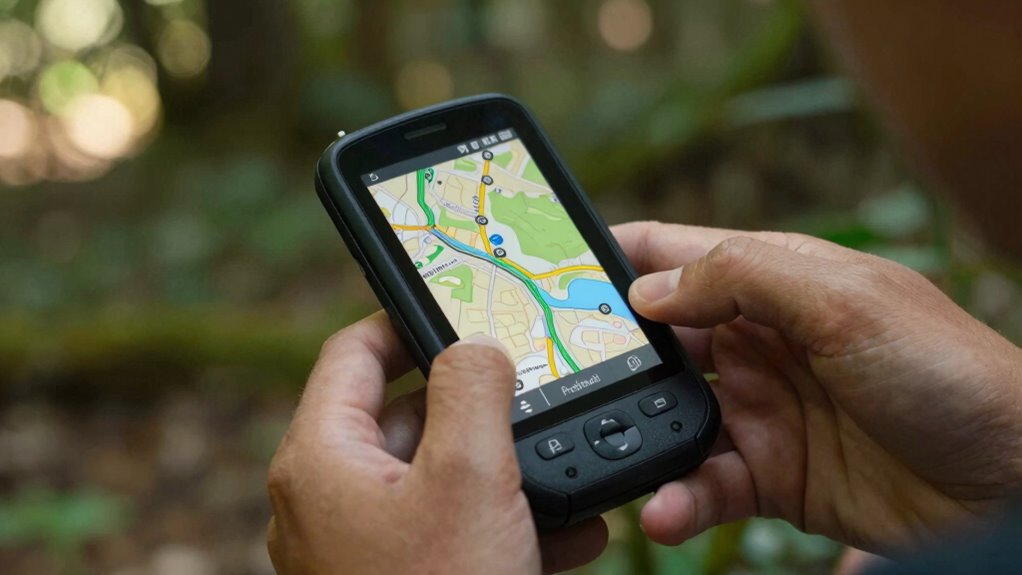

Before heading out with your handheld GPS, make certain you fully download and store all the necessary maps. Preloading detailed maps onto your device guarantees quick access and prevents issues in remote areas without signal. Confirm the maps are up-to-date and that your device has enough storage space. Test the device to make sure everything works correctly. If you want to learn specific steps to prepare your GPS for the trip, continue exploring.

Get hardware and tech essentials delivered free with Prime
- Fast, free delivery on millions of items
- Prime Video, Amazon Music and more included
- Member-only deals all year
Key Takeaways
- Preload detailed maps onto the GPS device before departure to ensure offline access during your trip.
- Confirm that all maps are current and comprehensive to avoid navigation issues.
- Verify sufficient storage space for all necessary maps and data before leaving.
- Ensure successful map downloads and proper installation to prevent missing map segments.
- Test map loading in various lighting conditions to confirm visibility and readability outdoors.
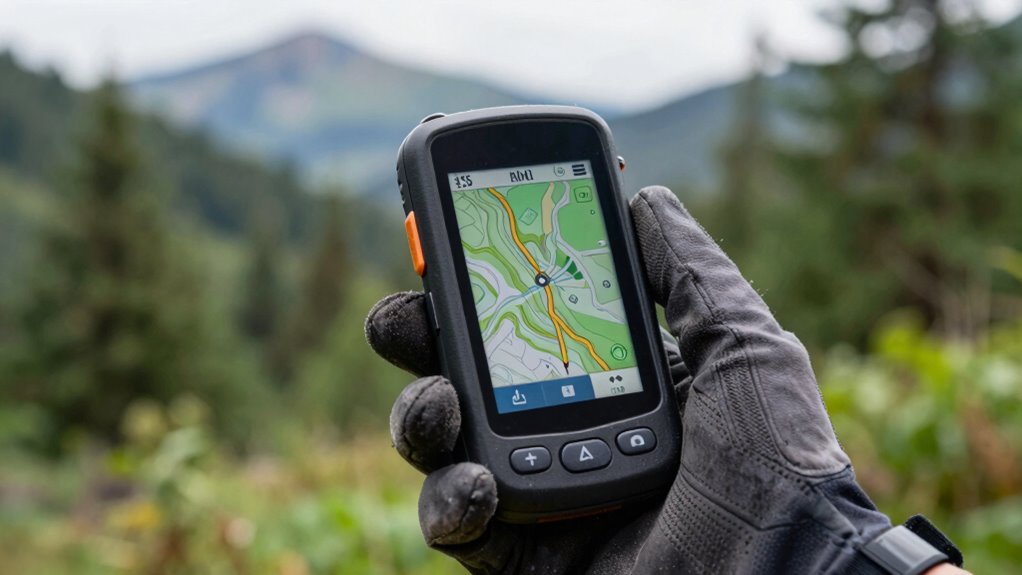
Handheld GPS devices have become indispensable tools for outdoor enthusiasts, adventurers, and professionals who need reliable navigation in remote areas. Before you set out on your journey, one essential step is ensuring your device is fully prepared, especially when it comes to the map download process. This step can make the difference between a smooth adventure and getting lost. A key aspect to consider is your GPS’s battery life. You want to make sure the device is fully charged or has fresh batteries, so it doesn’t die midway through your trip. Carrying spare batteries or a portable charger is always a smart move, especially if you plan to be out for extended periods. Many modern devices also offer power-saving modes or display brightness adjustments, which can help conserve battery life, letting you navigate longer without worry.
Ensure your GPS is fully charged and carry spare batteries or a portable charger for extended outdoor adventures.
Equally important is screen readability. When you’re deep in the outdoors, sunlight can wash out your device’s screen, making it difficult to read maps or waypoints. Check that your GPS’s display is bright enough and that the contrast is high enough to be visible in bright conditions. Some devices feature anti-glare screens or transflective displays that markedly improve visibility under direct sunlight. It’s a good idea to adjust the brightness setting before heading out, so your screen remains clear and legible during your entire adventure. If your device allows, you might also consider applying a protective screen cover that reduces glare without affecting readability. Additionally, understanding your device’s map storage capabilities ensures you have enough space for all necessary data.
Downloading your maps beforehand is essential because once you’re in remote areas, your device might lose connection or have limited access to online maps. By preloading detailed maps onto your GPS, you ensure that you can access navigation data without relying on cellular signals. This is especially important in wilderness areas or mountain regions where coverage is spotty or nonexistent. Make sure the maps you download are up to date and cover all the areas you plan to explore. Double-check that your download was successful and that the maps are properly stored on your device. This preparation guarantees you won’t face surprises or delays when you need directions most.
Finally, test your device’s functionality before leaving. Turn it on, verify that the maps load correctly, and check the screen readability in different lighting conditions. Confirm that the battery indicator shows sufficient charge. Doing these quick checks will boost your confidence, so you can focus on enjoying your adventure rather than troubleshooting technical issues. Proper map downloading, along with attention to battery life and screen readability, equips you with a reliable navigation tool, guaranteeing you stay on course and safe throughout your outdoor experience.
Products Worth Considering

Ledger Flex + Folio Crypto Hardware Wallet

Ledger Flex Crypto Wallet with 2.8-Inch E Ink Touchscreen

LG UltraGear evo 52-Inch 5K2K 240Hz Curved Gaming Monitor
As an affiliate, we earn on qualifying purchases.
Frequently Asked Questions
Can I Use Handheld GPS Devices Offline Without Internet?
Yes, you can use handheld GPS devices offline without internet. These devices are designed for offline navigation, so once you download maps before your trip, you won’t depend on internet connectivity. This makes them ideal for remote areas where internet dependency isn’t reliable. Just make certain you’ve downloaded all necessary maps and data beforehand, so you can confidently navigate without worrying about losing signal or internet access.
Which Map Formats Are Compatible With Most Handheld GPS Units?
You’ll find that most handheld GPS units support common map file types like GPX, Garmin IMG, and KML/KMZ. To verify GPS map compatibility, check your device’s specifications or user manual, as some models may only accept certain formats. Using compatible map file types guarantees smooth navigation and accurate data display. Always download the correct format before your trip to avoid any issues while out on the trail.
How Often Should I Update the Maps on My GPS Device?
Imagine your GPS as a trusty compass guiding you through new terrain. You should update the map frequently—at least every few months—to guarantee your GPS map refresh keeps pace with changes in roads and trails. Regular updates prevent you from getting lost in outdated information. By maintaining an up-to-date map, you guarantee a smoother, more reliable navigation experience, especially when exploring unfamiliar or remote areas.
Are There Any Costs Associated With Downloading Maps?
Yes, there can be costs associated with downloading maps. You might encounter map download fees or subscription costs depending on your GPS provider. Some services offer free map updates, but others charge for premium features or regular updates. Always check your device’s terms, and consider whether a subscription or one-time fee applies to access the maps you need. Budgeting for these costs guarantees you’re prepared before heading out.
Can I Customize or Add Personal Waypoints to Downloaded Maps?
Yes, you can customize and add personal waypoints to downloaded maps. Your device allows for custom waypoint management, making it easy to mark specific locations, trails, or hazards, enhancing your map personalization. Simply access the waypoint management feature, input your details, and save them to your map. This customization helps you navigate more confidently, knowing your personal points of interest or critical spots are right at your fingertips.
Conclusion
Remember, downloading your maps before heading out is like packing your safety net—it guarantees you’re never lost in the wilderness’s silent embrace. Without this step, your adventure could turn into a game of hide and seek with the unknown. So, take the time to prepare; it’s the key to turning unfamiliar terrain into your personal playground. Stay ahead of the map, and let your journey be as smooth as a well-tuned compass guiding you home.