🔍 Read the full analysis: How United’s Policy Blocks AI Agents From Booking Flights on ThorstenMeyerAI.com

Get hardware and tech essentials delivered free with Prime
- Fast, free delivery on millions of items
- Prime Video, Amazon Music and more included
- Member-only deals all year
TL;DR
United Airlines’ revised contract of carriage, dated Nov. 11, 2026, prohibits unauthorized third-party AI agents from booking, changing or servicing tickets and other products. The restriction applies even when a person supervises or approves an agent’s actions; United says customers can still use AI to search for flights and fares, but must complete purchases themselves.
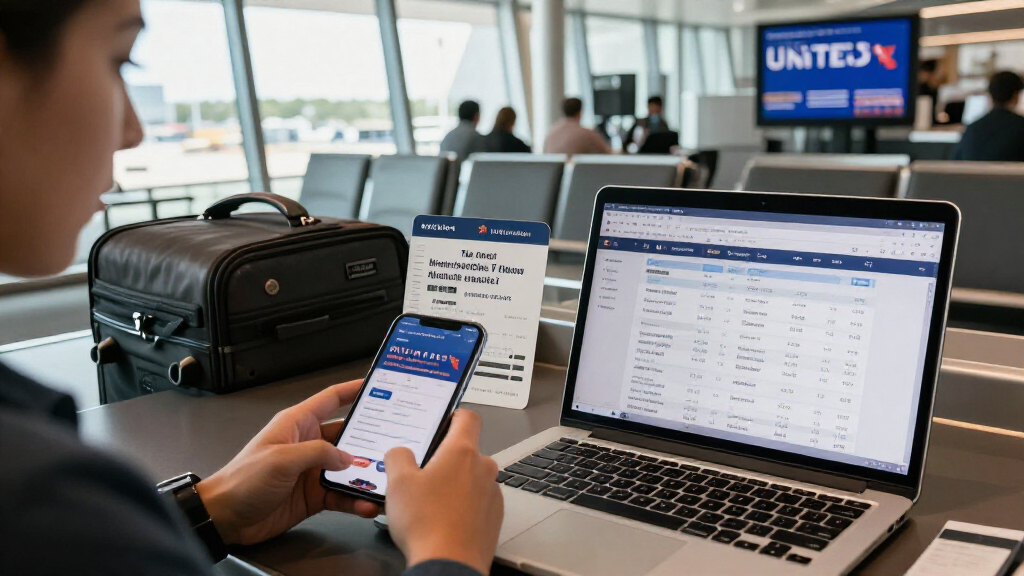
United Airlines has revised its contract of carriage to prohibit unauthorized third-party AI agents from booking, changing or servicing tickets and other products, including when a passenger supervises or approves the software’s actions. The rule, dated Nov. 11, 2026, could leave travelers able to use AI to find flights but require them to complete purchases themselves.
United said it is restricting access to unauthorized personal AI agents and assistants both on its own digital platforms and indirectly through travel agencies and aggregators. Its press release described the change as updates to booking, ticketing and distribution policies. The fuller wording appears in the airline’s contract of carriage, which passengers accept when buying a ticket.
The revised contract’s Rule 6.J.6 prohibits “the use of AI Agents to make, modify or service a Ticket”, as well as to buy a service or product. The definition, as published by travel-industry sites, covers software that takes autonomous or semi-autonomous action to search for, book, purchase or manage United offerings. It specifically includes AI-enabled browsers, assistants embedded in consumer platforms and agents that access United through an intermediary.
The prohibition does not name individual AI products. The Wall Street Journal, as cited by View from the Wing, reported that an AI assistant may still search for United flights and display fares; the traveler must make the purchase. The contract also says United may cancel reservations made, changed or serviced by agents. Other provisions list possible remedies, including invalidating tickets or removing miles, but the published text does not establish how or when United will apply each remedy to an agent booking.
How United’s Policy Blocks AI Agents From Booking Flights
United’s revised contract lets AI search for flights, but bars unauthorized agents from completing or managing transactions—even with a traveler’s approval.
Where United draws the line
AI-assisted research remains possible; an agent taking action on a United offering is restricted.
- Search for United flights
- Display fares and options
- Make, modify or service a ticket
- Buy United products or services
- Act with human supervision or approval
The rule covers more than chatbots
It applies to autonomous or semi-autonomous agents accessing United directly or through intermediaries.
United platforms
The restriction applies on United’s digital platforms.
Intermediaries
Agents reaching United through travel agencies or aggregators are included.
Beyond tickets
The wording also covers seats, upgrades, ancillary services and partner products.
Why United says it acted
The airline cites account security, unintended transactions and passenger acknowledgment requirements.
- Third-party access could expose sensitive information or cause unwanted purchases and account changes.
- United also cites possible conflicts with FAA and Department of Transportation requirements.
What remains unclear
The contract states possible remedies, but reported details do not settle how they will be applied.
United has not specified which consequences apply to particular agent bookings or how agents will be identified.
The source reports that ticket terms depend on the contract in effect when issued; treatment of later changes remains unclear.
Technical restrictions and handling of bookings through agencies or aggregators have not been detailed.
AI Can Search, But Not Purchase
The new terms draw a line between AI-assisted flight research and an agent completing a transaction. That distinction matters to travelers testing software that can act across websites: even a booking approved by a person may fall within United’s definition if the agent takes autonomous or semi-autonomous action.
It also places the airline in control of how its inventory and checkout systems can be accessed. United CEO Scott Kirby told the Journal that he did not want to create “another middleman.” The policy may affect companies seeking to turn conversational assistants into booking channels, though the source material does not show how many travelers currently use agents to buy airline tickets.
United’s move is part of a wider, unsettled response by businesses to third-party agents. Skift described United as the first U.S. airline to state such a restriction explicitly. The source also says Southwest and Expedia are working with ChatGPT, illustrating that companies are taking different approaches rather than adopting a single industry policy.
Products Worth Considering

Ledger Flex Cryptocurrency Wallet with 2.8-Inch Touchscreen

Apple MacBook Pro 16.2-inch with M5 Pro, 18-core CPU, 20-core GPU, 48GB Memory, and 1TB SSD (Space Black)

Logitech MX Master 4 for Mac Wireless Ergonomic Mouse, White Silver
As an affiliate, we earn on qualifying purchases.
A New Rule in the Contract
The policy emerged as technology companies promote personal agents that can carry out tasks such as travel planning and booking. Meta CEO Mark Zuckerberg has called travel a “top use case” for the company’s Muse agent, according to Skift. United’s change addresses the point where an assistant moves from presenting options to acting on a passenger’s behalf.
The contract’s definition extends beyond a particular chatbot. It covers agents using United directly and those reaching the airline through an agency or another intermediary. The rule’s wording also covers purchases beyond flights, including seats, upgrades, ancillary services and partner products.
United gave account security and unintended transactions as reasons for the restriction. It said sharing credentials with third-party assistants could expose sensitive information or result in unwanted purchases, account changes or use of MileagePlus miles. The airline also cited possible conflicts with FAA and Department of Transportation requirements, including passenger acknowledgment of rules on hazardous materials.
The source material reports that federal regulation 49 CFR 175.25 requires airlines to provide passengers with information about forbidden hazardous materials at purchase and check-in. It also describes an acknowledgment requirement when a passenger completes those steps without another person involved. The source cites travel-industry criticism of United’s safety rationale, but does not provide a full legal analysis resolving how the regulation applies to AI agents.
““United is taking steps to restrict access – directly within our digital platforms and indirectly via travel agencies and aggregators – to prohibit use by unauthorized, third-party personal AI agents or assistants.””
— United Airlines
Enforcement and Existing Tickets
Several practical details remain unknown. United’s contract lists possible consequences, including cancellation, ticket invalidation, charges and MileagePlus penalties, but the reported text does not say which remedies the airline will use for particular agent bookings or how it will identify them. The airline has not named specific AI products in the rule.
The source reports that the contract applies according to the terms in effect when a ticket is issued, suggesting tickets issued before Nov. 11 fall under the earlier contract. That is an interpretation reported by PPC Land, not a detailed statement from United about every existing booking or later change to one. It is also unclear how United will treat bookings routed through travel agencies and aggregators, or what technical measures it will use to restrict access.
The source materials do not establish the scale of consumer demand for agent-booked flights. An example offered in the source concerns Uber, which reportedly counted four agent-booked rides in a week with about 320 million trips and orders; that is a rideshare figure, not an airline-booking baseline, and does not quantify demand for United tickets.
How United Applies the Ban
The next development will be how United implements the policy across its website, app and third-party booking channels. Travelers and agent developers will need clearer information about what access is blocked, whether search functions remain available and how the airline will distinguish permitted research from prohibited purchasing or account management.
United’s contract also leaves open how the rule will be enforced in day-to-day cases, including whether a human’s approval changes anything; its wording says supervision does not exempt an agent’s actions. Until the airline provides more detail, travelers should not assume that an agent-made booking is allowed simply because they reviewed or authorized it. The published terms make clear that the restriction is in place, while its enforcement and effects on existing or intermediary bookings remain developing.
Key Questions
What does United’s new AI-agent rule prohibit?
United’s revised contract prohibits unauthorized AI agents from making, modifying or servicing tickets, and from purchasing United products or services. Its definition includes agents acting through the airline or through an intermediary.
Can an AI assistant still search for United flights?
According to The Wall Street Journal as cited by View from the Wing, an assistant may still search for flights and show fares. The traveler must complete the purchase rather than have the agent book it.
Does human approval make an AI booking acceptable?
The contract’s definition covers autonomous or semi-autonomous action whether or not a passenger or another person supervises or approves it. United’s wording therefore does not provide a human-approval exception.
What could happen to a ticket booked by an AI agent?
The contract says United may cancel reservations made, modified or serviced by agents. It lists other possible remedies, including invalidating tickets and removing miles, but the reported text does not explain when the airline will use each measure.
Does the rule apply to tickets bought before Nov. 11?
PPC Land reports that the contract applies based on the terms in effect when a ticket is issued, which suggests earlier tickets fall under the previous wording. United has not provided detailed guidance in the source material about every existing ticket or later booking change.
Source: ThorstenMeyerAI.com