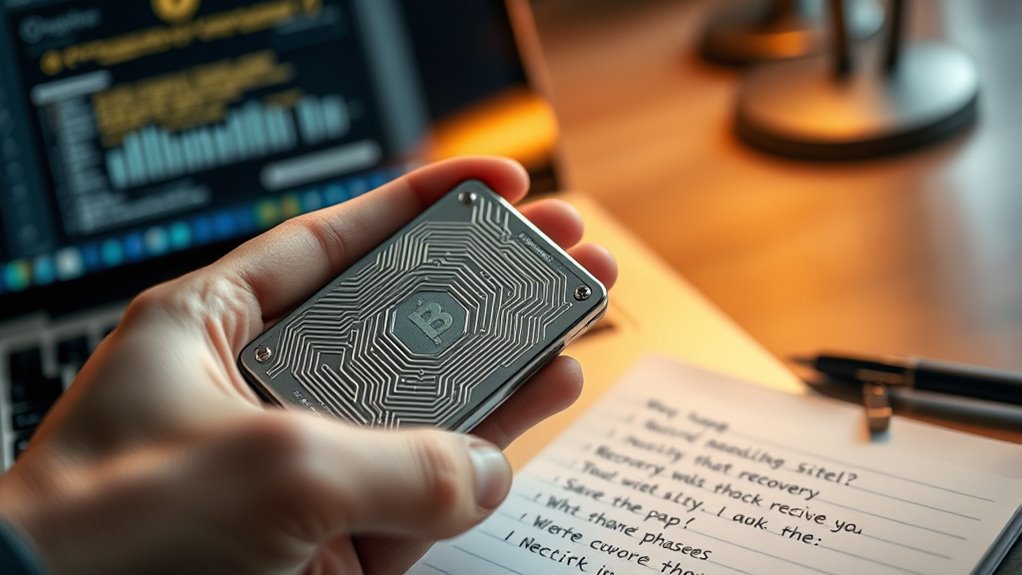
To back up your crypto wallet safely, write down your recovery seed on a secure, offline medium like metal or paper and store it in a fireproof, private location. Never save it digitally or online to avoid hacking risks. To restore your wallet, input the seed accurately into a compatible device or software wallet following the manufacturer’s instructions. Protect your seed at all costs—if you keep going, you’ll learn more about maintaining your digital security.
Key Takeaways
- Write your recovery seed on durable, offline media like metal or paper and store it securely in a fireproof safe.
- Never save your seed phrase digitally or online to prevent hacking risks.
- Follow manufacturer instructions carefully when restoring your wallet using the seed phrase.
- Conduct wallet backup and restoration in a private, secure environment away from public Wi-Fi.
- Keep your recovery seed private, offline, and protected to ensure quick and safe wallet recovery.
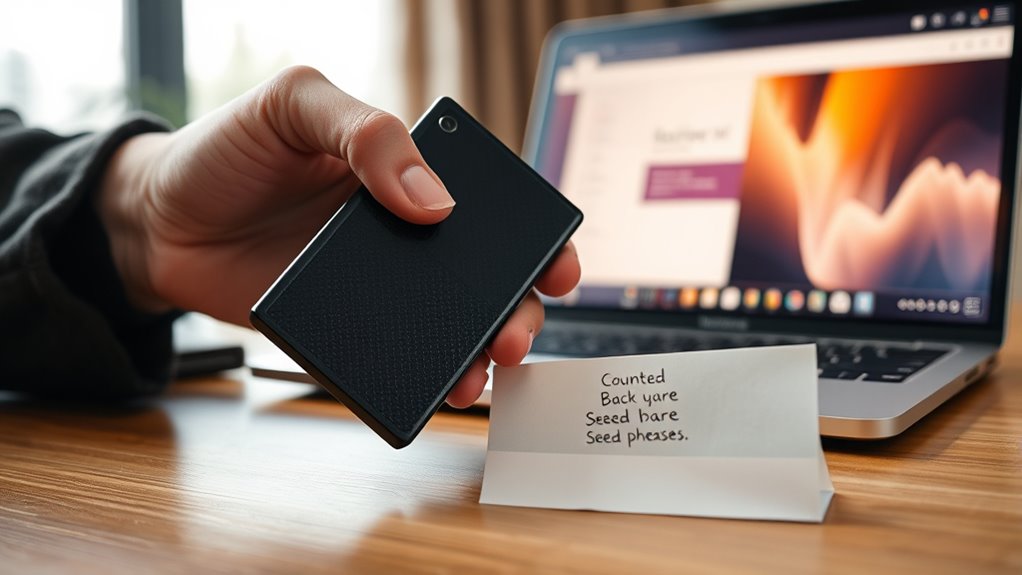
Have you ever thought about what would happen if you lost access to your crypto wallet? It’s a frightening idea, especially considering how valuable your digital assets might be. That’s why understanding how to back up and restore your crypto wallet is crucial for maintaining your digital security. When you’re dealing with cryptocurrencies, your wallet’s safety depends on how well you protect your private keys and recovery information. One of the most secure options for safeguarding your holdings is a hardware wallet. These devices store your private keys offline, making them resistant to hacking attempts and malware. Using a hardware wallet adds an extra layer of security because, even if your computer or online account gets compromised, your assets remain protected.
Backing up your hardware wallet is straightforward but critical. Typically, during setup, you’ll be provided with a recovery seed—a series of 12, 18, or 24 words. This seed essentially acts as the master key to your wallet and must be kept in a secure, offline location. Never store it digitally or online where hackers could access it. Instead, consider writing it down on a physical medium like a metal seed backup or a fireproof safe. This ensures that, even if your hardware wallet is lost or damaged, you can restore your wallet on a new device with your seed phrase. Remember, losing this seed phrase is equivalent to losing your assets; no central authority can recover it for you. Secure backup methods are vital to ensure your recovery options are reliable and safe.
When it’s time to restore your wallet, you’ll need to input your recovery seed into a compatible hardware wallet or software wallet. Follow the manufacturer’s instructions carefully to avoid any mistakes. Restoring from your seed phrase re-establishes your private keys and access to your funds instantly. Make sure you’re in a secure environment during this process, avoiding public Wi-Fi and ensuring no one is watching.
Digital security isn’t just about backing up your wallet; it’s about doing so responsibly. Always keep your recovery seed private and offline. Using hardware wallets greatly reduces the risks associated with digital theft, but your backup process is equally critical. If you lose your seed phrase or it gets stolen, your assets could be lost forever. Conversely, a well-protected backup allows you to recover your funds quickly and securely, giving you peace of mind. Properly backing up and restoring your crypto wallet isn’t just a technical task; it’s a fundamental step in protecting your digital wealth and ensuring your crypto journey remains safe.
Frequently Asked Questions
Can I Back up My Wallet on Multiple Devices Simultaneously?
Yes, you can perform multi device backups to guarantee backup redundancy. By backing up your wallet on multiple devices, you reduce the risk of losing access if one device fails or is compromised. Just make sure you securely store your private keys or seed phrases offline, and avoid exposing them across devices. This way, you maintain control and can restore your wallet seamlessly from any backup if needed.
What Should I Do if I Lose My Backup Phrase?
If you lose your backup phrase, your recovery options are limited, but don’t panic. Check if your wallet provider offers alternative recovery methods, like biometric or password recovery. Remember, backup security is essential, so avoid storing your phrase insecurely. Consider contacting support for guidance. To prevent future issues, always securely store your backup phrase and consider multiple backup methods to safeguard your wallet.
Is It Safe to Store Backups in the Cloud?
Storing backups in the cloud is like placing your treasure chest in a guarded vault. While cloud security and data encryption protect your data, risks still exist if your account gets hacked or credentials are compromised. Use strong, unique passwords and enable two-factor authentication. Remember, no storage method is foolproof, so consider encrypted offline options for added safety, especially for large or valuable crypto holdings.
How Often Should I Update My Wallet Backup?
You should update your wallet backup regularly, ideally after any significant transaction or change in your wallet. Following security best practices, frequent backup updates help protect your funds from potential loss or theft. Backup frequency depends on how often you use your wallet and make transactions, but a good rule of thumb is to back up at least weekly or whenever you add new private keys or recovery phrases to guarantee your assets stay secure.
Can I Restore My Wallet on a Different Wallet Provider?
Yes, you can restore your wallet on a different provider, but wallet provider compatibility is essential. Look for options that support cross-platform restoration using your seed phrase or private keys. Not all wallets are compatible, so double-check that the new provider allows importing from your original wallet’s seed or backup file. This way, you guarantee seamless access to your funds across different wallet providers without losing any data.
Conclusion
Remember, backing up your crypto wallet is like safeguarding your digital treasure chest—don’t leave it unprotected. Store your backup securely, maybe in a safe or a cloud service, and test your restore process periodically. Think of it as your own personal medieval vault, but with modern tech. By staying vigilant, you’ll keep your assets safe from any unforeseen dragons—er, hackers—ready to swoop in. Protect your crypto journey today, and sleep soundly knowing your coins are secure.