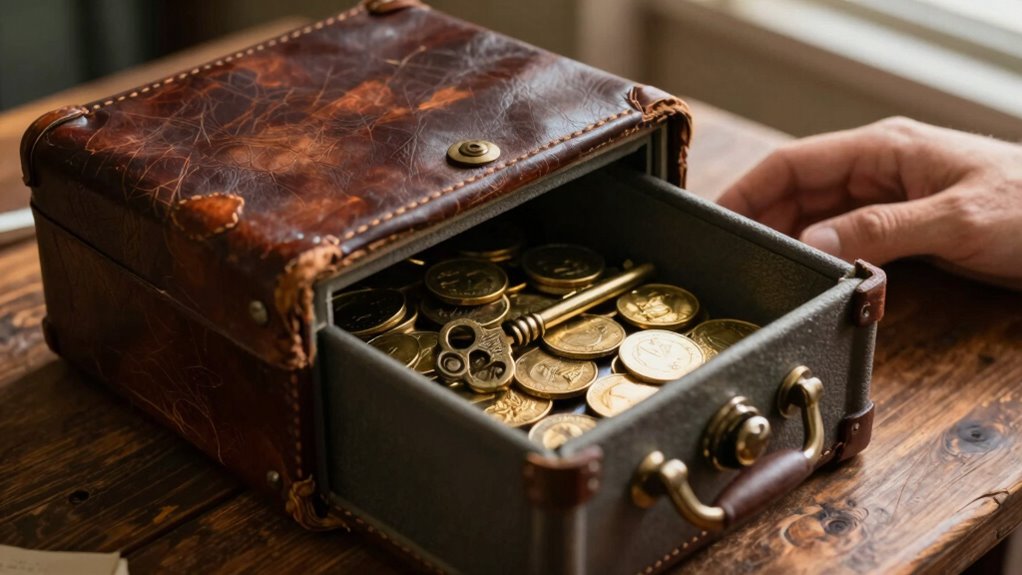

Self-custody can feel overwhelming until you realize that your private keys are the most valuable part of your assets. When you understand that these keys are your digital passwords, granting you full control, the responsibility becomes clearer and less intimidating. Protecting your private keys is essential because losing them means losing access forever. If you keep this rule in mind, managing your crypto becomes more confident and straightforward. Keep exploring to learn how to safeguard your keys effectively.
Key Takeaways
- The responsibility of safeguarding private keys can feel overwhelming without understanding they are your ultimate control point.
- Losing private keys means permanent asset loss, highlighting the importance of diligent security practices.
- Self-custody shifts control from trusted third parties to personal responsibility for security.
- Proper storage methods, like hardware wallets, make managing private keys more secure and less intimidating.
- Recognizing private keys as the core of ownership transforms self-custody from a risk into an empowering responsibility.
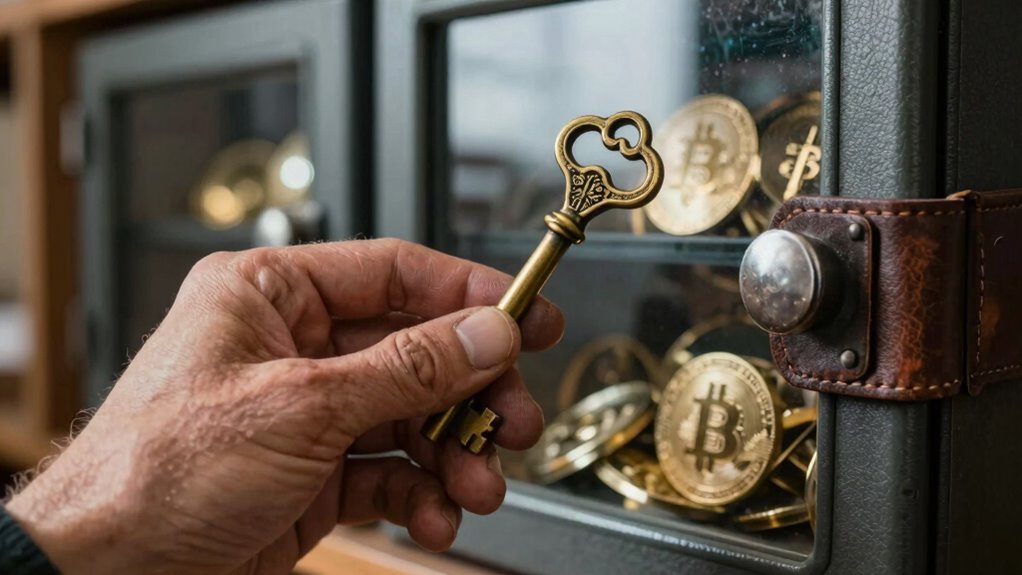
Have you ever wondered what it truly means to control your own digital assets? When you take on self-custody, you’re responsible for managing your cryptocurrencies directly, rather than relying on third-party services. At first, this can feel intimidating, even overwhelming. You might worry about losing access or making mistakes that could cost you your funds. But the core of self-custody isn’t as complicated as it seems—once you understand one key rule: your private keys are your ultimate authority.
Your private keys are the secret codes that give you access to your digital assets. Think of them as the digital equivalent of a password to your bank account, but even more critical because they grant full control over your funds. If someone else gains access to your private keys, they can move or spend your assets without your permission. That’s why digital security becomes paramount. Protecting your private keys should be your top priority.
Many newcomers find self-custody tricky because they’re used to trusting exchanges or wallets to handle security for them. But when you hold your private keys, you’re responsible for safeguarding them. If you lose your private keys, you lose access to your assets forever—there’s no customer service to call, no password reset. That’s why understanding and implementing a secure method to store your private keys is essential. Hardware wallets, paper wallets, or secure offline storage can help keep your private keys safe from hacking or theft.
It’s natural to feel uneasy about this responsibility. You might worry about making mistakes or forgetting your private keys. But once you grasp the importance of securing these keys, self-custody becomes less intimidating. Remember, your private keys are the only thing standing between your assets and potential loss or theft. By mastering digital security practices—such as encrypting backups, using multi-factor authentication, and keeping keys offline—you reduce risks considerably. Private key security is a fundamental aspect of managing your digital wealth responsibly. Additionally, understanding the importance of digital asset security helps you appreciate the broader context of protecting your investments. Developing a solid understanding of cryptocurrency security practices can further empower you to safeguard your holdings effectively. Recognizing the role of secure storage methods ensures you implement effective safeguards against potential threats.
The key rule is simple: treat your private keys as your most valuable digital asset. Protect them diligently, and your control over your digital wealth becomes clear and empowering. When you understand that your private keys are the gateway to your crypto, you realize that self-custody isn’t about taking on unnecessary risk—it’s about owning your security. Once you internalize this rule, the initial difficulty of self-custody diminishes, revealing it as a straightforward, empowering way to manage your digital assets with confidence.
hardware wallet for crypto
As an affiliate, we earn on qualifying purchases.
As an affiliate, we earn on qualifying purchases.
Frequently Asked Questions
What Are the Biggest Risks of Self-Custody?
The biggest risks of self-custody are losing custody of your assets due to mistakes or security breaches and facing privacy concerns. You hold custody responsibilities, so if you forget your private keys or fall victim to hacking, your funds are gone. Privacy concerns arise if you don’t secure your data properly, risking exposure of sensitive information. Staying vigilant and understanding your responsibilities helps mitigate these risks effectively.
How Do I Securely Store My Private Keys?
To securely store your private keys, use a hardware wallet, which keeps keys offline and protected from online threats. Always write down your seed phrase on paper or a secure offline medium, and store it in a safe, private location. Avoid digital storage methods like cloud or email. Regularly check your hardware wallet’s firmware updates and keep your seed phrase hidden from others to maintain security.
Is Self-Custody Suitable for Beginners?
Yes, self-custody can be suitable for beginners if you understand your custody responsibilities and embrace user empowerment. It puts you in control of your private keys, meaning you’re responsible for security. While it might seem complex at first, learning the basics guarantees you’re empowered to protect your assets independently. Start with simple tools and gradually build your confidence, knowing you’re taking control of your financial future.
What Tools or Wallets Are Best for Self-Custody?
If you want the best tools for self-custody, choose hardware wallets like Ledger or Trezor, and always create a secure backup. These tools offer robust security, ease of use, and peace of mind. With a hardware wallet, you protect your private keys offline, and a secure backup guarantees you won’t lose access if your device is lost or damaged. Prioritize safety, simplify management, and keep your assets secure.
How Do I Recover My Assets if I Lose Access?
If you lose access to your self-custody assets, don’t panic. Focus on asset recovery by using your backup seed phrase or private keys, which are your primary tools for regaining control. Custody challenges happen when these aren’t properly stored, so always keep your backups secure and private. Remember, safeguarding your seed phrase guarantees you can recover your assets anytime, preventing permanent loss due to access issues.
private key storage device
As an affiliate, we earn on qualifying purchases.
As an affiliate, we earn on qualifying purchases.
Conclusion
So, now that you know the one rule that makes self-custody feel like a walk in the park, go ahead—embrace it. Forget the nightmares of lost passwords or hacked keys; just remember, with great power comes great responsibility (and maybe a tiny bit of paranoia). Think of yourself as a digital knight, armed with your secret key—just don’t lose it, or you’ll be the hero nobody remembers. Happy custody!
cold storage crypto wallet
As an affiliate, we earn on qualifying purchases.
As an affiliate, we earn on qualifying purchases.
offline crypto wallet
As an affiliate, we earn on qualifying purchases.
As an affiliate, we earn on qualifying purchases.