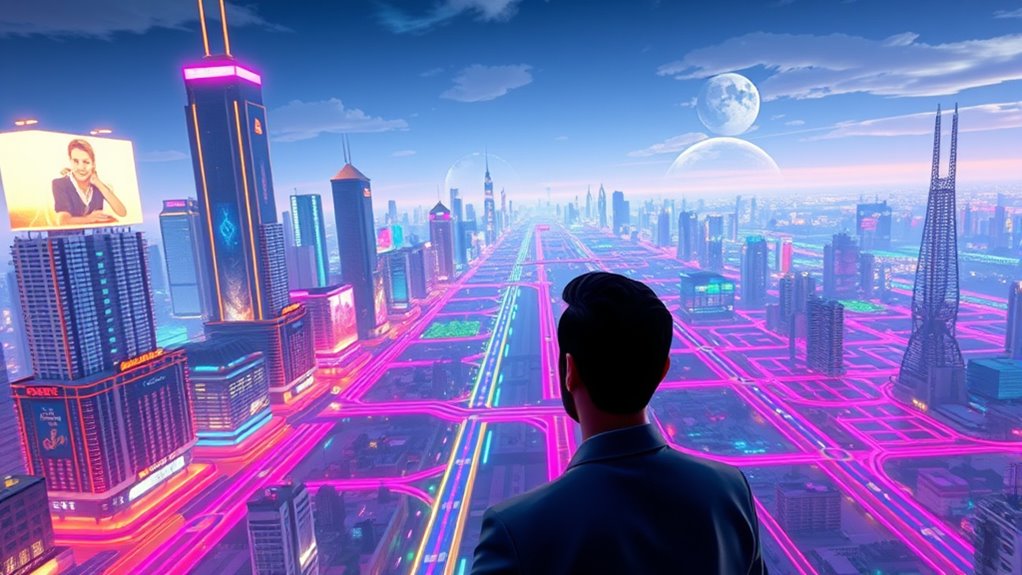

Virtual land in the metaverse has gone through rapid booms driven by NFT hype, speculation, and the allure of digital ownership. Prices can spike quickly as investors chase profits and exclusivity, but busts often follow when market sentiment shifts or hype fades. This volatile landscape makes virtual real estate risky, with potential for hefty losses. If you want to understand how these cycles shape the future of virtual property, there’s more to explore below.
Key Takeaways
- Virtual land markets surge during booms driven by NFT hype and FOMO, but can experience rapid declines when sentiment shifts.
- Blockchain and NFT technology authenticate ownership, creating scarcity and legitimacy in virtual real estate.
- Market volatility and speculative investments pose significant risks, including sudden value drops and bubbles bursting.
- External factors like technological changes and platform policies heavily influence virtual land prices.
- Opportunities exist for development and profit in the evolving metaverse, but understanding market dynamics is crucial to mitigate risks.
Have you ever wondered what it’s like to own property in a digital world? The rise of the metaverse has turned this curiosity into a reality for many. As virtual worlds expand, so does the excitement around virtual real estate, fueled heavily by the NFT hype. Non-fungible tokens have created a new way to buy, sell, and own digital land, making it feel as tangible as physical property. People flock to these platforms, eager to stake their claim, driven by the allure of exclusivity and the potential for profit. But behind this buzz lies a complex landscape of virtual economies that can be unpredictable and volatile.
Owning virtual land offers excitement and profit potential amid unpredictable digital economies.
In these digital environments, virtual economies function much like real-world markets, with demand, speculation, and investment driving prices. Virtual land isn’t just a game asset anymore; it’s a commodity traded on open marketplaces, where some properties have sold for thousands of dollars. The NFT hype has played a significant role in shaping this market, offering a sense of ownership that’s verifiable and secure. You can buy a piece of virtual land, display it in your digital portfolio, and even lease or develop it, all backed by blockchain technology. This innovation has created a sense of legitimacy and scarcity, attracting investors and entrepreneurs alike.
However, this excitement often leads to a boom-and-bust cycle. During the boom, prices skyrocket as new buyers rush in, driven by the fear of missing out and the promise of quick profits. But as with any speculative market, a sudden shift in sentiment or a downturn in the NFT hype can cause prices to plummet just as fast as they rose. Virtual economies are sensitive to external factors like technological changes, platform policies, and broader market trends. When the bubble bursts, some investors are left holding digital land that’s suddenly worth a lot less—or nothing at all.
Furthermore, understanding the fundamentals of virtual economy dynamics can help investors better navigate these fluctuations and avoid costly mistakes.
Despite the risks, the idea of owning virtual land remains enthralling. It’s a chance to be part of an emerging digital frontier, where the rules are still being written. You have the opportunity to participate in these virtual economies, but it’s vital to approach with caution and awareness of the volatility. Understanding the interplay between NFT hype and the dynamics of virtual economies can help you navigate this space more effectively. As the metaverse continues to evolve, so will the opportunities—and the challenges—of owning property in this digital realm.
Frequently Asked Questions
How Do Virtual Land Prices Compare to Physical Property Values?
Virtual land prices often surpass physical property values, driven by digital currency investments and the potential for virtual commerce. You might find virtual plots more affordable initially, but demand spikes as users and brands seek prime digital locations. Unlike physical real estate, virtual land’s value hinges on digital trends and platform popularity, making it highly volatile. You should carefully consider market fluctuations and the evolving virtual economy before investing.
What Legal Issues Surround Ownership of Virtual Land?
You need to understand that legal issues surrounding virtual land involve digital ownership rights and intellectual property concerns. When you buy virtual land, you’re fundamentally acquiring a digital asset, but laws aren’t always clear on how ownership transfers or if you truly own the rights. Protecting your digital ownership and respecting intellectual property laws is vital to avoid disputes and guarantee your virtual property rights are secure.
Can Virtual Land Be Inherited or Transferred Legally?
You can transfer or inherit virtual land, just like physical property, thanks to digital estate laws. A recent survey shows that over 60% of virtual landowners plan to pass their digital estate to heirs. Virtual inheritance is becoming more common as platforms develop legal frameworks. You should keep records and use secure wallets, ensuring your virtual land’s transfer aligns with platform rules, making your digital estate a rightful inheritance.
How Is Virtual Land Appraised and Valued Accurately?
You can appraise virtual land through digital asset valuation methods that consider factors like location, utility, and demand, but keep in mind market volatility. To get an accurate value, track recent sales and market trends, as virtual land prices can fluctuate rapidly. Using these insights helps you understand its worth, but stay cautious, as the metaverse market remains unpredictable, impacting your investment’s stability.
What Are the Environmental Impacts of Metaverse Infrastructure?
You should consider that metaverse infrastructure impacts the environment mainly through energy consumption required for servers and data centers, which can be significant. To promote sustainable development, developers are exploring ways to reduce energy use, such as using renewable energy sources. By being mindful of these impacts, you can support initiatives that minimize environmental harm while enjoying the benefits of virtual worlds.
Conclusion
Just like a roller coaster ride, the metaverse real estate market has its thrilling highs and stomach-dropping lows. Today’s boom may seem like clear skies, but tomorrow’s bust could come unexpectedly. Stay cautious and keep your eyes open, because this virtual landscape is ever-changing, and fortunes can shift in the blink of an eye. Remember, steering the metaverse is like sailing through uncharted waters—exciting but requiring a steady hand and a keen sense of direction.