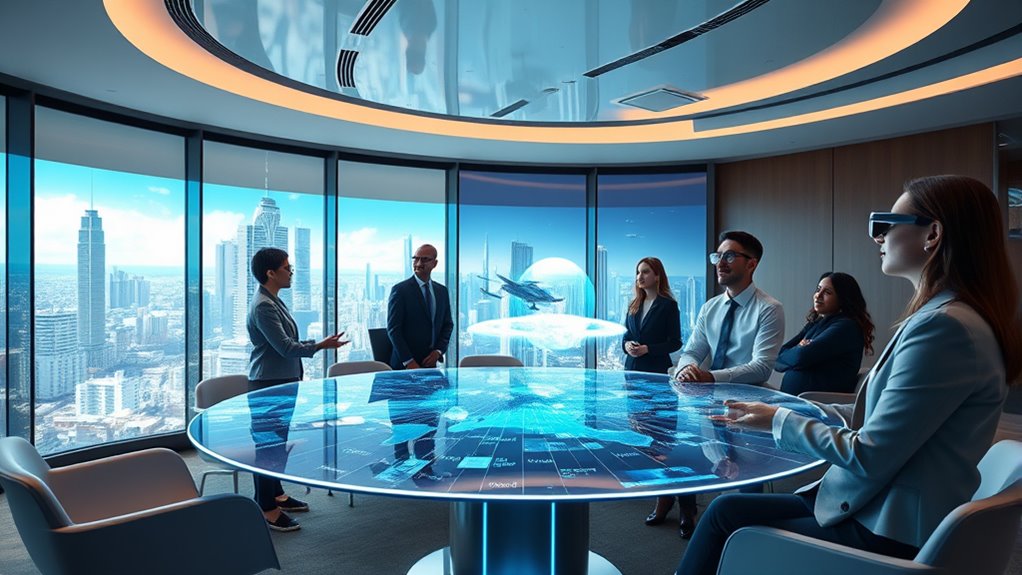

Businesses now use enterprise metaverse platforms to transform training and meetings, creating immersive virtual environments that boost engagement and collaboration. You can participate with personalized avatars that express gestures and facial cues, making remote interactions feel more human. These virtual spaces replicate real-world scenarios for hands-on learning and team brainstorming, reducing costs and risks. As technology advances, the way organizations connect and train will become even more dynamic—exploring further reveals how these tools will shape the future of work.

Get hardware and tech essentials delivered free — and shop member deals
- Fast, free delivery on millions of items
- Access to Prime Big Deal Days deals on October 6–7
- Prime Video, Amazon Music and more included
Key Takeaways
- Businesses utilize virtual worlds in the enterprise metaverse for immersive training that mimics real scenarios without physical risks.
- Virtual environments facilitate remote meetings, enabling natural interactions through digital avatars that express gestures and facial cues.
- Companies create collaborative spaces like conference rooms and project hubs to enhance teamwork and idea sharing in the metaverse.
- Virtual worlds improve engagement and retention by providing active, hands-on learning experiences and real-time simulations.
- The enterprise metaverse promotes innovation and operational efficiency by transforming traditional training and communication methods.
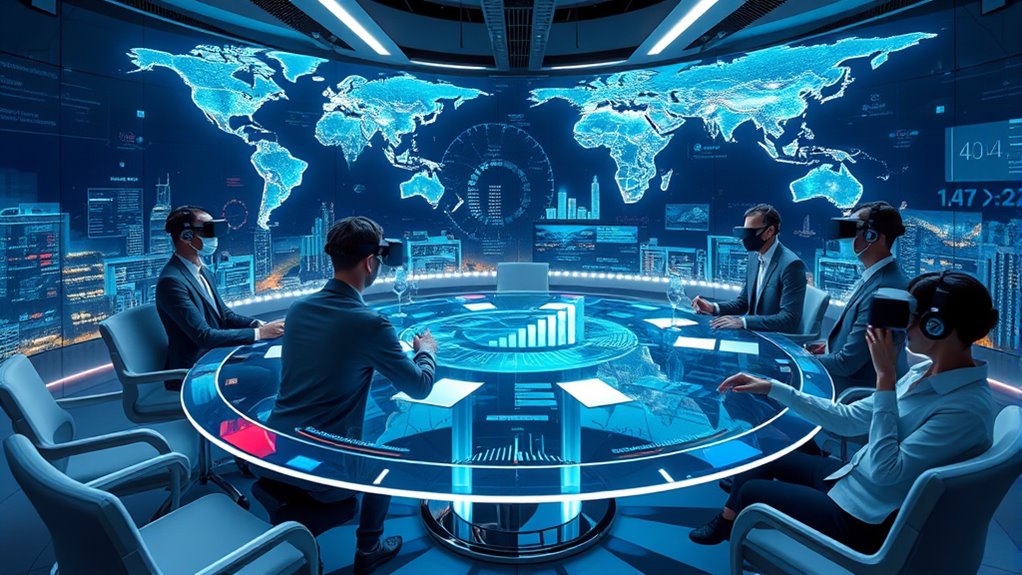
Have you ever wondered how the digital world is transforming the way businesses operate? One of the most exciting developments is the rise of the enterprise metaverse, where companies leverage virtual worlds for training, meetings, and collaboration. In this space, virtual collaboration becomes seamless, allowing teams to work together across distances as if they were in the same room. Instead of traditional video calls or emails, you can immerse yourself in a shared digital environment, making interactions more engaging and effective. This heightened level of engagement helps foster better communication, quicker problem-solving, and a stronger sense of team unity, even when members are geographically dispersed.
At the core of these virtual environments are digital avatars—personalized, animated representations of users. These avatars serve as your virtual presence, enabling you to navigate the metaverse with a sense of identity and agency. When you enter a virtual meeting, instead of just hearing voices or seeing static images, you see and interact with your colleagues’ avatars, which can be customized to reflect individual personalities or professional branding. This adds a layer of realism and human connection that’s often missing from traditional remote interactions. Digital avatars help break down barriers of distance and formality, making conversations more natural and spontaneous. They allow you to express gestures, facial expressions, and even body language, which are critical for effective communication and building rapport.
Digital avatars foster human connection, enabling natural gestures and expressions in virtual meetings for more engaging communication.
Using virtual collaboration tools within the metaverse, you can participate in immersive training sessions that mimic real-world scenarios. Whether it’s practicing complex machinery operation, conducting safety drills, or exploring new product designs, the virtual environment offers hands-on experience without the risks or costs associated with physical setups. This experiential approach accelerates learning and improves retention because you’re actively engaged rather than passively watching a presentation. The same applies to meetings, where virtual spaces can be transformed into dynamic conference rooms, brainstorming zones, or project hubs. Here, you can share digital assets, annotate models, or run simulations in real time, making collaboration more interactive and productive.
The enterprise metaverse isn’t just about replacing existing tools; it’s about enhancing how you work, learn, and connect. Virtual collaboration through digital avatars creates a more humanized digital experience, making remote interactions feel more personal and engaging. It’s a powerful way for businesses to innovate, streamline operations, and foster stronger relationships across teams, regardless of physical location. As this technology continues to evolve, expect your digital workplace to become more immersive, collaborative, and efficient—reshaping the future of enterprise communication and training. Additionally, understanding contrast ratio and its impact on image quality can help organizations choose better visual tools to complement virtual environments.
Frequently Asked Questions
How Secure Are Enterprise Metaverse Platforms Against Cyber Threats?
You might wonder about the security of enterprise metaverse platforms against cyber threats. They face cybersecurity challenges like data breaches and unauthorized access, so it’s essential to implement strong data protection measures. Platforms often use encryption, multi-factor authentication, and regular security updates to safeguard your information. While no system is completely invulnerable, proactive security practices help guarantee your data remains protected and your virtual environment stays secure.
What Are the Costs Associated With Implementing a Metaverse Solution?
You’ll need to do a thorough cost analysis and budget planning to implement a metaverse solution. Expenses include platform development or licensing, hardware upgrades, and ongoing maintenance. Training staff and integrating the system also add to costs. While initial investments can be significant, careful planning helps you maximize resources and ensure the project stays within budget, making the benefits of virtual collaboration worthwhile.
How Do Virtual Worlds Impact Employee Productivity and Engagement?
Virtual worlds boost your employee productivity and engagement by enabling virtual collaboration and immersive learning. When you use these environments, your team can work together seamlessly, regardless of location, fostering stronger communication and teamwork. Immersive learning experiences make training more effective, helping employees grasp concepts faster. As a result, you see increased motivation, better performance, and a more connected, engaged workforce that’s enthusiastic to innovate and grow within the company.
Can Small Businesses Effectively Adopt Enterprise Metaverse Technologies?
Sure, small businesses can jump into the virtual adoption pool, but beware of those pesky cost barriers that make the swim more of a splish-splash. While it’s tempting to think the metaverse is a playground for giants, clever startups find affordable tools and scalable solutions. With a bit of ingenuity, you’ll turn virtual worlds into a cost-effective way to train, meet, and grow—no giant budget needed.
What Are the Privacy Considerations for Users in Corporate Virtual Environments?
In corporate virtual environments, you need to prioritize data privacy and obtain clear user consent. Be transparent about how you collect, store, and use data, ensuring users understand their rights. Implement strict security measures to protect sensitive information and regularly update privacy policies. By actively managing these privacy considerations, you create a trusted virtual space where users feel safe and confident participating in training and meetings.
Conclusion
As you step into the enterprise metaverse, imagine a future where distance fades, and collaboration becomes limitless. This virtual domain isn’t just a tool; it’s a revolution that transforms training and meetings, making them more immersive and effective. Embrace this digital frontier, for it holds the power to redefine your business’s success. Don’t let it pass you by—seize the opportunity to shape a future where innovation and connection reign supreme.
Halloween Picks
halloween
As an affiliate, we earn on qualifying purchases.