
TL;DR

Get hardware and tech essentials delivered free — and shop member deals
- Fast, free delivery on millions of items
- Access to Prime Big Deal Days deals on October 6–7
- Prime Video, Amazon Music and more included
Russia plans to allocate nearly 60 billion rubles over the next three years to its system for filtering and blocking internet resources, according to a draft budget appendix reviewed by Forbes Russia. The reason for the higher planned spending has not been explained; experts cited equipment costs, growing traffic and sanctions as possible factors.
Russia plans to spend nearly 60 billion rubles over the next three years on the system used to filter and block internet resources, according to an appendix to the draft budget reviewed by Forbes Russia. The proposed funding would go to the Chief Radio Frequency Center, a regulator-linked entity that operates the system, but the government has not explained why the amount is higher than an earlier plan.
The money is designated for the Chief Radio Frequency Center, known by its Russian initials as GRChTs. The center operates the Automated System for Ensuring Security of the Russian Segment of the Internet, or ASBI, under Roskomnadzor, the federal media regulator. The draft allocation concerns the next three years; it is a spending plan, not confirmation that the full amount has already been spent.
Two years ago, the plan called for 32 billion rubles for ASBI over the same period. The new figure is nearly twice that earlier allocation, but the documents cited in the report do not explain the increase. The press services of the Finance Ministry and Digital Development Ministry did not respond to Forbes Russia’s requests for comment.
A source close to the Digital Development Ministry told Forbes Russia that explanations “haven’t been written into the bill yet” and “should be expected by the end of the year.” That leaves the official rationale pending. Experts cited in the report pointed to higher equipment prices, rising traffic volumes and difficulties obtaining imported components amid sanctions.
More Funding for Traffic Controls
The proposed increase would provide more funding for infrastructure that enables Russian authorities to filter, slow or block internet traffic. Under the “sovereign Runet” law, telecom operators must install traffic-filtering equipment known as TSPU on their networks. The equipment gives Roskomnadzor technical capacity to apply restrictions across those networks.
More spending could support upgrades or expansion, but the budget appendix alone does not identify specific purchases or new filtering measures. The experts’ explanations describe possible cost pressures; they do not establish how much of the proposed funding would go to each one. The scale and timing of any changes to the system remain unknown.
As an affiliate, we earn on qualifying purchases.
How Russia’s Filtering System Works
ASBI is the broader system described in the report, while TSPU refers to equipment installed on telecom operators’ networks. The “sovereign Runet” law requires operators to install this equipment. It can be used to filter, slow and block traffic, according to the source material.
Alexey Amelkin, president of the Association of Telecom Operators Makatel, said TSPU equipment had not yet been installed on operator networks in Russian-occupied territories of Ukraine. He said new equipment could cost more because of sanctions and global price increases for components such as RAM. His comments concern factors that may affect costs, not an official breakdown of the budget proposal.
The report also describes technical demands that can rise as internet traffic grows: filtering systems may need more powerful processors, memory and storage. It says sanctions make imported components harder for Russia to obtain. The provided material does not quantify the effect of traffic growth, sanctions or component prices on the planned sum.
““Explanations haven’t been written into the bill yet — they should be expected by the end of the year.””
— A source close to Russia’s Digital Development Ministry, as quoted by Forbes Russia
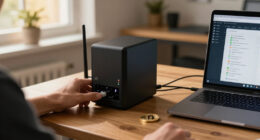
network traffic filtering hardware
As an affiliate, we earn on qualifying purchases.
As an affiliate, we earn on qualifying purchases.
Budget Rationale Still Pending
The draft materials cited by Forbes Russia do not specify why the planned sum rose from the earlier 32 billion rubles, or how the nearly 60 billion rubles would be divided among operations, equipment and other costs. The ministries contacted by Forbes Russia had not provided comment at the time of its report.
It is also unclear whether the proposed allocation will change before the budget is finalized, what equipment would be purchased, and whether the plan includes extending TSPU coverage to networks in occupied Ukrainian territories. The possibility that systems may use AI was raised by Amelkin as a potential cost factor, not confirmed as an approved feature or procurement plan.
firewall appliances for internet security
As an affiliate, we earn on qualifying purchases.
As an affiliate, we earn on qualifying purchases.
Government Explanation Due Later
The next stated milestone is an explanation expected by the end of the year, according to the source close to the Digital Development Ministry. The draft budget may also be revised before final approval; the source material does not provide a date for that process or confirm when the three-year spending period begins.
Further details would be needed to determine which costs account for the increase and what changes, if any, operators or internet users may see. Until the government publishes a breakdown or the budget is finalized, the amount remains a proposed allocation and the reasons for it remain unsettled.
As an affiliate, we earn on qualifying purchases.
Key Questions
How much does Russia plan to spend on internet filtering?
The draft budget appendix reviewed by Forbes Russia sets aside nearly 60 billion rubles over three years for the system that filters and blocks internet resources.
Why has the planned amount increased?
The government has not yet given an official explanation. Experts cited in the report pointed to rising equipment prices, increasing traffic and sanctions-related difficulty obtaining imported components.
What are ASBI and TSPU?
ASBI is the automated system operated by the Chief Radio Frequency Center under Roskomnadzor. TSPU is traffic-filtering equipment that telecom operators are required to install under Russia’s “sovereign Runet” law.
Does the budget confirm that the system will use AI?
No. Amelkin said that using AI to make TSPU systems “smarter” could require funding. The report does not confirm an approved AI feature or a related procurement plan.
Source: rss
Fall Picks
fall essentials
As an affiliate, we earn on qualifying purchases.