
TL;DR
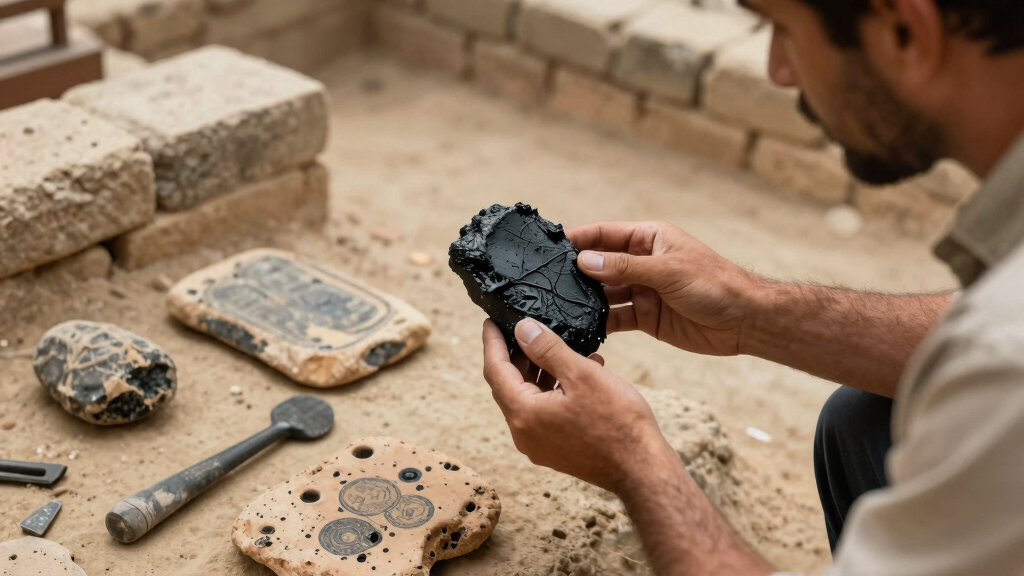
Researchers have identified that Sumerian craftsmen used deliberate recipes to produce bitumen composites with specific properties, akin to modern asphalt. This discovery highlights advanced engineering practices in ancient Mesopotamia. The findings are based on microscopic analysis of archaeological samples from Abu Tbeirah, Iraq.
New scientific analysis confirms that Sumerian craftsmen around 4,000 years ago used deliberate, recipe-based methods to produce bitumen composites with properties resembling modern asphalt, revealing advanced engineering knowledge in ancient Mesopotamia.
The research examined 59 archaeological samples of Sumerian bitumen composites from Abu Tbeirah, Iraq, using digital microscopy and image processing. The study identified distinct formulations tailored for specific functions, such as waterproofing, adhesion, and structural reinforcement, indicating that these were not simple, natural deposits but engineered materials.
Some composites were fiber-rich to improve toughness and flexibility, while others incorporated mineral inclusions for stability under stress. The samples also suggest a recycling economy, as craftsmen reheated and reused bitumen, adjusting recipes with fresh fillers to maintain desired properties. This points to a sophisticated understanding of material science and manufacturing processes in ancient Sumer.
Implications for Ancient Engineering and Trade
This discovery challenges the view of ancient Mesopotamian technology as primitive, showing that Sumerians developed standardized, engineered materials similar to modern asphalt. It underscores their advanced understanding of composite materials, which supported city infrastructure, waterproofing, and trade networks across wet floodplains. Recognizing these recipes as managed technologies highlights the level of craftsmanship and knowledge transfer in early urban societies, influencing interpretations of ancient technological capabilities.

Road Rescue Black Asphalt Repair 50 lb.
- Easy to Apply: No tools or mixing needed
- Durable and Long-Lasting: Resists heavy traffic and weather
- Versatile Use: Fills cracks and potholes on various surfaces
As an affiliate, we earn on qualifying purchases.
As an affiliate, we earn on qualifying purchases.
Sumerian Use of Bitumen in Urban Development
Bitumen was abundant along the Tigris and Euphrates rivers, crucial for waterproofing reed boats, brickwork, and floodplain infrastructure. Historically, natural seepages supplied the material, but recent analysis shows that Sumerian craftsmen deliberately formulated specific composites for different functions, reflecting a technological approach akin to modern engineering. This development aligns with the broader context of Sumerian innovation in construction and trade, supporting their urban growth and resilience in a challenging environment.
“The microscopic features reveal deliberate formulations that indicate planned production, not just accidental contamination, showing advanced engineering in Sumerian bitumen use.”
— an anonymous researcher

Sikalastic HLM 5000 GC Waterproofing Membrane, 5 Gallon – General Purpose Bitumen Modified Polyurethane Coating for Green Concrete, Foundations & Below-Grade Waterproofing
- Easy to Apply: No mixing needed for quick use
- Flexible Elastomeric Coating: Adapts to surface movement
- Wide Temperature Range: Suitable for all climates
As an affiliate, we earn on qualifying purchases.
As an affiliate, we earn on qualifying purchases.
Unresolved Questions About Sumerian Material Engineering
While the analysis confirms deliberate formulations, it remains unclear how widespread these practices were across Sumer or how they evolved over time. The exact proportions and recipes used in different contexts are still being studied, and whether similar techniques were employed in other regions is unknown.
Bluestar Flexible Asphalt Crack Filler, DIY – No Special Tools Needed, Fill Cracks in Asphalt Driveways and Parking Lots. 16 fl. oz. Bottle.
- Easy DIY Application: No special tools required
- Weather-Resistant Formula: Remains flexible in hot and cold
- Wide Crack Filling: Fills cracks up to one inch
As an affiliate, we earn on qualifying purchases.
As an affiliate, we earn on qualifying purchases.
Future Research on Ancient Composite Technologies
Researchers plan to analyze additional samples from other Sumerian sites to determine the extent of standardized bitumen recipes. Further studies may also explore how these materials influenced trade, construction, and technological transfer in ancient Mesopotamia, providing deeper insights into early engineering practices.
Loctite PL Premium Polyurethane Construction Adhesive, 10 fl oz Cartridge, 1 Pack – Versatile Construction Glue for Wood, Concrete, Stone, Metal & More
- All-Purpose Adhesive: Bonds to most materials for various projects
- Three Times Stronger: Offers 3x the strength of standard adhesives
- Versatile Use: Suitable for wood, concrete, metal, and more
As an affiliate, we earn on qualifying purchases.
As an affiliate, we earn on qualifying purchases.
Key Questions
How did Sumerians produce their bitumen composites?
They likely used deliberate mixtures of natural bitumen with plant fibers and mineral inclusions, reheating and reworking the materials to achieve desired properties, based on microscopic analysis of archaeological samples.
What functions did these bitumen recipes serve?
They were used for waterproofing boats and buildings, as adhesives for tools and decorative inlays, and possibly as standardized trade or construction blocks, tailored for specific tasks.
Does this mean Sumerians had a form of materials engineering?
Yes, the evidence suggests they developed repeatable, engineered recipes for their bitumen composites, indicating a sophisticated understanding of material properties and manufacturing processes.
Are similar practices seen elsewhere in ancient civilizations?
This remains an open question; ongoing research aims to determine whether other early societies also developed standardized composite recipes for construction and trade materials.
Why is this discovery important today?
It reshapes our understanding of ancient technological capabilities, showing that early civilizations like Sumer had advanced engineering knowledge that supported their urban and economic development.
Source: Ancient Origins