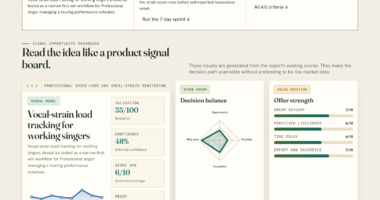
📊 Full opportunity report: Compare GLP-1 Access Across Pharmacies And Direct Channels on IdeaNavigator AI — validation score, market gap, and execution plan.

Get hardware and tech essentials delivered free — and shop member deals
- Fast, free delivery on millions of items
- Access to Prime Big Deal Days deals on October 6–7
- Prime Video, Amazon Music and more included
TL;DR

IdeaNavigator AI has proposed a GLP-1 pharmacy index that would compare cash prices and dose-level availability across retail pharmacies and manufacturer-direct channels. The concept calls for a free consumer finder and a paid data feed for health care and benefits buyers; no launch, signed pilot, or operating index is reported.
IdeaNavigator AI’s proposal describes a searchable index for comparing cash prices and reported dose availability for four brand-name GLP-1 drugs across retail pharmacies and manufacturer-direct channels. The material outlines a potential product and validation plan; it does not report that the index has launched, that buyers have signed up, or that the service has verified live inventory.
According to the IdeaNavigator AI proposal, the index would cover Ozempic, Wegovy, Zepbound and Mounjaro, with searches by drug, dose and ZIP code. Its proposed consumer tool would show reported stock and compare cash prices from channels including LillyDirect, NovoCare, Costco and Walmart, alongside a discount-price layer. The proposal gives a broad price range of roughly $199 to more than $1,000 per month, but does not specify a date, dose-by-dose schedule, or consistent comparison method for that range.
The proposal pairs a free patient-facing finder with paid access to an availability-and-price data feed. It names telehealth prescribers, employer benefits teams, pharmacy benefit managers and brokers as potential business customers. The document suggests licensing a dashboard or API and possibly receiving referral fees from pharmacy or manufacturer-direct channels; it does not identify customers, pricing, or an agreed commercial arrangement.
For an initial version, IdeaNavigator AI proposes combining crowdsourced stock reports with normalized public price information, then adding alerts for particular doses. Its proposed test would focus on one metro area and run for 60 days. The proposal sets two target signals: at least 200 consumer stock reports and at least two B2B prospects signing a paid pilot or letter of intent. These are proposed thresholds, not achieved results.
A Price Search With Dose-Level Detail
Patients paying without insurance may encounter different prices depending on the drug, dose, eligibility rules and purchasing channel. A comparison tool that presents those conditions could help users identify where a prescribed dose is reported available and what a cash purchase may cost. Price and stock are separate details: an advertised price does not establish that the requested dose can be obtained locally, and a stock report does not guarantee inventory will remain when a patient tries to order.
The business case in IdeaNavigator AI’s proposal is to give health care and benefits organizations a more consistent view of availability and cash-price variation. The proposal also says GLP-1 drugs account for roughly 20% of pharmacy spending for some employers, but provides no survey name, population or measurement period. The figure therefore cannot be assessed from the material supplied.
A working index would need to state what each listed price includes and who qualifies. Manufacturer offers may have conditions, and cash prices may not be comparable with insured prices or pharmacy discount-card prices. The proposal does not specify how listings would be verified, kept current or reconciled when reports conflict.
Shortages Gave Way to Many Channels
The proposal points to a change in the access landscape after the U.S. Food and Drug Administration determined that shortages of tirzepatide injection products were resolved in December 2024 and semaglutide injection products in February 2025. Those FDA determinations concerned shortage status; they did not establish availability of every dose at every pharmacy. The Associated Press reported that patients could still experience disruptions as products moved through distributors and pharmacies. (Associated Press)
Patients can also seek cash purchases through manufacturer-direct programs. In February 2026, the White House announced the launch of TrumpRx, a portal that directs users to manufacturer purchasing sites or pharmacy coupons rather than dispensing medication itself. A portal listing does not confirm local, dose-specific inventory. (White House announcement; Associated Press report)
The proposal’s product list includes drugs with different approved uses: Ozempic and Mounjaro are used for type 2 diabetes, while Wegovy and Zepbound are approved for weight management. A comparison would need to preserve those distinctions and avoid implying that one product can be substituted for another. Prescriptions and treatment choices remain clinical decisions.
Inventory and Buyer Demand Unverified
The supplied IdeaNavigator AI proposal does not establish that a live index exists or that any pharmacy, manufacturer, telehealth provider or employer has agreed to participate. It reports no results from the proposed consumer or B2B tests. No launch date, coverage map, operating company or named design partner is identified in the material.
The potential reliability of an index would depend on the quality and freshness of its data. Crowdsourced reports can become outdated, while public prices may depend on dose, patient eligibility, supply form, coupon terms and whether the buyer uses insurance. The proposal does not describe a method for confirming inventory, updating prices, labeling expired reports, or accounting for shipping and pharmacy fees.
The proposal does not specify whether the feed would cover only the four named brands and listed channels, or how it would handle other pharmacies and changing offers. Its stated price span of approximately $199 to more than $1,000 lacks a comparison date and like-for-like dose basis, so it is a broad estimate in the proposal rather than a current price quote.
A 60-Day Test Is Proposed
IdeaNavigator AI proposes a single-metro, 60-day test of stock reports and cash prices for the four brand-name drugs. The plan describes a consumer page focused on finding a prescribed dose at a lower cash price, alongside pitches for a normalized data feed to telehealth and employer-benefits buyers.
The proposal’s decision points are 200 consumer reports and two B2B prospects agreeing to a paid pilot or letter of intent. It does not say when the test would start or identify a metro area. No test results are reported. Patients should confirm price, eligibility and availability directly with the pharmacy or dispensing channel before relying on a listing.
Source: IdeaNavigator AI
Key Questions
Has the GLP-1 pharmacy index launched?
No launch is reported. IdeaNavigator AI describes a proposed tool and a plan to test it in one metro area.
Which drugs would the proposed index cover?
The proposal names Ozempic, Wegovy, Zepbound and Mounjaro, searchable by drug, dose and ZIP code.
Would the index show insurance prices?
The proposal focuses on cash prices and availability. It does not describe an insurance benefit or insured-price comparison.
How would the proposed service earn revenue?
It proposes licensing an availability-and-price feed or dashboard to telehealth, employer-benefits and pharmacy-benefit buyers, with possible referral fees from pharmacy or manufacturer-direct channels.
What would count as an initial validation?
The proposed 60-day test would aim for 200 consumer stock reports in one metro area and at least two B2B prospects signing a paid pilot or letter of intent.
Source: IdeaNavigator AI
Fall Picks
fall essentials
As an affiliate, we earn on qualifying purchases.