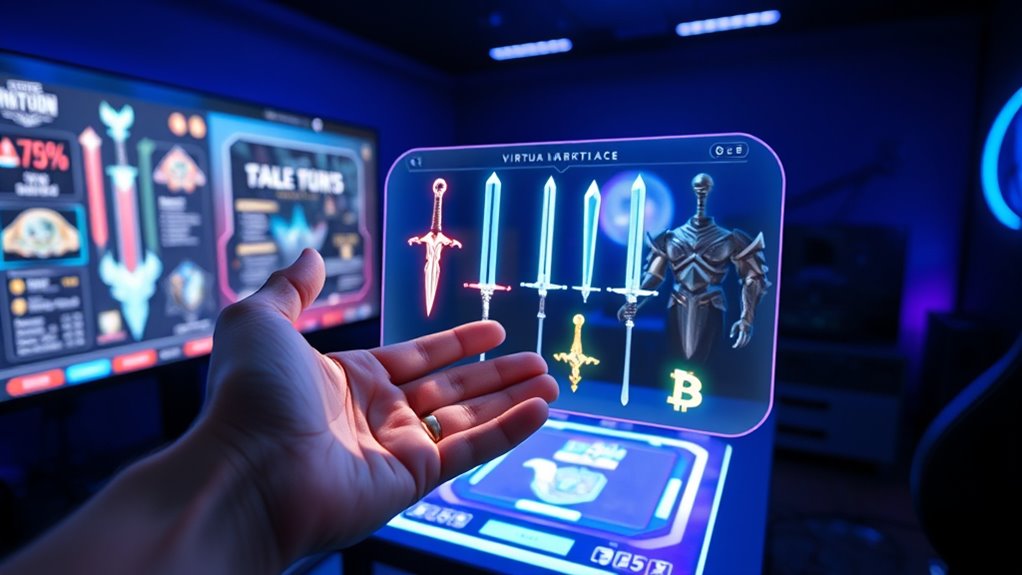

NFTs in gaming let you truly own your in-game assets by using blockchain technology. You can acquire, trade, and sell items like skins, characters, and land securely and transparently outside the game environment. This shift gives you control over your digital possessions and opens new opportunities to monetize your gaming efforts. If you’re curious about how this innovation shapes the future of gaming and digital ownership, there’s more to discover below.
Key Takeaways
- NFTs enable true digital ownership of in-game assets, making items unique, tradable, and portable on the blockchain.
- Players can prove ownership and securely trade NFTs representing skins, characters, or virtual land outside the game.
- Blockchain ensures transparent verification, preventing asset manipulation or deletion, and safeguarding players’ digital possessions.
- The play-to-earn model allows gamers to monetize achievements and assets by selling NFTs on open marketplaces.
- NFTs connect in-game items to broader digital economies, empowering players with control over their virtual assets.
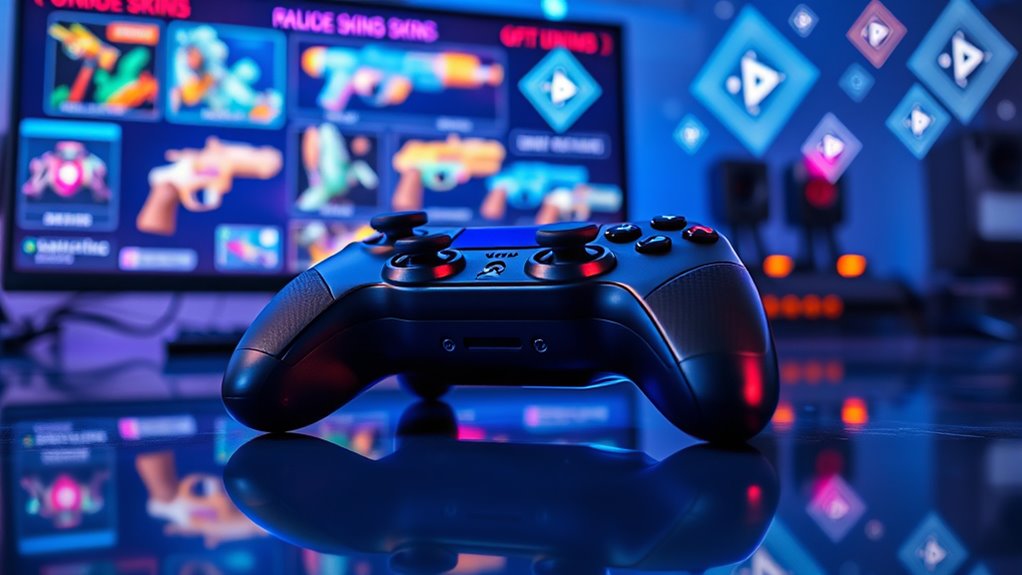
Have you ever wondered how blockchain technology is transforming the gaming world? It’s revolutionizing how players interact with in-game assets, giving you the ability to truly own what you earn and acquire. Gone are the days when your in-game items, like skins, weapons, or characters, were controlled solely by game developers. Now, with NFTs—non-fungible tokens—you gain digital ownership of your assets, making them unique, tradable, and portable across different platforms. This shift is closely tied to the rise of play to earn models, where you can generate real value through your gameplay. Instead of simply playing for fun, you now have the opportunity to earn tangible rewards and build a digital portfolio of valuable assets that are verifiable on the blockchain.
Blockchain transforms gaming by enabling true ownership of in-game assets through NFTs and play-to-earn models.
When you participate in play to earn games, you’re not just completing quests or leveling up—you’re actively acquiring NFTs that represent your in-game accomplishments. These NFTs serve as proof of ownership, stored securely on the blockchain, which means nobody can delete or manipulate them. This digital ownership grants you unprecedented control over your items, allowing you to trade, sell, or showcase your assets outside the game environment. It turns your gaming efforts into something more than just entertainment; it becomes a way to build a digital collection that has real-world value. Whether it’s rare skins, exclusive characters, or special weapons, each NFT is unique, and its scarcity often drives up its worth.
This new model also empowers you to participate in a broader economy. Instead of being limited to the game’s ecosystem, you can list your NFTs on open marketplaces, reaching a global audience of collectors and traders. This creates opportunities to monetize your time and skills, transforming gaming into a potential source of income. Plus, since NFTs are stored on the blockchain, you benefit from transparency and security, knowing your assets are yours and yours alone. The concept of digital ownership extends beyond just in-game items; it can include avatars, land plots, and even entire virtual worlds. As blockchain technology continues to evolve, the line between gaming and digital asset investment blurs, opening up innovative ways to play, earn, and own.
In essence, the integration of NFTs into gaming isn’t just about owning assets; it’s about redefining what’s possible within the gaming universe. You’re no longer limited by a game’s restrictions—you can truly own, trade, and profit from your in-game possessions, making your gaming experience more personal, valuable, and connected to the wider digital economy. This digital ownership is made possible by blockchain technology, which provides a secure and transparent record of your assets.
Frequently Asked Questions
Can Players Truly Own Their In-Game Assets Long-Term?
Yes, you can truly own your in-game assets long-term with NFTs, thanks to digital ownership on the blockchain. This technology guarantees that your assets are unique, secure, and transferable beyond the game’s confines. You have control over your items, allowing you to transfer or sell them whenever you want. With NFTs, your ownership isn’t just within the game—it’s a permanent part of the blockchain, giving you real, lasting control.
How Do NFTS Impact Game Balance and Fairness?
NFTs can subtly influence game balance and fairness, but they also promote player empowerment through digital scarcity. By owning unique assets, you gain more control and customization, which encourages a fairer environment. However, if not managed carefully, NFTs might tip the scales toward wealthier players. Overall, they can enhance fairness by giving you genuine ownership, but developers need to make certain these assets don’t create unfair advantages.
What Are the Risks of Purchasing NFT Assets?
When you purchase NFT assets from an NFT marketplace, you face risks like digital scarcity being artificially inflated, which can mislead you about an item’s true value. Prices can also be volatile, and the market’s lack of regulation means scams and fraud are common. Additionally, there’s a chance that the NFT may become worthless if the project loses support or the blockchain standards change, making your investment uncertain.
Are NFTS in Gaming Environmentally Sustainable?
NFTs in gaming are like delicate butterflies, requiring careful attention to their environmental impact. They aren’t entirely sustainable yet, mainly due to the energy-intensive nature of blockchain technology. However, with advancements in blockchain transparency and the shift to eco-friendly consensus mechanisms, digital ownership through NFTs could become more sustainable. You can help by supporting games that prioritize greener blockchain solutions.
How Can Developers Integrate NFTS Without Disrupting Gameplay?
To integrate NFTs seamlessly, focus on preserving gameplay while emphasizing digital scarcity, making each asset unique and valuable. Use token interoperability so players can trade assets across different games and platforms effortlessly. You should design NFT features that enhance, not hinder, the gaming experience, ensuring they add value without disrupting flow. By doing this, you create a balanced environment where players enjoy ownership benefits without compromising gameplay integrity.
Conclusion
You now see how NFTs revolutionize gaming by giving you true ownership of in-game assets. With the NFT market in gaming expected to grow at a compound annual rate of 35% through 2025, it’s clear this technology is shaping the future of play. Imagine trading your rare skins or unique characters across platforms, all secured on the blockchain. Embrace this change, and you’ll be part of a gaming revolution where your assets truly belong to you.