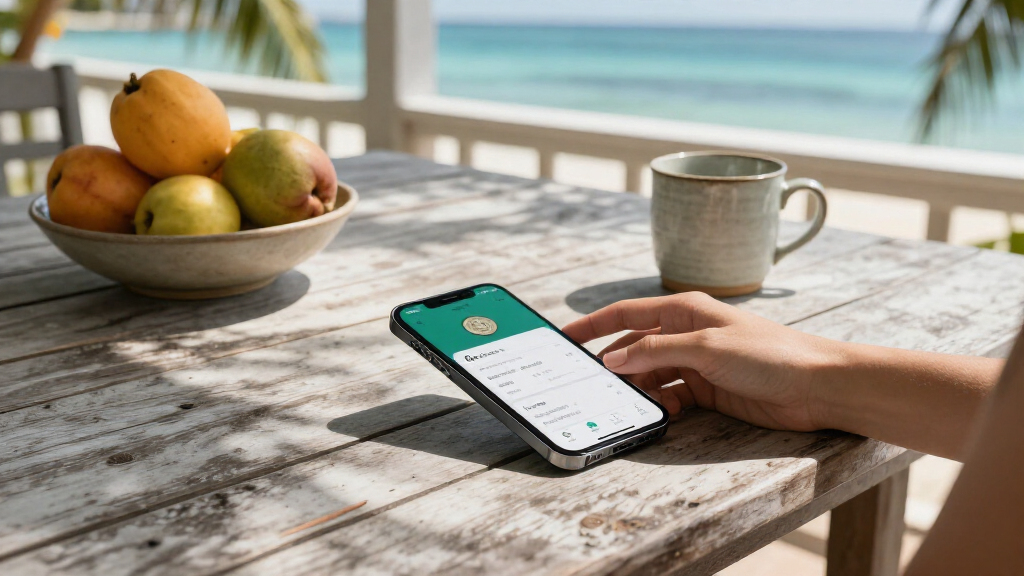

🔍 Read the full analysis: What AI’s Future Might Learn From The Marshall Islands’ Basic Income on ThorstenMeyerAI.com

Get hardware and tech essentials delivered free with Prime
- Fast, free delivery on millions of items
- Prime Video, Amazon Music and more included
- Member-only deals all year
TL;DR
The Marshall Islands completed the first year of Enra, a quarterly payment for eligible citizens living in the country, and approved $32.5 million for year two, alongside a $3.2 million top-up. The program reaches a large share of residents, but no public evaluation yet shows how it has affected households or the economy.
The Marshall Islands has completed Enra’s first year, paying eligible citizens living in the country four quarterly installments, and approved $32.5 million for the program’s second year, plus a $3.2 million top-up. The payments reached tens of thousands of people, but no public evaluation has yet established what the program changed for recipients or the wider economy.
The final payment of the first year was $215.85 per person and went to 40,714 people in August 2026, according to the Marshall Islands Journal, citing the Social Security Administration’s administrator. President Hilda Heine has said the program covered more than 95% of the resident population. Eligibility is limited to Marshallese citizens who live in the country; citizens living abroad are excluded.
Enra’s official name is the Individual Support Distribution. It is funded from a fixed annual allocation and paid quarterly, so each person’s payment can change as the number of eligible people changes or outside funding is added. The first payment, in November 2025, was $201.92. As registrations grew, the March 2026 payment fell to about $160. A $3.2 million World Bank grant helped lift the third and fourth payments, with the final installment higher than the launch payment.
On September 2, the US–Marshall Islands trust fund committee approved $32.5 million for year two. Parliament passed a budget on September 18 that included that amount and a separate $3.2 million Enra top-up. The previous year’s budget allocation was $27.6 million. The government’s stated financing source is a trust fund established under the Compact of Free Association with the United States, which was valued at about $1.77 billion at the end of July 2026.
Infographic 01 · Enra, the first year
Four payments, one fixed pot
How the Marshall Islands paid a basic income to almost every resident citizen between November 2025 and August 2026.
- Nov 2025First payment: $201.92 to more than 33,000 people. MISSA had enrolled 33,119 by 30 Sep 2025.Launch ceremony in Majuro, 26 Nov
- End Mar 2026About $160. Delayed a month to vet new registrations and residence. More than 37,000 registered, same fixed budget.Citizens away more than 3 months are removed from the list, with exceptions
- End May 2026About $200 again, thanks to a $3.2 million World Bank grant ($1.6 million per quarter). More than 41,000 on the eligible list.Pushed by the president over fuel and food prices
- Aug 2026$215.85 to 40,714 people. Fewer paper checks than in earlier rounds.MISSA administrator to the Marshall Islands Journal
Payment per person, year one
US dollars per quarter · March and May rounded as reported
Why the amount moves
- Enra is a fixed annual budget shared equally among everyone eligible that quarter.
- More registrations mean a smaller share unless the budget grows.
- Roughly $780 per person in year one, about 12% of GDP per person (IMF: $6,417, FY2023). My arithmetic.
Sources: Marshall Islands Journal (27 Nov 2025, 26 Feb, 22 May, 6 Aug, 27 Aug 2026) · IMF, 10 Sep 2025. March and May amounts as reported (“about”).
Powered by Thorsten Meyer AI
A Nationwide Test With Limited Evidence
Enra is relevant to debates about income support as automation reshapes work because it operates nationally rather than as a small, time-limited trial. It offers a real-world case of an unconditional payment reaching a large share of a country’s residents, including children, rather than a selected group in a pilot project.
But the first year does not yet answer the questions that policymakers elsewhere are likely to ask: whether recipients experienced more financial security, whether spending or employment changed, and whether the program affected poverty or local prices. The available figures describe coverage, payment amounts and funding, not measured outcomes. A national program can show how payments are administered at scale, but without a published evaluation it cannot by itself establish what similar programs would do in other economies, particularly those with different tax bases and labor markets.
The program’s costs also matter. The International Monetary Fund estimated Enra would cost 8.1% of GDP in fiscal 2026 and urged the government to replace it “at the first feasible opportunity” with a targeted scheme. That is the IMF’s policy position, not a finding that Enra has failed. It underscores the tension between broad, equal payments and the long-term affordability of financing them.
Products Worth Considering

Trezor Safe 7 Crypto Hardware Wallet

Ledger Nano X Bluetooth Crypto Wallet

Apple MacBook Air 13-inch with M5 chip, 16GB memory, 1TB SSD, and 12MP Center Stage camera (Midnight)
As an affiliate, we earn on qualifying purchases.
How Enra Payments Are Funded
Enra’s first payment was issued on November 26, 2025. The country’s payment system allows eligible residents to receive money by check, bank deposit or the Lomalo phone wallet. Digital delivery has drawn attention because the wallet uses a token called USDM1, but the Marshall Islands Ministry of Finance rejects describing it as a stablecoin. The ministry says it is a U.S.-dollar sovereign bond backed one-to-one by short-dated U.S. Treasuries, and says it is not a cryptocurrency, central bank digital currency or stablecoin.
The payment methods address practical challenges across a widely dispersed Pacific nation. The source report says the main bank branches are on Majuro and Ebeye, while mailed checks can take weeks to reach outer islands. The share of recipients using the wallet, however, has not been published.
Enrollment grew from 33,119 people by September 30, 2025, to more than 37,000 by the second payment and over 41,000 on the eligible list by May 2026. The government also checks whether applicants live in the country. According to the finance minister, the immigration office reviews departures; citizens who remain abroad for more than three months are removed, with exceptions including diplomats, students and patients sent overseas for treatment. Those changing registration totals help explain why Enra’s per-person amount is not fixed.
Outcomes and Wallet Use Remain Unreported
The central evidence gap is that no public evaluation of Enra has been published. It is not yet clear how the payments affected recipients’ household finances, work decisions, poverty, prices or other outcomes. The payment count shows the program’s reach, but it does not establish its social or economic effects.
Other details are also missing from the published information summarized in the source report. The number of people using the Lomalo wallet has not been released, and the eventual effect of the larger second-year allocation is unknown. The reported trust-fund value and budget figures describe financing, but do not by themselves establish how sustainable Enra would be over the longer term.
Second-Year Payments and Evaluation
The next confirmed step is the program’s second year, funded under the September budget. Future quarterly payments will show how the expanded allocation and any changes in enrollment affect the amount received by each eligible person. Enra’s payments are divided from a fixed pot, so individual installments can shift if the eligible population or supplementary funding changes.
A public assessment of outcomes would be needed to clarify what the first year achieved and to inform the debate over whether the program should continue in its current form. The IMF has called for a move toward targeted support, while the government has approved more funding for year two. Whether the authorities will publish an evaluation, change eligibility or adopt the IMF’s recommendation has not been stated in the source material.
Key Questions
What is Enra?
Enra is the Marshall Islands’ Individual Support Distribution, a quarterly payment for citizens who live in the country. It has no means test or work requirement, according to the source report.
How much did people receive in the first year?
Payments varied as enrollment and supplementary funding changed. The first installment was $201.92, while the August 2026 payment was $215.85 per person. The source report estimates a resident received roughly $780 across the year.
Who is eligible for Enra?
Eligible recipients are Marshallese citizens living in the Marshall Islands, including children. Citizens living abroad generally do not qualify, subject to reported exceptions in the residency checks.
Has Enra been shown to reduce poverty or change employment?
No public evaluation has been published in the source material, so its effects on poverty, employment and household finances remain unclear.
Where does the program’s money come from?
The government funds Enra through a trust fund established under the Compact of Free Association with the United States, with additional support including a $3.2 million World Bank grant for first-year payments.
Source: ThorstenMeyerAI.com