🔍 Read the full analysis: Inside Neoclouds: The Economics Of Renting AI Chips on ThorstenMeyerAI.com

Get hardware and tech essentials delivered free with Prime
- Fast, free delivery on millions of items
- Prime Video, Amazon Music and more included
- Member-only deals all year
TL;DR
Neoclouds rent GPU computing to AI customers, but their economics depend on keeping costly chips busy and financing them affordably. CoreWeave reported $3.661 billion in revenue for the quarter ended September 30, 2026; calculations from its filings put depreciation and amortization at about $52 per $100 of revenue and net interest at about $23. These figures illustrate the model’s costs, not a conclusion about the company’s shares.
A November 29 explainer on neocloud economics uses CoreWeave’s latest quarterly results to show how specialist providers make money renting AI computing—and why depreciation and borrowing costs can consume much of their revenue. CoreWeave reported $3.661 billion in revenue for the three months ended September 30, 2026; calculations based on its filings put depreciation and amortization at about $52 and net interest at about $23 for every $100 of revenue.
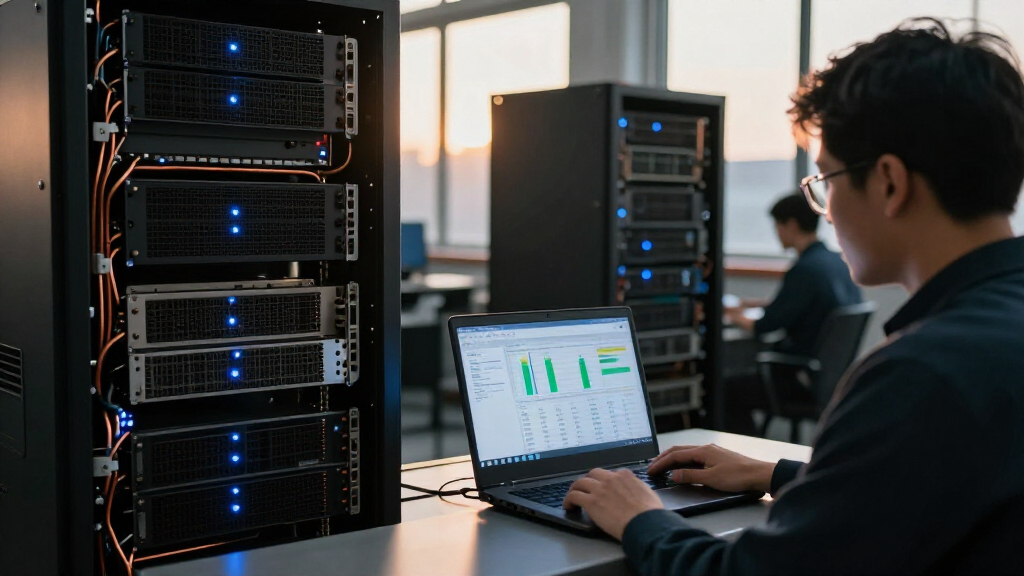
Neoclouds buy and operate servers equipped with graphics processing units, or GPUs, then rent access to that computing capacity, often by the hour. Unlike large cloud providers that sell many types of services, they focus mainly on GPU computing for AI. Their revenue depends on customers using the machines: an hour of capacity left idle cannot be sold later.
The explainer’s CoreWeave figures are calculated from the company’s results for the quarter ended September 30, 2026, released November 10. Depreciation and amortization were $1.889 billion, equal to about 51.6% of revenue. Net interest was $846 million, or about 23.1%. The article rounds these to $52 and $23 per $100 of revenue. They are selected cost measures, not a complete account of the company’s profits or cash flow.
Long customer commitments and financing are central to the model. The source says customers sign long-term take-or-pay contracts, under which they owe payment for reserved capacity even if they do not use it. Lenders can use those contracts and the equipment as support for financing. The explainer gives CoreWeave an average contract duration of about five years and a six-year depreciation period for technology equipment, leaving different timelines for revenue commitments and the accounting life assigned to machines.
Utilization Shapes the Economics
The model links customer demand, chip prices and debt. A provider with high utilization can spread the cost of its servers and data-center operations across more billable computing hours. If demand falls or customers use less reserved capacity, equipment may sit idle while financing and operating obligations remain. That creates exposure to both underused capacity and fixed costs.
Customers may gain another source of AI computing and, in some cases, lower rental prices than those offered by large cloud providers. But the price shown in an index is not necessarily the price a business will pay. The source cites an April 2026 Silicon Data H100 rental index, referenced in a research paper, that put neocloud on-demand rates at about one-third of big-cloud prices. It cautions that index rates can differ from contracted prices and that rental rates change quickly.
For buyers, a lower hourly rate needs to be weighed against contract terms, expected workload and the provider’s ability to keep delivering service. A take-or-pay agreement can leave a customer paying for capacity it no longer needs. The source advises buyers to check how workloads could be moved if a provider encounters trouble; the available material does not detail particular safeguards or provider contingency plans.
Products Worth Considering

LG UltraGear 32-inch QHD Curved Gaming Monitor, 180Hz, 1ms, FreeSync

Ledger Flex Crypto Wallet – Neptune Blue
Apple MacBook Pro 16.2-inch with M5 Pro, 18-core CPU, 20-core GPU, 24GB Memory, 1TB SSD, Silver
As an affiliate, we earn on qualifying purchases.
Contracts, Chips and Depreciation
Large cloud providers—including Amazon, Microsoft, Google and Oracle—offer a broad range of computing and business services. Neoclouds specialize in renting GPU capacity. The source notes that CoreWeave’s 2025 annual report identifies those hyperscalers as competitors and says that a number are also its current customers. That detail illustrates how the market can involve companies that compete in some areas while also buying capacity from one another.
Depreciation is an accounting method for spreading the cost of equipment over the years a company expects to use it. It is not a direct measure of the equipment’s resale value or a cash payment in that period. The source says CoreWeave adopted a six-year depreciation period for technology equipment after changing from five years in 2023. It also reports that Amazon shortened the estimated life for a subset of servers and networking equipment from six years to five beginning in January 2025, citing faster technology development.
These choices matter because AI hardware can lose its competitive usefulness before it physically stops working. The explainer frames the business as a “hotel for chips”: GPU hours resemble room nights, while data halls, power and cooling are part of the operating setup. Unlike an empty room that might be rented on another night, an unused GPU hour is lost revenue for good.
Costs Beyond the Quarterly Snapshot
The reported figures describe one quarter and do not establish how profitable CoreWeave is across its full operations, how much cash remains after investment, or how the business will perform as demand and rental prices change. The $52 and $23 figures are calculations from specified reported line items divided by revenue; they should not be read as the entire cost structure or as a forecast.
The source material does not provide detailed terms for individual customer contracts, the share of capacity currently in use, or how much equipment could be redeployed if demand shifts. It also does not quantify how quickly specific GPU models lose value or whether future customer commitments will match the pace of hardware investment. The cited rental-price comparison is an on-demand index from April 2026, not a current quote or a like-for-like assessment of all contract terms.
Track Demand and Contract Terms
The next evidence will come from later company filings and updates on revenue, equipment investment, financing costs, contract commitments and utilization. Those disclosures can help show whether capacity is being rented at a pace that supports the costs of owning and financing it. The source provides no specific date for a future milestone.
Businesses comparing providers should check current rates rather than rely on an older index, read take-or-pay clauses carefully, and ask what happens to workloads if service is disrupted or a provider faces financial difficulty. These steps do not remove the commercial risks of long commitments or dependence on a specialist supplier, but they clarify what a quoted price includes.
Key Questions
What does a neocloud do?
A neocloud specializes in renting GPU computing capacity, mainly for AI workloads. It differs from a large cloud provider by focusing on this narrower service rather than offering a broad range of cloud products.
Why does utilization matter so much?
Providers earn revenue when customers use rented GPU capacity. An hour left idle cannot be saved and sold later, while equipment, facilities and financing costs may continue. Higher utilization can help spread those costs across more billable hours.
What do CoreWeave’s $52 and $23 figures represent?
They are rounded calculations for the quarter ended September 30, 2026: about $52 per $100 of revenue went to depreciation and amortization, and about $23 per $100 to net interest. They are not a full measure of costs, profitability or cash flow.
What is a take-or-pay contract?
It generally requires a customer to pay for capacity it has reserved even if it does not use all of it. Buyers should review the terms and avoid committing to more capacity than they expect to need.
Are neocloud GPU rentals always cheaper than big-cloud rentals?
No. The source cites an April 2026 on-demand index that showed a lower price for one widely used Nvidia chip at neoclouds, but says actual contract rates can differ and prices move quickly. Buyers should compare current offers and contract terms.
Source: ThorstenMeyerAI.com