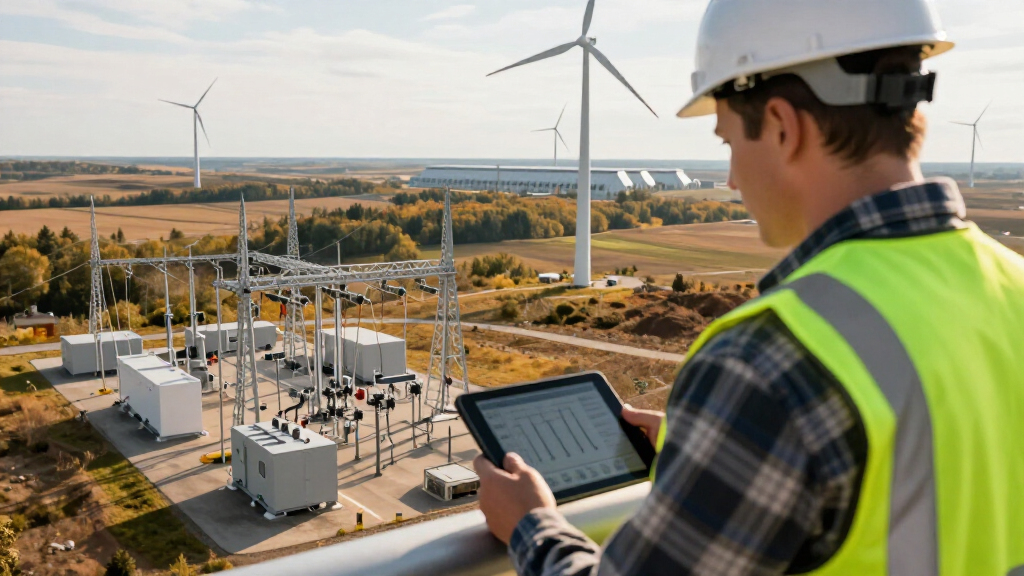

🔍 Read the full analysis: The Importance Of Canada's Energy Infrastructure For AI Growth on ThorstenMeyerAI.com

Get hardware and tech essentials delivered free with Prime
- Fast, free delivery on millions of items
- Prime Video, Amazon Music and more included
- Member-only deals all year
TL;DR
Canada possesses substantial hydroelectric resources, but provincial restrictions and grid constraints are limiting data-center growth. This challenges assumptions about Canada’s energy advantage for AI development and impacts international negotiations.
Provincial restrictions and regulatory delays in Canada are currently limiting new power procurement for data centers, challenging assumptions that Canada offers abundant cheap clean energy essential for AI growth. These developments impact Canada’s competitiveness and influence international negotiations on AI infrastructure and energy access.
Canada boasts over 78 GW of hydroelectric capacity, predominantly in Quebec, BC, Ontario, Manitoba, and Newfoundland & Labrador, supplying roughly 60% of the nation’s electricity. Historically, this resource has been viewed as a key advantage for AI data-center expansion, given the low-cost, renewable power it provides. However, recent policy shifts have introduced constraints. Quebec has restricted new power procurement for large data centers since 2024, proposing a higher tariff of 13 cents per kWh for large consumers—double the existing industrial rates—and facing legal challenges from data-center operators. Meanwhile, British Columbia has allocated only 400 MW over two years, capped at 145 MW per project, which is insufficient to support large-scale AI data centers like the 200 MW campus planned in Germany’s Lübbenau. Ontario and Alberta have implemented policies requiring new projects to bear connection costs, with Alberta explicitly encouraging data-center development but still facing a queue of proposals exceeding 10 GW, with only a fraction likely to be connected.
These restrictions and regulatory hurdles mean that, despite Canada’s hydro resources, the actual available power for new data centers is limited and contested. The current situation contrasts sharply with Europe’s energy landscape, where supply is constrained by infrastructure and regulatory bottlenecks, leading to competition and re-pricing of energy access. Canada’s existing infrastructure, paid off decades ago, is not enough to meet the surging demand for AI data centers without new investment, which is hampered by provincial policies and grid limitations.
Energy is the AI policy: why Canada’s grid matters more than its labs — and why it isn’t free
Almost all the coverage leans on one assumption: Canada has abundant cheap clean power and Europe doesn’t. That assumption is about to be wrong, and the evidence is already public. Europe isn’t being offered a reservoir. It’s being offered a queue — already contested, already being repriced.
- >78 GW installed hydro; ~60% of national generation
- Lowest unit system costs: Quebec C$76/MWh, Manitoba C$91, BC C$100
- Cold climate cuts cooling load; Ontario nuclear expanding
- Ottawa: double capacity by 2050, non-emitting, plus an intertie programme
- Quebec has halted new large data-centre power procurement since 2024
- BC: 400 MW over two years, capped at 145 MW per project
- Alberta: 1,200 MW cap vs a >10 GW queue — a 1-in-8 hit rate
- Canada live capacity ~1.4 GW vs the US 40.6 GW
Procurement restricted since 2024. Data centres are the largest new line item in the supply plan; consumption forecast to rise ~7× by 2035 (200 MW → >1,000 MW).
Capped at 145 MW per project from Feb 2026. For scale: Lübbenau’s first phase alone is 200 MW.
Connection-asset payments, expansion deposits, locational marginal pricing. Shifts the cost — doesn’t remove the constraint. Nuclear expanding.
Federal MoU suspends Clean Electricity Regulations obligations; encourages made-in-Canada data centres. But 1,200 MW capped through 2028.
Energy economics push European AI compute out of Europe. Sovereignty rules push it back in. SecNumCloud requires EU-only storage; CADA’s assurance levels turn on data residency; the Digital Trade Agreement would prohibit “unjustified” localization. Three instruments, three directions. The workable answer is to tier the workloads: classified and DORA-bound work stays on EU soil regardless of price; pre-training runs and synthetic-data generation with no personal or classified data can sit where the electrons are cheap. Not all compute is sovereign compute — treating it as one undifferentiated resource is what makes the trade-off look impossible.
The sovereignty debate has been conducted as a legal argument — ownership caps, adequacy, assurance levels. All of it matters. But the binding constraint of the next five years is physical, measured in megawatts and queue positions. On that measure Canada is genuinely the best partner on offer: real hydro, a nuclear programme, cold climate, critical minerals, a government building sovereign compute. The alliance logic holds — at a smaller scale and higher price than the enthusiasm implies. Buy queue position, co-finance generation, put the sovereignty-bound workloads at home and the rest where the electrons are cheap, and tie it to interties and SMRs rather than one campus. Because Lübbenau’s lesson crosses the Atlantic: the scarce thing was never the model — it was the connection to the grid.
Implications for Canada’s Role in Global AI Infrastructure
The restrictions and regulatory delays in Canada challenge the assumption that the country can be a reliable, low-cost energy hub for AI data centers. This impacts Canada’s competitiveness in attracting large-scale AI investments and shifts the global landscape, where markets with more accessible power—such as parts of the US and Europe—may become more attractive. The situation underscores that energy infrastructure constraints are a critical bottleneck for the next phase of AI development, influencing international negotiations and strategic alliances.
Products Worth Considering

Apple MacBook Air 13-inch Laptop with M5 Chip, 16GB Memory, 512GB SSD, Liquid Retina Display, and 12MP Center Stage Camera (2026, Silver)

Apple MacBook Pro 16.2-inch with M5 Pro, 18-core CPU, 20-core GPU, 48GB Memory, and 1TB SSD (Space Black)

Ledger Stax Crypto Wallet with Touchscreen
As an affiliate, we earn on qualifying purchases.
Canadian Energy Resources and Policy Shifts
Canada has long been considered a prime location for AI data centers due to its abundant hydroelectric resources, which provide affordable and renewable electricity. The country’s goal is to double electricity capacity by 2050, with a focus on maintaining a non-emitting energy mix and improving inter-provincial power sharing. However, recent policy measures, particularly in Quebec, have placed restrictions on new power procurement for large data centers, citing concerns over grid stability and rising consumption. Hydro-Québec’s proposal to charge higher tariffs for data centers remains under regulatory review, with industry opponents contesting the move. Meanwhile, other provinces like BC, Ontario, and Alberta have implemented policies to control or ration new connections, reflecting a broader recognition that existing infrastructure cannot support unlimited growth. These developments occur amid a global surge in data-center power demand, which increased from 59 GW in 2020 to 96 GW in 2024, with notable congestion in US hubs like Virginia and European markets such as Frankfurt and Dublin.
Remaining Questions About Canada’s Data-Center Energy Access
It is still unclear how provincial policies will evolve and whether new infrastructure investments will be prioritized to overcome current constraints. The long-term impact of regulatory delays and legal challenges on Canada’s competitiveness in AI infrastructure remains uncertain. Additionally, the pace at which provinces might relax restrictions or develop new interconnections is not yet known.
Future Developments in Canadian Energy Policy and Data-Center Growth
Next steps include regulatory decisions on Hydro-Québec’s tariff proposals, potential policy adjustments in BC, Ontario, and Alberta, and ongoing infrastructure planning to expand inter-provincial power sharing. Monitoring these developments will determine whether Canada can maintain its position as a key energy provider for AI data centers and how the global landscape shifts accordingly.
Key Questions
How do provincial restrictions affect Canada’s ability to attract AI data centers?
Restrictions, such as Quebec’s procurement caps and higher tariffs, limit the availability and affordability of power for new data centers, reducing Canada’s competitiveness compared to markets with fewer constraints.
Why is energy access so critical for AI growth?
AI models require massive data processing, which depends on large, reliable, and affordable data-center power supplies. Limited or expensive energy can slow down or deter AI infrastructure expansion.
Could Canada’s energy constraints shift the global AI infrastructure landscape?
Yes, if Canada cannot provide sufficient, low-cost energy, AI companies may relocate or expand in regions with more accessible power, such as parts of the US or Europe, altering global investment flows.
What investments are needed to overcome current constraints?
Investments in new inter-provincial transmission infrastructure, regulatory reforms to streamline approval processes, and policies to incentivize capacity expansion are essential for increasing data-center energy access.
How might provincial policies evolve in the future?
Provinces may adjust restrictions based on economic and grid stability considerations, but current trends suggest a cautious approach to expanding large-scale data-center power procurement.
Source: ThorstenMeyerAI.com