
At a Glance
| Criteria | Ledger Hardware Wallets | Trezor Hardware Wallets | Winner |
|---|---|---|---|
| Security Features | Advanced security with Secure Element chip, multiple authentication layers | Strong security with secure chip, open-source firmware for transparency | A |
| Ease of Use | Intuitive onboarding, touchscreen interface | Simple setup, physical buttons for navigation | B |
| Compatibility | Supports a wide range of cryptocurrencies and apps | Supports numerous cryptocurrencies, with more flexibility via third-party integrations | Tie |
| Open Source & Transparency | Proprietary firmware, closed source | Fully open source firmware, transparent code | B |
| Design & Portability | Sleek, compact, portable design | Compact, slightly bulkier than Ledger models | A |
| Price | Higher price point, around $60-$150 depending on model | Lower to comparable pricing, around $50-$140 | B |
| Customer Support | Responsive support, extensive online resources | Good support, active community forums | B |
| Additional Features | Supports Ledger Live app, biometric security on some models | Supports Trezor Bridge, integration with third-party wallets | Depends |
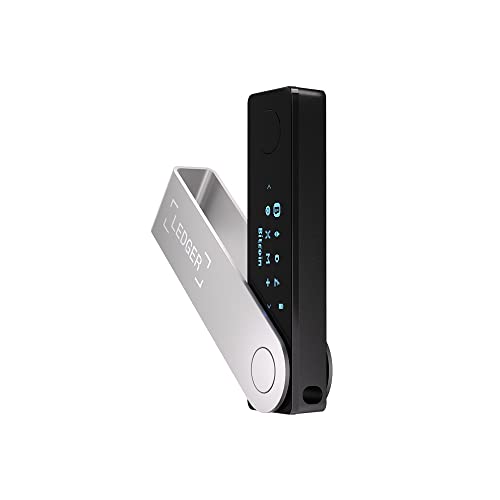
Ledger Nano X Crypto Wallet Signer - Securely Manage All Your Crypto Assets with This Bluetooth Enabled Classic - Onyx Black
Effortlessly build your crypto portfolio via the all in one Ledger Wallet app: buy, sell, send, receive, swap,...
As an affiliate, we earn on qualifying purchases.
Ledger Nano X Crypto Wallet Signer – Bluetooth Enabled, Onyx Black

The Ledger Nano X stands out for supporting over 15,000 coins and tokens, making it ideal for users who manage diverse assets. Its Bluetooth connectivity and iOS compatibility enable seamless mobile management, suitable for those who need flexibility on the go. However, its physical durability can be compromised if not handled carefully, and battery life details are vague, which may impact long-term mobility. Compared with the Tangem wallets, it offers digital management but sacrifices some of the offline security benefits.
Ledger Nano X Crypto Wallet Signer – Bluetooth Enabled, Onyx Black
- ✔ Connectivity: Bluetooth
- ✔ Compatibility: iOS
- ✔ Color: Onyx Black

Tangem Crypto Wallet Pack of 2 – Cold Storage Hardware Wallet for Bitcoin, Ethereum, NFTs & Altcoins
- ✔ Security: EAL6+ chip with no remote hacks
- ✔ Compatibility: Supports 90 blockchains, 14,100+ coins & tokens
- ✔ Durability: Waterproof, shockproof, temperature resistant
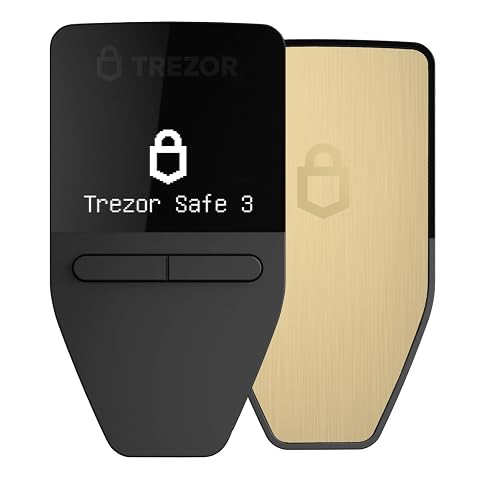
Trezor Safe 3 Passphrase & Secure Element Protected Crypto Hardware Wallet
- ✔ Lock Type: Electronic Combination Lock
- ✔ Additional Features: Advanced Security, Multi-coin Support
- ✔ Mounting Type: Floor Mount
Pros:
- Supports a wide range of cryptocurrencies (over 15,000 coins and tokens)
- Bluetooth connectivity enables easy mobile management
- Secure backup signer enhances asset protection
Cons:
- Product color may vary from pictures
- Requires careful handling to avoid scratches
- Battery life unspecified, which can impact usage over time
Best for: Active traders and users managing multiple cryptocurrencies who prioritize mobile convenience
Not ideal for: Users seeking purely offline cold storage or maximum physical durability
Bottom line: A versatile, feature-rich wallet perfect for active users who want mobile access and broad coin support.
“A versatile, feature-rich wallet perfect for active users who want mobile access and broad coin support.”

TANGEM Crypto Wallet Pack of 2 – Trusted Cold Storage Hardware Wallet for Bitcoin, Ethereum, NFTs & Altcoins – 100% Offline Crypto Cold Wallet
Proven security at scale: Over 9 years and millions of cards issued with no known remote hacks, while...
As an affiliate, we earn on qualifying purchases.
Tangem Crypto Wallet Pack of 2 – Cold Storage Hardware Wallet for Bitcoin, Ethereum, NFTs & Altcoins
Tangem wallets are designed for maximum security and durability, supporting 90 blockchains and over 14,100 coins and tokens. Their offline, military-grade security makes them ideal for long-term storage, especially for users who prioritize cold storage over quick access. The absence of a digital interface means management relies entirely on physical handling and encryption, which could be a drawback for those needing frequent transactions. Compared to the Trezor, Tangem offers superior durability but less convenience for daily use.
Pros:
- High security with military-grade encryption and offline storage
- Durable design, waterproof and shockproof, suitable for extreme conditions
- Supports a vast range of cryptocurrencies and tokens
Cons:
- No digital interface or screen for quick management
- Requires physical handling and secure storage
- Limited to offline use, not suitable for frequent transactions
Best for: Long-term hodlers and those needing secure offline storage without frequent transactions
Not ideal for: Active traders requiring quick access and frequent transactions
Bottom line: An excellent choice for long-term cold storage, offering durability and security at the expense of convenience.
“An excellent choice for long-term cold storage, offering durability and security at the expense of convenience.”

Trezor Safe 3 - Passphrase & Secure Element Protected Crypto Hardware Wallet - Buy, Store, Manage Digital Assets Simply and Safely (Solar Gold)
Unparalleled Security: Protect your assets NDA-free EAL 6+ Secure Element, offering robust defense and complete transparency
As an affiliate, we earn on qualifying purchases.
Trezor Safe 3 Passphrase & Secure Element Protected Crypto Hardware Wallet
The Trezor Safe 3 offers advanced security features, including a Secure Element chip and an OLED screen for on-device confirmation, making it highly suitable for security-conscious users. Its support for thousands of cryptocurrencies and straightforward setup via the Trezor Suite app makes it user-friendly for managing diverse assets. However, it lacks water resistance and has a smaller physical size, which may impact its durability and portability. Compared with Ledger Nano X, it emphasizes security over mobility and coin variety.
Pros:
- High-level security with Secure Element and OLED screen
- Supports a wide range of cryptocurrencies and tokens
- Easy setup and management via Trezor Suite app
Cons:
- Not water resistant
- Small physical size may reduce durability
- Initial setup takes around 15 minutes
Best for: Users seeking high-security management of assets with easy setup and recovery options
Not ideal for: Those needing water resistance or a larger physical device for rugged environments
Bottom line: An excellent high-security wallet suited for users prioritizing safety and ease of management over ruggedness.
“An excellent high-security wallet suited for users prioritizing safety and ease of management over ruggedness.”
As an Amazon Associate we earn from qualifying purchases.
Key Differences
Ledger’s primary advantage is its focus on security with a Secure Element chip and a user-friendly touchscreen interface, making it suitable for users prioritizing security without sacrificing ease. Trezor emphasizes transparency with open-source firmware, which appeals to users who prefer open validation of security measures and more flexible cryptocurrency support. In practice, Ledger’s design leans toward convenience and enterprise-level security, while Trezor appeals to security enthusiasts and open-source advocates. These differences influence user trust, security confidence, and flexibility in managing diverse assets.Detailed Comparison
Security Features (Ledger Hardware Wallets wins — major)
Ledger uses a Secure Element chip and dual-chip architecture, providing a higher level of hardware security. Trezor relies on open-source firmware and a secure chip but lacks a dedicated Secure Element. Ledger’s security is generally considered more resilient against physical attacks, but Trezor’s transparency appeals to users wanting open validation of security practices.Ease of Use (Ledger Hardware Wallets wins — moderate)
Ledger’s touchscreen and intuitive Ledger Live app streamline onboarding and daily operations, making it more accessible for beginners. Trezor’s setup involves physical buttons and a less integrated interface, which can be slightly more complex but still straightforward for tech-savvy users.Compatibility (Ledger Hardware Wallets wins — moderate)
Ledger supports a larger ecosystem via Ledger Live, including more cryptocurrencies and integrations with third-party wallets. Trezor supports many assets but relies more on third-party tools, which can require extra setup.Open Source & Transparency (Trezor Hardware Wallets wins — moderate)
Trezor’s firmware is fully open source, allowing community review and greater transparency. Ledger’s firmware is proprietary, providing less visibility into its internal workings, which may concern security-conscious users.Design & Portability (Ledger Hardware Wallets wins — minor)
Ledger devices tend to feature sleek, modern designs with a touchscreen, making them highly portable and easy to carry. Trezor devices are compact but lack a touchscreen, relying on physical buttons for navigation.Price (Trezor Hardware Wallets wins — minor)
Ledger’s models generally cost between $60-$150, reflecting features like touchscreens and security chips. Trezor devices are often priced similarly but can be slightly cheaper, offering good value for open-source advocates.Customer Support (Ledger Hardware Wallets wins — minor)
Both brands offer support channels, but Ledger’s extensive online resources and responsive support services often appeal more to beginners. Trezor’s active community forums provide good peer support but may require more technical engagement.Additional Features (Ledger Hardware Wallets wins — minor)
Ledger supports Ledger Live, a comprehensive app for managing assets, and biometric security on some models. Trezor offers integration with multiple third-party wallets and emphasizes open-source security tools.Ledger Hardware Wallets: Pros and Cons
Pros:
- High security with Secure Element chip and advanced protection
- User-friendly touchscreen interface
- Supports a wide range of cryptocurrencies and integrated apps
- Excellent customer support and resources
- Modern, portable design
Cons:
- Proprietary firmware limits transparency
- Generally higher price point
Trezor Hardware Wallets: Pros and Cons
Pros:
- Open-source firmware enhances transparency and trust
- Cost-effective with similar or lower pricing
- Supports numerous cryptocurrencies with flexible integrations
- Active community and third-party support
Cons:
- Less intuitive interface, reliance on physical buttons
- No touchscreen, potentially less user-friendly for beginners
- Slightly less integrated ecosystem
Who Should Choose What
Choose Ledger Hardware Wallets if:
- You prioritize security with a user-friendly interface and are willing to pay a premium
- You want an all-in-one device with touchscreen and extensive support for mainstream cryptocurrencies
Choose Trezor Hardware Wallets if:
- Transparency and open-source firmware are most important to you
- You prefer flexibility, lower cost, and are comfortable with a slightly more technical setup