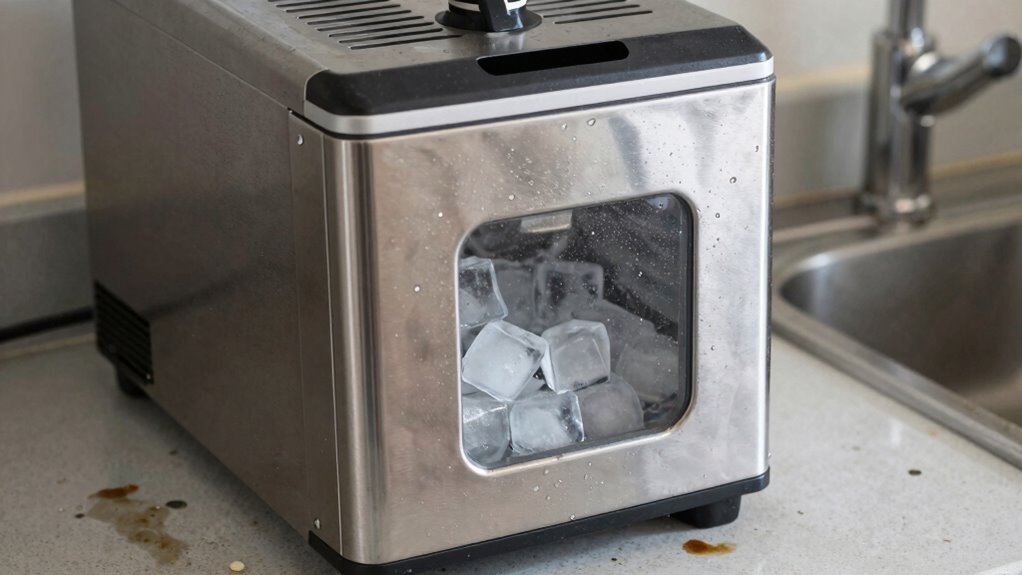
If your countertop ice maker is producing strange-tasting ice, the most common cause is neglecting regular cleaning and maintenance. Mineral buildup, mold, and bacteria can develop if you don’t clean the unit with vinegar or follow the manufacturer’s instructions. Additionally, outdated or clogged water filters can let off-flavors seep into your ice. To improve your ice’s taste, guarantee proper cleaning, filter replacement, and water quality. Keep going to discover more tips to prevent this problem.

Get hardware and tech essentials delivered free with Prime
- Fast, free delivery on millions of items
- Prime Video, Amazon Music and more included
- Member-only deals all year
Key Takeaways
- Neglecting regular cleaning can lead to mold, bacteria, and mineral buildup that cause off-flavors in ice.
- Failing to replace or clean the water filter allows stale tastes and impurities to contaminate ice.
- Using unclean reservoirs or ice bins introduces odors and mold, impacting ice taste.
- Ignoring maintenance of inlet valves and other components can cause water quality issues.
- Infrequent cleaning with vinegar solutions allows mineral deposits to accumulate, affecting ice flavor.

Are you tired of running out of ice when hosting parties or enjoying your favorite cold drinks? If your countertop ice maker is producing strange-tasting ice, it’s probably time to look into some common issues. Often, this problem stems from overlooked maintenance tips, which can lead to buildup of minerals, mold, or bacteria that taint your ice. You might think it’s just a minor inconvenience, but the quality of your ice directly affects the flavor of your beverages. Before blaming the water supply, consider that your ice maker might need a thorough cleaning or some troubleshooting to get back to producing fresh, clean-tasting ice.
Start by examining your ice maker for any signs of mineral deposits or mold, especially if you notice a strange odor or taste. These issues usually occur when you neglect regular maintenance tips, such as cleaning the water reservoir and ice bin. Many people forget that buildup from minerals in tap water can accumulate over time, creating a breeding ground for bacteria and leading to off-flavors. To fix this, you should run a cleaning cycle with a mixture of equal parts vinegar and water, following your manufacturer’s instructions. This simple step can dissolve mineral deposits and eliminate unwanted odors, restoring the ice’s natural freshness. Regularly checking and replacing water filters can prevent the buildup of stale flavors and ensure cleaner ice. Additionally, using proper cleaning techniques can help maintain the overall hygiene of your machine and prevent future issues. Ensuring your water source has good water quality is also essential for preventing mineral buildup and off-flavors.
Another common cause of strange-tasting ice is dirty water filters. If your countertop ice maker has a filter, check if it’s overdue for replacement. A clogged or old filter can cause stale, off-flavors to seep into your ice. Replacing the filter regularly is a crucial maintenance tip to keep the ice tasting crisp. Additionally, ensure you’re using clean water from a reliable source. If the water itself has a strange taste, consider installing a filtration system or using bottled water for ice production. These small adjustments can significantly improve ice quality and your overall experience. Regularly inspecting and maintaining your inlet valve and other components can help prevent malfunctions that affect ice quality.
Products Worth Considering
Apple MacBook Air 13-inch with M5 Chip, 16GB Memory, 512GB SSD, Silver

LG UltraGear 32GX870A-B 32-inch 4K OLED Dual-Mode Gaming Monitor

LG 27GS60QC-B Ultragear 27-inch Curved Gaming Monitor (QHD, 180Hz, 1ms, 1000R)
As an affiliate, we earn on qualifying purchases.
Frequently Asked Questions
Can Using Bottled Water Prevent Strange-Tasting Ice?
Using bottled water can help prevent strange-tasting ice by reducing minerals and impurities that cause off-flavors. Bottled water often has a cleaner taste, which leads to better taste improvement in your ice. When you use bottled water consistently, you’re less likely to encounter mineral buildup or bacteria that can affect the ice’s flavor. This simple step keeps your ice tasting fresh and pleasant, enhancing your overall experience.
How Often Should I Clean My Countertop Ice Maker?
You should clean your countertop ice maker every 3 to 6 months to maintain ideal ice quality and extend its lifespan. Regular cleaning prevents mineral buildup and mold, which can affect taste. If your unit has a water filtration system, change the filters as recommended. Proper maintenance keeps the ice tasting fresh, helps your ice machine last longer, and guarantees the water filtration system functions effectively.
Does the Size of the Ice Affect Taste?
Did you know that larger ice cubes can take up to twice as long to melt, affecting flavor? The size of ice definitely impacts taste because bigger cubes melt slower, preventing dilution and preserving flavor. Smaller ice melts quickly, potentially watering down drinks and altering their taste. So, choosing the right ice size helps maintain the intended flavor, ensuring every sip stays as delicious as you want it.
Are There Specific Cleaning Products Recommended?
You should use gentle cleaning solutions or descaling agents specifically designed for ice makers. Regularly cleaning with these products helps remove mineral buildup and prevents bacteria growth, which can cause strange-tasting ice. Avoid harsh chemicals that might leave residues. Follow the manufacturer’s instructions carefully, ensuring you rinse thoroughly afterward. Proper maintenance with the right cleaning products keeps your ice tasting fresh, and your machine running smoothly.
Can Mineral Deposits Cause Ice Taste Issues?
Yes, mineral deposits can cause ice taste issues. When water mineralization is high, minerals build up inside your ice maker, affecting the ice flavor. Over time, these deposits create a metallic or strange taste that taints your frozen treats. To keep your ice tasting fresh, regularly clean your machine and use filtered water. Proper maintenance prevents mineral buildup, ensuring your ice remains crisp, clean, and delightful.
Conclusion
If your ice suddenly tastes off, it’s like a ghost haunting your invigorating moments. Regular cleaning and maintenance are your shields against this icy curse, ensuring your countertop companion serves up crisp, clean cubes instead of ghostly flavors. Think of it as tending a garden—keep it nourished, and you’ll enjoy sparkling, pure ice that dances like sunlight on water. Don’t let neglect turn your cool oasis into a shadowy trap. Keep it pristine, keep it perfect.