

📊 Full opportunity report: The Critical AI Insights Benchmark Partners Recognize That Others Ignore on ThorstenMeyerAI.com — validation score, market gap, and execution plan.
TL;DR
Benchmark’s Eric Vishria warns that many in AI underestimate the market’s size and complexity. He emphasizes the importance of differentiation and challenges assumptions about commodity hardware and monopolistic winners.
Eric Vishria, a General Partner at Benchmark, has publicly emphasized that the AI market is significantly larger and more fragmented than conventional wisdom suggests. His insights challenge the common narrative of a zero-sum race toward a few dominant players, highlighting the importance of differentiation and market complexity.
In a recent interview with Patrick O’Shaughnessy, Vishria argued that many industry players wrongly assume the AI landscape is a fixed pie, where one winner will dominate all. Instead, he points to the cloud era as an example, where multiple large companies like Snowflake, Confluent, Elastic, and Cloudflare built substantial businesses alongside Amazon, contradicting the idea of a single dominant provider. Vishria warns that similar dynamics are unfolding in AI, with a growing oligopoly of winners across different layers of the ecosystem.
He emphasizes that the macro market for AI is enormous, but most individual companies within that space will not succeed. Differentiation is crucial, as many companies are not truly commodity providers despite appearances. For example, Fireworks, a startup running open-source models on NVIDIA hardware, demonstrates that efficiency and specialization can create significant competitive advantages, even when using commodity hardware. Vishria also highlights that hardware investments, such as those by Cerebras, differ fundamentally from software investments, requiring control and specialized expertise to succeed.
Distilled from Eric Vishria (Benchmark) on Invest Like the Best. Less a set of predictions than a set of disciplines for reading this moment clearly rather than emotionally. Not investment advice.
The error that runs through every wrong AI prediction: carving up a fixed pie when the pie is exploding. The cloud era is the cautionary tale.
Implications of Market Fragmentation and Differentiation in AI
This perspective matters because it suggests that the AI industry is not a straightforward race to a few winners but a complex ecosystem with many viable, large-scale players. Recognizing this can influence investment strategies, startup focus, and competitive approaches, emphasizing differentiation and specialization over assumptions of market dominance.
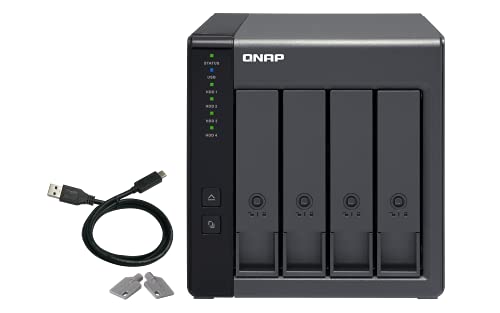
QNAP TR-004 4 Bay USB Type-C Direct Attached Storage (DAS) with hardware RAID (Diskless)
- Connectivity: USB Type-C for multiple OS
- Versatile Storage: Use as external NAS backup
- Capacity Expansion: Increase QNAP NAS storage
As an affiliate, we earn on qualifying purchases.
As an affiliate, we earn on qualifying purchases.
Historical Lessons from Cloud and Hardware Markets
Vishria draws parallels with the cloud industry, where initial skepticism about AWS's durability shifted to recognition of a multi-vendor oligopoly, with companies like Snowflake and Cloudflare emerging as giants. He notes that many believed infrastructure would be a zero-sum game, but the reality proved otherwise. Similarly, in hardware, Cerebras exemplifies how control and specialization create durable advantages, unlike commodity hardware which appears interchangeable but often isn't.
"The market is too big for one vendor to consume, and the idea of a fixed pie is fundamentally wrong."
— Eric Vishria

Luckcrab Crypto Seed Phrase Backup – 3-Plate Steel Wallet & Hardware Wallet Backup for Cold Storage, Fireproof Seed Phrase Plate Kit with Engraver, Indestructible Metal Crypto Seed Storage Vault
- Indestructible Seed Vault: Fireproof, water-resistant stainless steel
- Effortless Deep Engraving: Wall-plug electric engraving pen included
- Versatile Storage Solution: Stores crypto seeds, passwords, and PINs
As an affiliate, we earn on qualifying purchases.
As an affiliate, we earn on qualifying purchases.
Unclear Aspects of Market Evolution and Winners
It remains uncertain how quickly and extensively the AI ecosystem will fragment into multiple large winners across different layers. The precise impact of hardware control, the pace of innovation, and how new entrants will position themselves are still developing areas.

Dell Pro 15 Business Laptop, 13th Gen Intel Core i7-1355U, 32GB DDR5, 1TB SSD, FHD 120Hz Display, WiFi 6, Windows 11 Pro
- Powerful 13th Gen Performance: Intel Core i7-1355U, 32GB DDR5, 1TB SSD
- Smooth 120Hz FHD Display: 15.6-inch IPS, anti-glare, wide viewing angles
- Business-Ready Connectivity: WiFi 6, USB-C, HDMI, SD card reader
As an affiliate, we earn on qualifying purchases.
As an affiliate, we earn on qualifying purchases.
Future Developments and Strategic Implications
Expect ongoing analysis of AI market dynamics, with a focus on differentiation strategies, hardware innovation, and ecosystem fragmentation. Companies and investors will need to adapt to a landscape where multiple large players coexist, each with specialized strengths.
NVIDIA open-source AI model hardware
As an affiliate, we earn on qualifying purchases.
As an affiliate, we earn on qualifying purchases.
Key Questions
Why does the AI market appear more fragmented than expected?
Historical patterns from cloud and hardware markets show that multiple large companies can thrive simultaneously, contradicting the idea of a single dominant player. This fragmentation is driven by the enormous size of the market and the need for specialization.
What does differentiation mean in the context of AI hardware and software?
Differentiation involves developing unique expertise, control, and efficiency in specific niches, such as specialized hardware or optimized inference pipelines, which create durable competitive advantages beyond mere scale.
Are hardware companies like Cerebras likely to succeed long-term?
Yes, if they maintain control and specialization, as their deep expertise creates barriers to commoditization. Hardware success depends on unique capabilities that are hard to replicate at scale.
How should investors approach AI companies given this new insight?
Investors should focus on differentiation, control, and specialization within the AI ecosystem, rather than assuming a zero-sum race or market dominance by a few players.
What are the main risks for AI startups in this environment?
The main risks include underestimating the importance of differentiation, overestimating their market share potential, and failing to develop unique, defensible advantages in a large, complex ecosystem.
Source: ThorstenMeyerAI.com