

🔍 Read the full analysis: A Closer Look At Gemini 4 Neon’s Results, Cost, And Google’s Data on ThorstenMeyerAI.com

Get hardware and tech essentials delivered free with Prime
- Fast, free delivery on millions of items
- Prime Video, Amazon Music and more included
- Member-only deals all year
TL;DR
Google released Gemini 4 Neon on November 18, positioning it as a balance between capability and efficiency. Artificial Analysis scores it one point above Gemini 4 Carbon at the tested high settings, while reporting lower cost and faster task completion; results vary by effort setting and benchmark. Google’s published comparison omits two models that rank ahead of Neon on the independent index.
Google released Gemini 4 Neon on November 18, describing it as a model that balances depth and efficiency. Figures from Artificial Analysis show Neon scoring one point above Gemini 4 Carbon at the compared high settings, while costing less and completing an index task sooner; the results also show that performance depends on the setting and test used.
On the Artificial Analysis Intelligence Index, Neon at xhigh effort scored 61, compared with Carbon at high effort at 60. At standard list prices, Artificial Analysis estimates a task costs $6.44 and takes 21.5 minutes with Neon xhigh, versus $7.76 and 37.1 minutes for Carbon high. At Neon’s default high setting, the model scored 60 at a reported $3.74 per task and 14.8 minutes.
Neon’s list price is $3 per million input tokens and $15 per million output tokens, below Carbon’s standard $4 and $20 rates. However, Carbon is discounted to $2 and $10 through November 30, according to the source report. Artificial Analysis says Neon generates output at about 110 tokens per second, compared with Carbon’s roughly 55, and uses about 15% more output tokens per task, offsetting part of the price difference.
Results are not uniformly better. Neon xhigh scored 63.6% on Terminal-Bench 4.0, below Carbon high at 65.2%. On the Artificial Analysis Coding Agent Index, Neon scored 58.6, close to Claude Fable 5.2 at 58.5 and Claude Opus 5.5 at 58.2. The reported cost per task was $6.86 for Neon, compared with $15.47 for Fable 5.2 and $12.61 for Opus 5.5. These are benchmark-specific measurements, not guarantees of performance or cost for every use.
Gemini 4 Neon
Four models in seven weeks
Google’s Gemini 4 releases side by side, each at its best tested setting in the independent Artificial Analysis index. The best value in each row is outlined.
- Four models in seven weeksArgon on September 30, Carbon on October 28, Hydrogen on November 12, Neon on November 18. Neon is adapted from Carbon.
- A small step in the indexNeon at xhigh scores 61, one point above Carbon at high. It ranks third among model families, behind GPT-6.2 Astra and Claude Fable 5.2.
- A bigger step in cost and timeOne index task costs $6.44 instead of $7.76 and takes 21.5 instead of 37.1 minutes. Neon’s tokens are 25% cheaper than Carbon’s standard price.
- What to watchUntil November 30, Carbon still sells at a discounted $2/$10. Google’s own table compares Neon with Claude Opus 5.5 and GPT-6.2 Sol, not with the index leaders.
Source: Artificial Analysis, Gemini 4 Neon model page and article, accessed Nov 19, 2026 (Intelligence Index v5.0.1, cost and time per task at standard prices, release dates); Google, “Introducing Gemini 4 Neon”, Nov 18, 2026; Gemini 4 Neon model card. Output price in US$ per million tokens, standard rates. Redrawn by Thorsten Meyer AI.
Graphic: Powered by Thorsten Meyer AI
Neon’s Cost and Capability Trade-off
The results make effort setting a practical cost decision, not just a technical preference. Artificial Analysis reports that moving from Neon high to xhigh adds one point on its Intelligence Index but raises the estimated cost per index task from $3.74 to $6.44 and the task time from 14.8 to 21.5 minutes. Teams evaluating the model may want to test whether that additional score changes outcomes for their own work.
The comparison also matters because Google’s evaluation table does not include every prominent competitor. Google reports Neon ahead in 16 of 19 rows against Claude Opus 5.5 and GPT-6.2 Sol, while acknowledging those rivals lead in three rows. The table does not include Claude Fable 5.2 or GPT-6.2 Astra, which rank ahead of Neon on the Artificial Analysis index. The distinct comparison sets make it harder to treat Google’s table as a complete view of Neon’s standing.
Products Worth Considering

Apple MacBook Air 15-inch (2026) with M5 chip, 16GB memory, 512GB SSD — Midnight
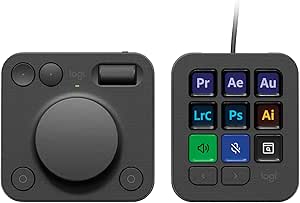
Logitech MX Creative Console with 9 Customizable Keys, Graphite

Logitech MX Keys S Combo Wireless Keyboard and Mouse, Graphite
As an affiliate, we earn on qualifying purchases.
Google’s Rapid Gemini 4 Rollout
Neon is the fourth Gemini 4 model Google has released in about seven weeks, following Argon on September 30, Carbon on October 28 and Hydrogen on November 12. Google describes Carbon as suited to long, difficult projects and Hydrogen as aimed at fast everyday execution, placing Neon between them. Its model card says Neon is adapted from Carbon and refers readers to Carbon documentation for architecture, training data and hardware details.
Google says Neon accepts text, images, audio and video, produces text, and has a one-million-token context window. Its knowledge cutoff is March 2026. The model offers four effort levels—low, medium, high and xhigh—with high as the default. Google lists availability through the Gemini API in AI Studio and several paid Gemini products. A cyber-defense version is being made available to eligible trusted defenders through Google’s Fairwind Program.
Artificial Analysis characterizes the release as a small Intelligence gain over Carbon paired with a roughly 17% lower cost per task in its comparison. That estimate uses the specific models, settings and standard prices in its evaluation; it should not be read as a universal savings figure.
“Frontier-level intelligence with fast end-to-end task completion.”
— Google, in its Gemini 4 Neon launch post
Limits of the Published Comparisons
The available results do not establish how Neon will perform across all real-world tasks, or whether the benchmark cost and timing figures will match a particular user’s workload. The index comparisons use different effort settings for Neon and Carbon in some headline figures, while Google’s table uses a different comparison set from Artificial Analysis. Those differences limit direct, across-the-board conclusions.
Google’s model card points to Carbon documentation for details about Neon’s architecture, training data and hardware; the supplied material does not provide those details specifically for Neon. Google also says the model has its “lowest fabrication rate yet” in internal Antigravity testing, but that is a company-reported measurement that outside readers cannot independently check from the information provided. The source material does not give the full details of Google’s evaluation methodology or the remaining results table after noting its comparison-set limitation.
Availability and Further Testing
Neon is available through the Gemini API in Google AI Studio and listed Gemini products, with access depending on the service and subscription. Google said eligible members of its Fairwind Program would receive access to the cyber-defense version over the next few days. Carbon’s stated discount is scheduled to run through November 30, according to the source report.
The next useful evidence will come from broader testing across matched effort settings, workloads and pricing conditions, as well as more detail about Neon’s model documentation. Until then, the published numbers support a limited conclusion: Neon offers a small index-score gain over Carbon in the cited comparison, with lower standard-price task cost and shorter measured completion time, but it does not lead every test.
Key Questions
When did Google release Gemini 4 Neon?
Google released Gemini 4 Neon on November 18, 2026, according to the source report.
How does Neon compare with Gemini 4 Carbon?
Artificial Analysis reports a score of 61 for Neon at xhigh and 60 for Carbon at high on its Intelligence Index. In that comparison, Neon’s estimated task cost and completion time were lower. Because the settings differ, the figures are not a like-for-like test at the same effort level.
What does Gemini 4 Neon cost?
Google’s stated list price is $3 per million input tokens and $15 per million output tokens. Actual costs can depend on usage and service terms. The source report says Carbon is discounted through November 30, 2026, at rates below its standard list price.
Does Neon outperform every competing model?
No. The cited Artificial Analysis results place GPT-6.2 Astra and Claude Fable 5.2 ahead of Neon on the Intelligence Index, and Neon trails Carbon on Terminal-Bench 4.0. Benchmark results vary by test, model setting and comparison group.
What information about Neon remains limited?
The supplied model-card information refers readers to Carbon documentation for architecture, training data and hardware. Google’s internal fabrication-rate claim is also not independently verifiable from the material provided.
Source: ThorstenMeyerAI.com