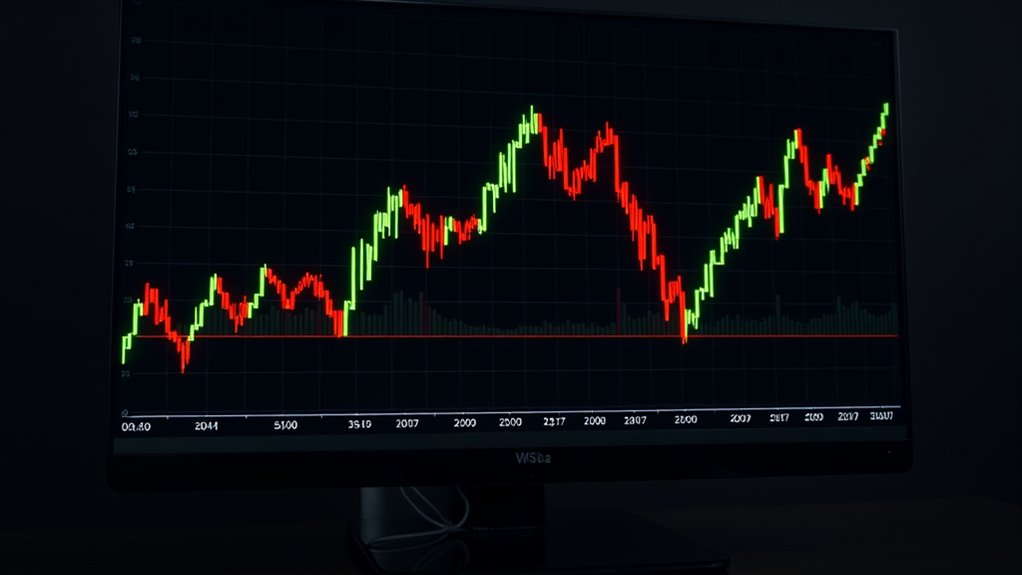

Stablecoins can break their peg during market stress, leading to sharp price swings and heightened volatility. Notable depegging events, like TerraUSD in 2022, caused panic and regulatory scrutiny, while some stablecoins recover quickly due to strong backing. Others struggle if confidence wanes or backing weakens. Regulatory responses and investor reactions considerably impact recovery prospects. If you want to understand how these events unfold and what factors influence recovery, there’s more to explore.
Key Takeaways
- Depegging events occur when stablecoins temporarily lose their fixed value, often triggered by market shocks or confidence crises.
- Investor reactions during depegging are rapid and emotional, leading to increased volatility and potential market instability.
- Recovery depends on the stablecoin’s backing, market confidence, and regulatory support, with some rebounding quickly and others collapsing.
- Major incidents like TerraUSD’s 2022 depegging prompted regulatory scrutiny, influencing future stability and investor trust.
- Transparency and regulatory clarity can aid recovery, but excessive restrictions may hinder innovation and market resilience.
Stablecoins are designed to maintain a fixed value, usually pegged to a fiat currency like the US dollar, but depegging events can cause their prices to fluctuate unexpectedly. When this happens, it often sparks a wave of concern among investors and prompts scrutiny from regulators. You might notice that during these moments, investor reactions tend to be swift and emotional. Some panic sell, fearing the stablecoin has lost its backing, while others see it as a buying opportunity, betting on a quick recovery. These reactions can intensify the volatility, making the situation more unpredictable. Regulatory impacts play a vital role here; authorities may step in with new rules or stricter oversight to prevent future depegging. This regulatory response aims to protect investors and preserve market stability, but it can also shake confidence if perceived as overreach or if it hampers innovation. For example, during the TerraUSD depegging in 2022, regulators worldwide expressed concern about the stability of algorithmic stablecoins, leading to increased calls for regulation. These interventions can influence investor behavior, either calming nerves through assurances or fueling fears of tighter restrictions. As a user, you might feel uncertain about the future of stablecoins when such regulatory impacts are announced. You could worry about your investments or wonder whether the stablecoin will recover or face permanent depegging. Historically, recoveries depend on underlying mechanisms and market confidence. Some stablecoins bounce back after depegging due to solid backing or market intervention, while others struggle or collapse entirely. Your role as an investor involves monitoring regulatory developments and market signals closely to make informed decisions. Understanding how authorities respond to depegging events helps you anticipate potential risks and opportunities. In some cases, regulatory impacts lead to increased transparency, improving trust in the system over time. However, if regulations are too restrictive, they may stifle innovation or limit access, affecting your ability to use stablecoins effectively. Overall, depegging events highlight the delicate balance between market dynamics and regulation. Your reactions, along with regulatory impacts, shape the trajectory of stablecoins during turbulent times. Staying informed about regulatory changes and understanding how markets typically respond can help you navigate these events more confidently. Remember, while depegging can be unsettling, history shows that many stablecoins recover, especially when supported by strong backing and clear regulatory frameworks. Being aware of the importance of leadership skills in understanding regulatory responses can help you better adapt to market changes. Your awareness of these factors will be indispensable in managing risks and capitalizing on opportunities as the stablecoin landscape evolves.
stablecoin backing security
As an affiliate, we earn on qualifying purchases.
As an affiliate, we earn on qualifying purchases.
Frequently Asked Questions
How Do Stablecoins Maintain Their Peg During Market Turbulence?
You can help stablecoins stay pegged during market turbulence through effective collateral management and market interventions. By managing collateral carefully, they guarantee sufficient backing to absorb shocks. Market interventions, like buying or selling stablecoins or adjusting supply, help restore the peg quickly. These strategies work together to maintain stability, even during volatile times, giving you confidence that the stablecoin will remain close to its target value.
What Role Do Regulatory Agencies Play in Depegging Crises?
Imagine regulatory agencies rushing in like knights to save the day, wielding legal frameworks like shiny swords. Their role in depegging crises is to intervene through regulatory measures, which can stabilize or destabilize, depending on their mood. They set rules and enforce them, aiming to protect investors. But beware, their intervention can sometimes be too little, too late—turning a stable coin into a rollercoaster ride you didn’t sign up for.
Can Algorithms Prevent Stablecoin Depegging in Volatile Markets?
Algorithms can help prevent stablecoin depegging during market volatility by maintaining algorithmic stability through dynamic adjustments. They continuously monitor market conditions and automatically rebalance reserves or supply to keep the peg intact. While they can’t eliminate all risks, well-designed algorithms can respond swiftly to fluctuations, reducing the chance of depegging. However, in extreme volatility, even sophisticated algorithms might struggle to prevent a break in the peg.
How Does Liquidity Impact a Stablecoin’s Ability to Recover Its Peg?
Imagine a dam holding back a river; the more water, the greater the pressure. Liquidity depth strengthens a stablecoin’s ability to recover its peg because it provides enough market resilience to absorb shocks. When there’s ample liquidity, buy and sell orders stabilize prices quickly, preventing prolonged depegging. Without sufficient liquidity, even minor fluctuations can cause a stablecoin to lose its peg, making recovery more difficult.
What Are the Long-Term Implications of Repeated Depegging Events?
Repeated depegging events can seriously harm your market trust and investor confidence. As these episodes happen more often, people may start doubting the stablecoin’s ability to maintain its peg, leading to reduced demand and volatility. Over time, this can cause a downward spiral where users withdraw their assets, making recovery harder. To protect your investments, stay informed about a stablecoin’s stability mechanisms and historical resilience.
cryptocurrency market stress protection
As an affiliate, we earn on qualifying purchases.
As an affiliate, we earn on qualifying purchases.
Conclusion
So, next time you see a stablecoin lose its peg, remember it’s not just a rare glitch but part of a larger story. Coincidences happen—markets shift, confidence wavers—and sometimes, the system finds its way back, almost like it was meant to. You might find it ironic how these events, though stressful, often lead to lessons and stronger safeguards. After all, even in chaos, stability can unexpectedly resurface when you least expect it.
stablecoin recovery tools
As an affiliate, we earn on qualifying purchases.
As an affiliate, we earn on qualifying purchases.

Digital Assets Under U.S. Securities Law: What Issuers, Exchanges, and Counsel Must Know (Crypto Regulatory Intelligence)
As an affiliate, we earn on qualifying purchases.
As an affiliate, we earn on qualifying purchases.