
Crypto wallets help you manage digital assets using public and private keys. The public key acts like an address, allowing others to send you funds, while the private key is like a password that gives you control over your assets. Hardware wallets store these keys offline for extra security, and seed phrases ensure you can recover your wallet if needed. Understanding these basics starts you on a safer, more controlled crypto journey—discover more to safeguard your investments better.

Get hardware and tech essentials delivered free — and shop member deals
- Fast, free delivery on millions of items
- Access to Prime Big Deal Days deals on October 6–7
- Prime Video, Amazon Music and more included
Key Takeaways
- Public keys are like bank account numbers used to receive cryptocurrency, while private keys grant access to spend or transfer funds.
- Private keys must remain confidential; exposing them risks theft, whereas public addresses can be shared freely.
- Wallets generate a pair of keys—public and private—using cryptographic algorithms for secure asset management.
- Hardware wallets securely store private keys offline, reducing hacking risks and enabling safe transaction signing.
- Seed phrases act as backups for private keys, allowing wallet recovery if the device is lost or damaged.
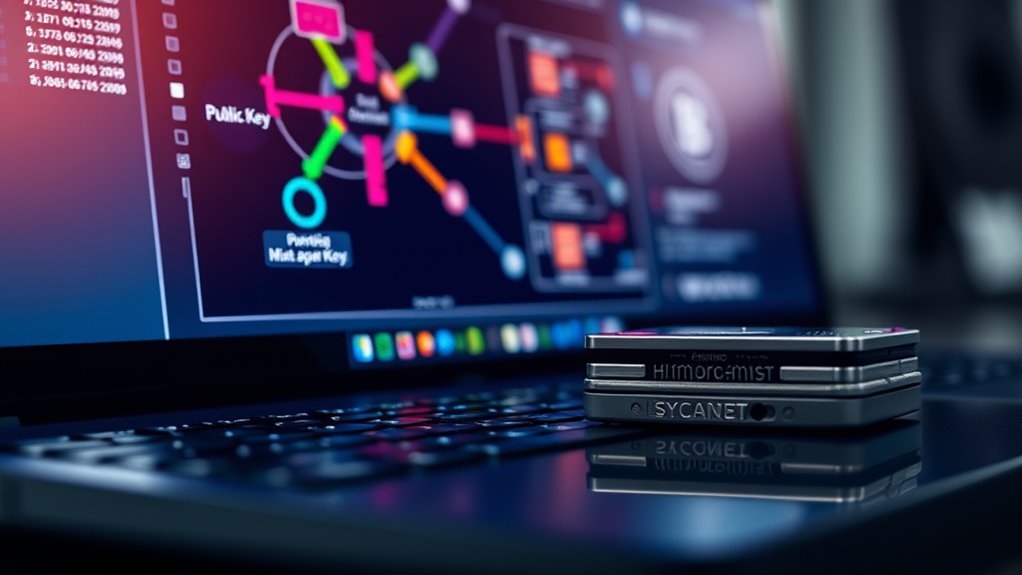
Ever wondered how to securely store your cryptocurrencies? The key lies in understanding the importance of hardware security and effective key management. When you hold digital assets, safeguarding your private keys is essential, and one of the most reliable ways to do this is through hardware wallets. These devices are designed to keep your private keys offline, making it nearly impossible for hackers to access them remotely. By isolating your keys within a hardware security module, you considerably reduce the risk of theft or hacking. This method ensures that even if your computer or online accounts are compromised, your private keys remain safe and inaccessible to malicious actors.
Key management plays a critical role in maintaining your crypto security. Think of your private key as the master password to your digital assets—without it, you can’t access or control your funds. Proper key management means securely storing this private key and ensuring it isn’t exposed to potential threats. Many users opt for hardware wallets because they simplify key management by storing private keys in a dedicated device, away from internet threats. When you generate a wallet, you’re given a public address—like an account number—that you can share to receive funds. The private key, however, must stay private at all costs. If someone gains access to it, they can drain your wallet entirely. Additionally, understanding the importance of payment data protection helps you appreciate the need for secure storage solutions like hardware wallets. Using hardware wallets also makes key management more straightforward by providing a user-friendly interface for handling your private keys. You can sign transactions directly on the device, so your private keys never leave the hardware, preventing exposure during online activities. Additionally, many hardware wallets support seed phrases—sets of words that serve as backups for your private keys. These are essential for recovery if your device is lost or damaged. Properly storing your seed phrase, ideally offline and in a secure location, is critical for effective key management.
Frequently Asked Questions
How Are Public and Private Keys Generated?
You generate public and private keys through a process called key generation, which uses cryptographic algorithms like elliptic curve cryptography. When you create a wallet, the software applies these algorithms to produce a unique pair of keys. The private key is kept secret, while the public key is derived from it and shared openly. This guarantees secure transactions and ownership verification within the crypto ecosystem.
Can Private Keys Be Changed or Reset?
You can’t change or reset your private key, but you can back it up safely to guarantee key recovery if lost. If you lose your private key, there’s no way to recover it, so always keep a secure backup. Some wallets generate new keys, but this means creating a new wallet. To prevent losing access, regularly update your key backup and store it in a safe location.
What Happens if I Lose My Private Key?
Did you know that over 20% of crypto assets are lost forever? If you lose your private key, you can’t recover your funds because private key recovery isn’t possible without it. Losing your wallet means your assets are inaccessible, emphasizing the importance of securely storing your private key. Always keep backups and never share your private key to avoid permanent loss and the serious implications of a lost wallet.
Are Public Addresses the Same Across Different Cryptocurrencies?
No, public addresses aren’t the same across different cryptocurrencies because each follows its own cryptocurrency standards and address formats. For example, Bitcoin uses a different structure than Ethereum or Ripple. You’ll notice variations in length, characters, and prefixes. Always double-check the address format before sending or receiving funds to avoid mistakes, since using the wrong format could lead to lost assets or failed transactions.
How Do I Ensure My Wallet’s Security?
You can guarantee your wallet’s security by always keeping your seed phrase private and stored offline, since it’s your ultimate backup. Use hardware wallets for added protection, as they store your private keys securely away from online threats. Avoid sharing your private keys or seed phrases, and be cautious of phishing scams. Regularly update your software and enable two-factor authentication to strengthen your defenses.
Conclusion
Think of your crypto wallet like a safe deposit box. Your public key is the address where friends can send you funds, like the mailbox outside your house. Your private key is the key to that box—keep it secret or you’ll risk losing everything. Just like you wouldn’t share your house key, never share your private key. Protect it well, and you’ll keep your digital treasures secure and sound.
Fall Picks
fall essentials
As an affiliate, we earn on qualifying purchases.