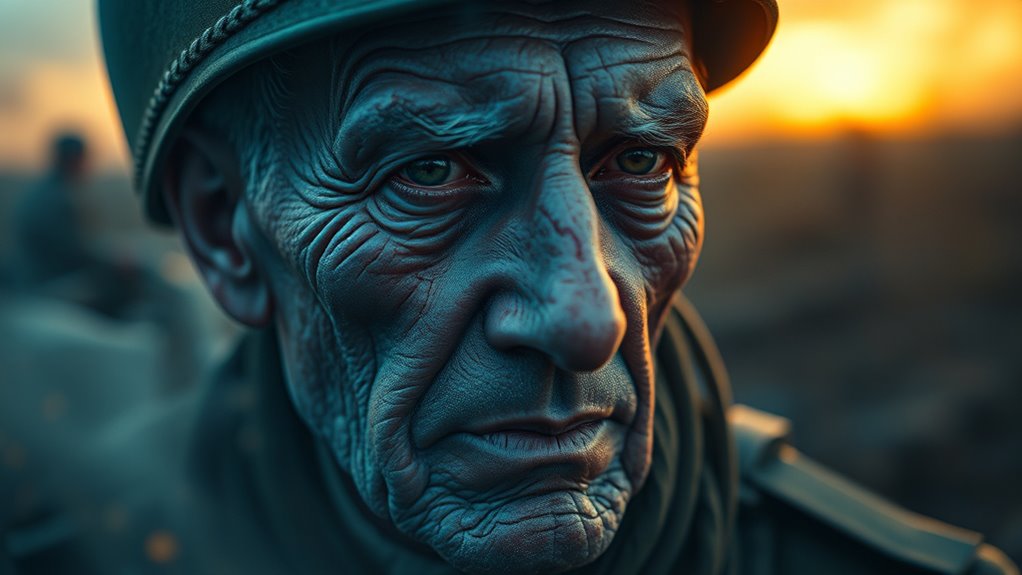

Artificial intelligence is changing how we honor war victims by helping to revive their faces, even after severe injuries or decomposition. Using facial recognition combined with DNA, AI identifies fallen soldiers, allowing families to say their final goodbyes with dignity. It also assists forensic teams in locating mass graves and analyzing remains. If you keep exploring, you’ll discover how AI’s use in battlefield forensics supports human dignity and justice amid conflict.
Key Takeaways
- AI facial recognition reconstructs faces of war victims for identification and dignified repatriation.
- Forensic AI tools analyze skeletal remains to restore facial features after trauma or decomposition.
- AI-assisted facial reconstruction provides emotional closure for families and supports memorial efforts.
- Machine learning enhances accuracy in identifying casualties from mutilated or incomplete remains.
- AI helps document war casualties, ensuring respectful handling and promoting accountability.
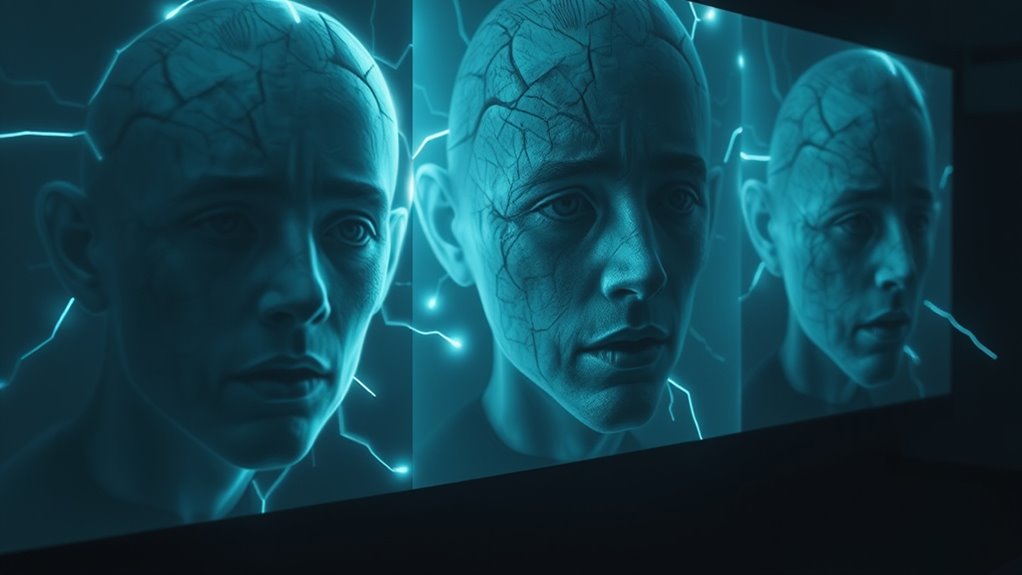
Artificial intelligence is transforming how we confront the human toll of war, offering new tools to identify fallen soldiers and provide closure for families. When conflict erupts, identifying the deceased swiftly and accurately is essential for honoring their memory and fulfilling humanitarian duties. AI-powered facial recognition technology (FRT) plays a critical role in this effort. During the Russia-Ukraine war, Ukrainian authorities employed FRT combined with DNA samples from families to identify soldiers killed on the battlefield. This technology enables rapid identification, even when bodies are mutilated, decomposed, or located in inaccessible areas, ensuring that families are notified promptly and bodies are treated with dignity. Such capabilities help address the chaos and destruction of war zones, supporting the respectful return of remains and reducing the emotional toll on grieving relatives.
AI-driven facial recognition aids in rapidly identifying fallen soldiers, ensuring dignity and timely family notification amid war chaos.
Beyond immediate battlefield identification, AI considerably enhances forensic humanitarian efforts. Specialized tools analyze skeletal remains and facial features to identify victims, especially when remains are disturbed or decomposed. Programs like Skeleton ID and forensic facial imaging improve accuracy in challenging conditions, helping investigators piece together the fates of war victims. AI also predicts the locations of mass graves and scrutinizes open-source imagery for clues, aiding in the search for missing persons and ensuring compliance with international humanitarian law (IHL). Despite these advancements, AI remains underutilized in many contexts, and integrating it into standard forensic protocols can further improve identification processes and respect for human dignity.
However, deploying AI in conflict zones raises ethical and legal concerns. Privacy issues emerge from mass surveillance capabilities, and disparities exist between countries and groups in access to AI technology. Non-state armed groups often lack the resources or willingness to adopt AI for forensic purposes, risking uneven standards and potential violations of humanitarian principles. Ensuring AI applications adhere to IHL principles—such as humanity and equal treatment—is essential. Oversight is necessary to prevent misuse, bias, and discriminatory practices that could undermine humanitarian efforts or exacerbate conflicts.
AI also contributes to medical and psychological recovery by aiding facial reconstruction after blast injuries, which are common in modern warfare. In conflicts like Ukraine, where head and neck injuries account for a significant share of casualties, AI-driven models help visualize wounds and guide surgical interventions. This process not only restores physical appearance but also helps victims regain their identity, offering emotional closure to families. Additionally, AI facilitates early diagnosis of rare craniofacial conditions, such as Apert syndrome, through mobile deployment in war zones. This technology enables timely medical assistance in regions with limited healthcare, ultimately saving lives and improving quality of care.

Vega Essential Protein – 25g Vegan Protein Powder, Rich Chocolate for a High Protein, Zero Sugar Shake – Large Tub, 32.5oz (20 Servings)
- Protein Content: 25g vegan protein per serving
- Versatile Use: Ideal for smoothies and baking
- Digestive Comfort: Dairy-free, bloat-free digestion
As an affiliate, we earn on qualifying purchases.
Frequently Asked Questions
How Does AI Ensure Ethical Use in Recreating Wartime Faces?
You guarantee ethical AI use in recreating wartime faces by prioritizing data transparency, clearly identifying images as synthetic, and obtaining explicit consent from stakeholders. You verify accuracy to prevent misinformation, promote diversity to avoid bias, and protect privacy through strict data security. Additionally, you align AI applications with professional standards, document your processes, and involve human judgment, ensuring accountability, fairness, and respect for individual rights throughout the reconstruction process.
Can Ai-Generated Faces Evoke Genuine Emotional Responses?
AI-generated faces can be like echoes of real emotions, but they often lack the depth to evoke genuine feelings. You might feel a fleeting connection, yet your brain perceives these faces as less authentic, especially with positive expressions like smiles. While negative emotions such as anger resonate more strongly, the subtle cues that make facial expressions truly heartfelt are often missing or muted, making emotional responses feel superficial rather than real.
What Are the Privacy Concerns Associated With Resurrecting Wartime Images?
Resurrecting wartime images raises serious privacy concerns because you might use faces of victims or soldiers without their consent, risking re-traumatization for families. You could also infringe on personal privacy and intellectual property rights if these images are used without permission. This practice can violate ethical standards, undermine trust, and potentially cause emotional harm, especially when families haven’t authorized or are unaware of how their loved ones’ images are being reused.
How Accurate Are AI Reconstructions Compared to Original Photographs?
AI reconstructions are quite accurate but not perfect. You’ll find that AI models achieve about 88% diagnostic accuracy and 90% in postoperative evaluations, with facial predictions error around 1.1 mm. While these figures show promising precision, they still depend heavily on input data quality. So, although AI can closely resemble original photographs, slight differences and individual variability mean it’s not an exact replica every time.
Will This Technology Be Used for Propaganda or Educational Purposes?
You might see this technology wielded as a double-edged sword: a tool for propaganda or a bridge to understanding. Like a mirror reflecting both light and shadow, AI can humanize victims to evoke empathy or distort truths to manipulate opinions. Its purpose depends on who controls it and how ethically it’s used—either fostering awareness and reconciliation or fueling deception and division.

Vega Protein Made Simple Plant-Based Vanilla Protein Powder with 15g Protein – Stevia-Free, Clean Nutrition – 9.2 oz (10 Servings)
- Plant-Based Protein: 15g of plant energy from natural ingredients
- Easy to Mix: Smooth blending with water or almond milk
- Gentle on Stomach: Non-bloating, stevia-free, easy digestion
As an affiliate, we earn on qualifying purchases.
Conclusion
As you see how AI can bring fallen soldiers back to life, it’s clear this technology transforms grief and remembrance. Imagine visiting a war memorial and having a virtual chat with a soldier from decades ago, thanks to AI reconstruction. While it offers comfort, it also raises questions about ethics and memory. As you navigate this new frontier, remember that technology can connect us to the past—if used thoughtfully, it can honor their memories in meaningful ways.

Vega Essential Protein – 25g Vegan Protein Powder, Creamy Vanilla, Dairy-Free Vanilla Shake – Large Tub, 32.5oz (20 Servings)
- Protein Content: 25g vegan protein per serving
- Versatile Use: Ideal for smoothies and baking
- Dairy-Free: Gentle on sensitive stomachs
As an affiliate, we earn on qualifying purchases.
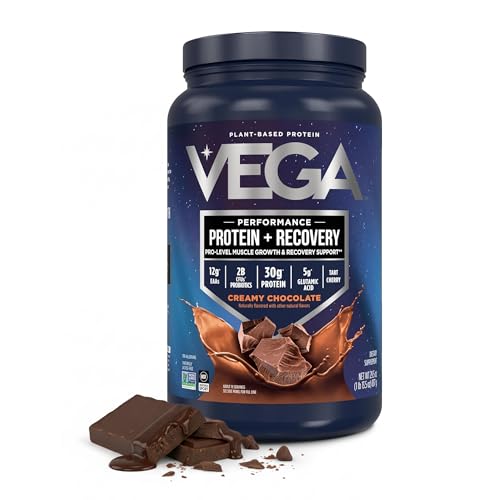
Vega Protein + Recovery, Chocolate – 30g Vegan Protein, Dairy & Gluten Free, Probiotics, NSF Certified, 28.8 oz (19 Servings)
- Plant-Based Muscle Support: 30g vegan protein per serving
- Dairy & Gluten Free: Allergy-friendly, non-dairy formula
- Probiotics & Fiber: 2 billion CFUs and added fiber
As an affiliate, we earn on qualifying purchases.