
TL;DR

Get hardware and tech essentials delivered free with Prime
- Fast, free delivery on millions of items
- Prime Video, Amazon Music and more included
- Member-only deals all year
Thorsten Meyer AI has published a 2026 acoustic and thermal roundup for local AI GPUs, arguing that VRAM, cooler design and power limits matter as much as raw speed. The report says power-capping GPUs to 70% to 80% can cut heat and noise with little inference loss, though results vary by card model and build.
Thorsten Meyer AI has released a 2026 roundup of quiet GPUs for local AI workstations, ranking cards by VRAM tier while emphasizing heat, fan noise, cooler design and power settings, a focus that matters for users running models for hours beside a desktop machine.
The report identifies VRAM as the first buying filter for local AI users. It says 16GB cards such as the RTX 5080 or RTX 4060 Ti can serve 7B to 13B models and some roughly 34B models at Q4 quantization, while 24GB cards such as the RTX 4090 and used RTX 3090 remain an enthusiast baseline. It places 32GB cards such as the RTX 5090 as a stronger fit for 70B models at Q4 without offloading, and 96GB professional cards such as the RTX PRO 6000 as options for larger dense builds.
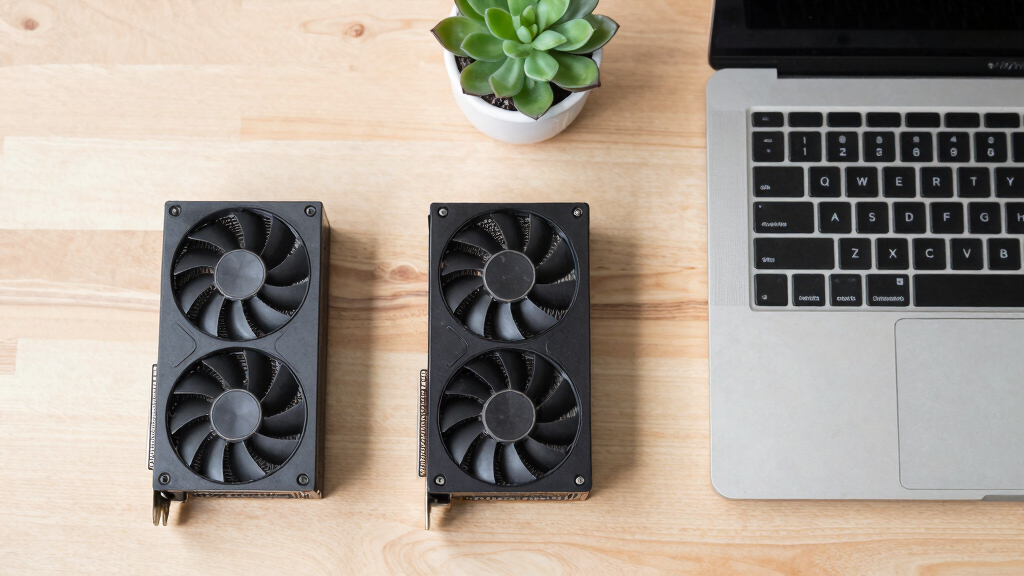
The roundup’s central finding is that the GPU chip alone does not determine noise. Thorsten Meyer AI says cooler design and power settings can change the acoustic result across cards using the same silicon. The article recommends large triple-fan open-air coolers with zero-RPM idle modes for most single-GPU builds, while saying blower-style designs may be better for multi-GPU systems where open-air cards can recycle heat from neighboring cards.
The report also says a power cap of 70% to 80% can reduce heat output with limited inference-speed loss because many local AI inference workloads are memory-bound. It presents the RTX 5090 as a high-power example, citing a 575W draw at stock settings, but argues that power limiting can make such cards more manageable in a workstation.
Why It Matters
The roundup matters because local AI use has moved beyond short benchmarks. Users running LLMs, image models or coding agents for long sessions may care as much about sustained heat and fan noise as peak output. A fast card can be a poor fit if it turns a home office or studio workstation into a hot, loud machine for most of the day.
For buyers, the report shifts the decision from a single performance ranking to a set of practical constraints: whether the model fits in VRAM, whether the cooler has enough surface area, whether the case can exhaust heat, and whether a lower power target can keep the system quiet enough for daily use.
As an affiliate, we earn on qualifying purchases.
Background
The article is positioned as a companion to Thorsten Meyer AI’s guide on reducing heat and noise in high-power AI workstations. It uses a VRAM-first framework because, according to the source material, models that do not fit in GPU memory can suffer severe performance loss from offloading.
The source also notes that quantization formats such as GGUF Q4_K_M, AWQ and Blackwell FP4 can reduce memory use by 50% to 75%, with some quality tradeoff. That means the same card may support different model sizes depending on precision, quantization, context length and runtime settings.
“VRAM is the hard limit”
— Thorsten Meyer AI
“the chip doesn’t decide how loud your card is”
— Thorsten Meyer AI
“Power-cap it”
— Thorsten Meyer AI
As an affiliate, we earn on qualifying purchases.
What Remains Unclear
The exact acoustic result remains unclear for any single buyer because partner-card cooler designs, case airflow, room temperature, workload, fan curves and power limits vary. The source also warns that prices, availability and VRAM configurations change often, so buyers need to verify current specifications before purchase.
The article cites 2026 local-LLM GPU guides and independent reviewers for figures, but the supplied material does not include a full test table with measured decibel levels, temperatures, test duration or standardized case conditions.
As an affiliate, we earn on qualifying purchases.
What’s Next
Readers comparing GPUs should first choose the smallest VRAM tier that fits their target models, then compare cooler variants and power-limit behavior within that tier. The next useful step for the market would be standardized sustained-inference testing that reports noise, temperature, wattage and tokens per second under the same workload and case setup.
As an affiliate, we earn on qualifying purchases.
Key Questions
What is the main development in this roundup?
Thorsten Meyer AI published a 2026 guide that evaluates local AI GPUs through heat and noise behavior, not only speed. It ranks choices by VRAM tier and recommends power limits and cooler types for quieter operation.
Which GPU tier does the source favor for 70B local models?
The source says 32GB cards, including the RTX 5090, can run 70B models at Q4 quantization without offloading, while 24GB cards may need more aggressive quantization.
Why does power-capping matter for local AI?
The report says many inference workloads are memory-bound, so lowering the power limit can cut heat and fan noise with limited speed loss. Actual results depend on workload and hardware.
Are open-air or blower GPUs quieter?
For a single GPU, the source favors large triple-fan open-air coolers. For multi-GPU systems, it says blower designs may work better because they exhaust heat more directly from crowded builds.
What remains unconfirmed from the supplied material?
The supplied material does not provide standardized decibel readings, full temperature charts or lab conditions for each card. It gives buyer guidance and cited figures, but acoustics still depend on the exact card, case and settings.
Source: Thorsten Meyer AI
Halloween Picks
halloween
As an affiliate, we earn on qualifying purchases.