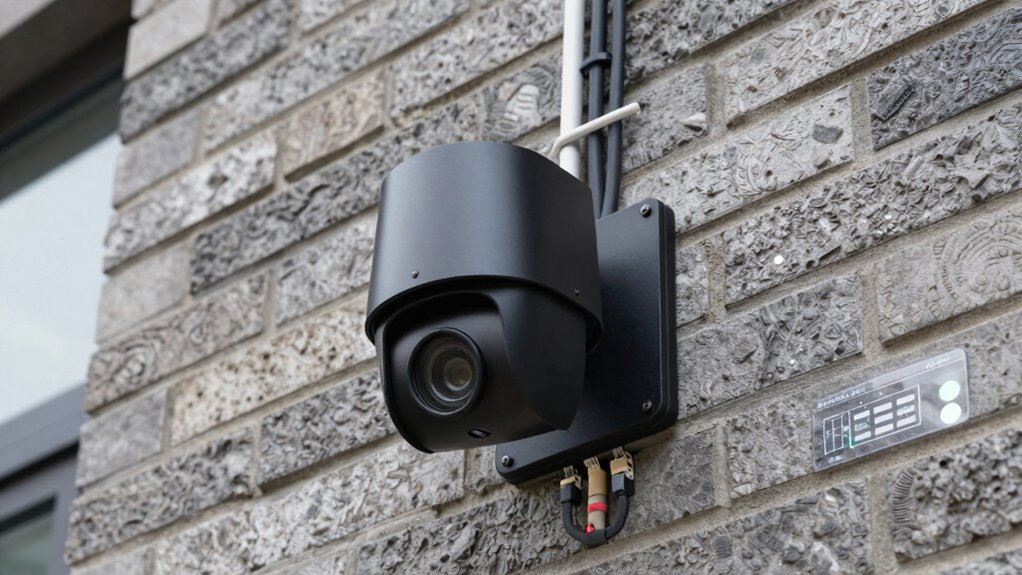

To prevent PoE camera installation failures, you need to get your power budget right. Make sure your power supply supports the total wattage of all cameras, and account for voltage drops along long cable runs. Oversized supplies waste money, while undersized ones cause outages. Proper planning also includes choosing the right network topology and ensuring your switch can handle the load. Keep these details in mind, and you’ll guarantee a stable, reliable security system—there’s more to consider that can make or break your install.
Key Takeaways
- Accurate power budget calculations prevent camera outages and ensure reliable system operation.
- Oversized power supplies increase costs without added benefits; undersized ones cause instability.
- Network topology affects power distribution; star topology simplifies management and reduces voltage drops.
- Proper planning accounts for cable length, quality, and future expansion, avoiding power loss and system failures.
- Selecting a power supply with sufficient wattage and headroom ensures system resilience and scalability.
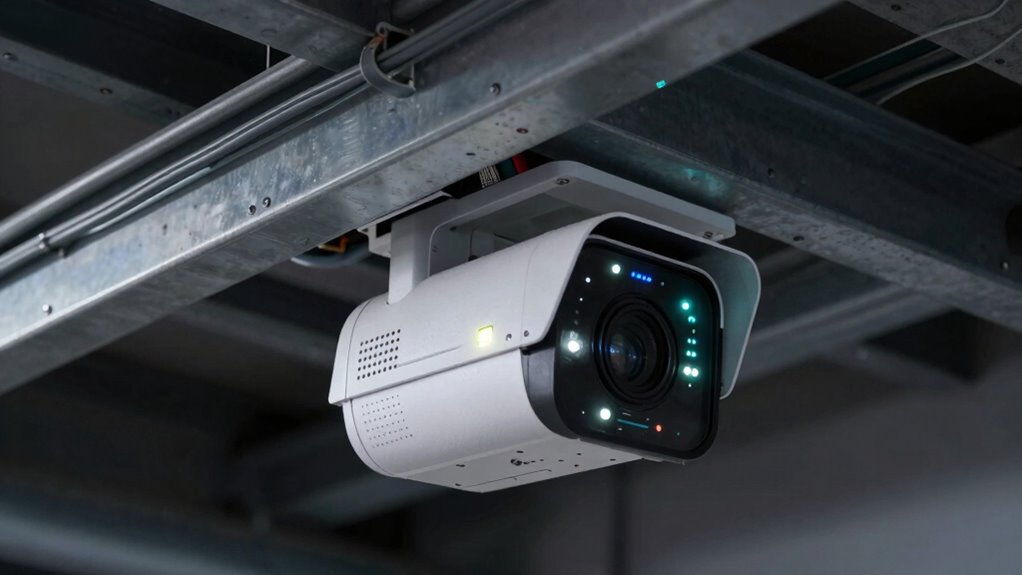
Power over Ethernet (PoE) camera systems have become a popular choice for security installations due to their simplicity and flexibility. They eliminate the need for separate power supplies by transmitting both data and power over a single Ethernet cable. This streamlined setup makes installations cleaner and quicker, especially in environments where running multiple cables can be a hassle. However, understanding the power budget is essential to guaranteeing your system functions reliably without overloading the network.
Your power supply plays a critical role in the success of a PoE installation. It must provide enough wattage to support all connected cameras, considering each device’s power demands. If the power supply is undersized, you risk cameras shutting down or experiencing intermittent power issues, which can compromise security. Conversely, oversizing the power supply isn’t necessarily a problem but can be inefficient and more costly. To avoid these pitfalls, carefully calculate the total power requirement based on the number of cameras and their individual power needs, then select a power supply that comfortably exceeds this total.
Network topology is another key factor that influences your power budget. The way you organize your network—whether it’s a star, daisy chain, or a hybrid topology—affects how power is distributed and how much voltage drop you might encounter along the cables. In a star topology, each camera connects directly to a central switch or PoE injector, which simplifies power management and makes it easier to monitor and troubleshoot power issues. In more complex topologies, longer cable runs or multiple connection points can cause voltage drops that reduce the effective power reaching each device. This means you may need to adjust your power budget accordingly or use powered switches with higher wattage capabilities. Additionally, power budget management is crucial to ensure that your network maintains optimal performance and reliability. Proper planning of your network topology ensures you allocate enough headroom in your power supply and avoid unexpected outages. Being aware of potential power loss along the cable runs can help you make informed decisions during installation and prevent future issues. Moreover, adhering to cable quality standards and best practices can significantly minimize power loss and improve overall system stability.
Understanding power supply capacity and how it interacts with your network layout ensures you design a resilient security system that can adapt to future growth or changes. By mapping out your network carefully and understanding each camera’s power requirements, you prevent costly installation errors or system failures down the line.

Gigabit PoE Injector 48V Power Over Ethernet Supply Adapter 10/100/1000Mbps IEEE 802.3at/af RJ45 Compliant for Camera IP Phone Switch and More PoE Devices with 3FT Cat 6 Gigabit Ethernet Cable
- Input Voltage: 110-240V 50/60Hz
- Output Voltage and Current: 48V-0.5A 24W
- Ethernet Compatibility: Supports 10/100/1000Mbps
As an affiliate, we earn on qualifying purchases.
As an affiliate, we earn on qualifying purchases.
Frequently Asked Questions
How Do Poe Camera Power Budgets Impact Overall System Scalability?
Your PoE camera power budgets directly affect system scalability by limiting how many cameras you can add without overloading the power supply. Proper power allocation guarantees each camera receives adequate power, preventing system failures. If you don’t consider power budgets early, system expansion becomes difficult, risking insufficient power to new cameras. Planning for scalable power distribution helps you seamlessly grow your system without compromising performance or stability.
What Are Common Signs of Insufficient Power in Poe Camera Setups?
You’ll notice common signs of insufficient power in your PoE camera setup like cameras failing to power on, intermittent connectivity, or poor image quality. These issues often result from an inadequate power supply or voltage regulation problems. When power is limited, cameras may reset or shut down unexpectedly, making it clear that the power budget isn’t meeting your system’s demands. Ensuring a robust power supply is essential for reliable operation.
Can Existing Network Switches Support High-Power Poe Cameras?
You might think your existing network switches can handle high-power PoE cameras, but don’t be fooled—many aren’t designed for that. Their power supply often falls short, risking camera compatibility issues and unstable performance. Ironically, what seems like a simple upgrade can turn into a costly overhaul if your switches can’t provide the necessary power. Always check your switches’ power budget to ensure they support your high-power PoE camera needs.
How Does Cable Length Affect Power Delivery in Poe Systems?
Cable length greatly impacts power delivery in PoE systems due to voltage drop and cable attenuation. As the cable length increases, voltage drop rises, reducing the power reaching your camera. Longer cables cause more attenuation, weakening the signal and potentially causing power issues. To guarantee reliable operation, keep cable runs within recommended distances, or consider PoE extenders or switches with higher power budgets to compensate for these losses.
What Are the Best Practices for Troubleshooting Power Issues in Poe Cameras?
When troubleshooting power issues in PoE cameras, start by checking the power supply to guarantee it’s providing adequate power. Inspect cables for any damage or signal interference that could disrupt power delivery. Use a PoE tester to verify the camera is receiving the correct voltage and data signals. Also, confirm the switch or injector isn’t overloaded. Address any identified issues promptly to restore stable power and reliable camera operation.

LINOVISION Industrial 5 Ports Gigabit 12V PoE Switch, Solar Powered Switch
- DC9V-54V POE SWITCH: Support DC9V-54V input and standard…
- 5-PORT FULL GIGABIT POE SWITCH: Provide 4 IEEE802.3af/at 30W POE…
- INDUSTRIAL DESIGN: Compact IP40 rugged metal enclosure;…
As an affiliate, we earn on qualifying purchases.
As an affiliate, we earn on qualifying purchases.
Conclusion
Understanding the power budget is your guide, your map, your blueprint for successful PoE camera installations. It helps you navigate the complexities, avoid surprises, and guarantee each camera receives the power it needs. By planning, calculating, and balancing your power requirements, you create a seamless, efficient system. It’s the foundation, the backbone, and the key to a flawless installation—making your security setup reliable, scalable, and ready to perform when it matters most.
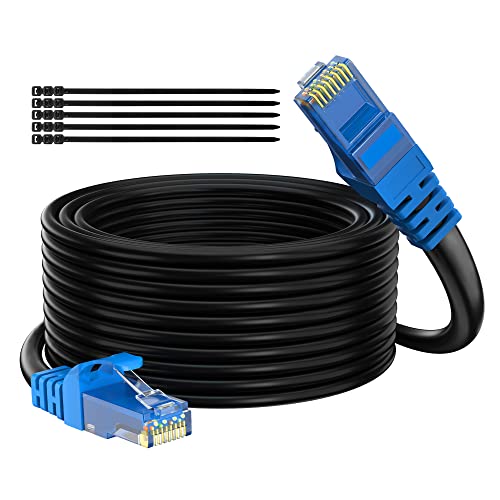
Adoreen Cat 6 Outdoor Ethernet Cable 100 Ft Black, High Speed Heavy Duty Long Internet Network Cable for POE Camera Cat 5 5e RJ45 LAN Patch Cable Cord, Sturdy Waterproof Direct Burial+25 Ties
- Durable Outdoor Design: Double jackets with UV resistance for outdoor use
- Heavy Duty Construction: Sturdy, waterproof, and suitable for direct burial
- High Performance Conductors: 4 twisted pairs of solid CCA copper with gold connectors
As an affiliate, we earn on qualifying purchases.
As an affiliate, we earn on qualifying purchases.

PoE Texas DC-Powered Gigabit PoE+ Injector, 12-60V Input, 30W
- Compatible with 12-60V DC sources: Supports unregulated DC power inputs
- Converts to 50V PoE+: Regulates 12-60V to 50V PoE+
- Supports IEEE 802.3at PoE+: Provides up to 30W power output
As an affiliate, we earn on qualifying purchases.
As an affiliate, we earn on qualifying purchases.