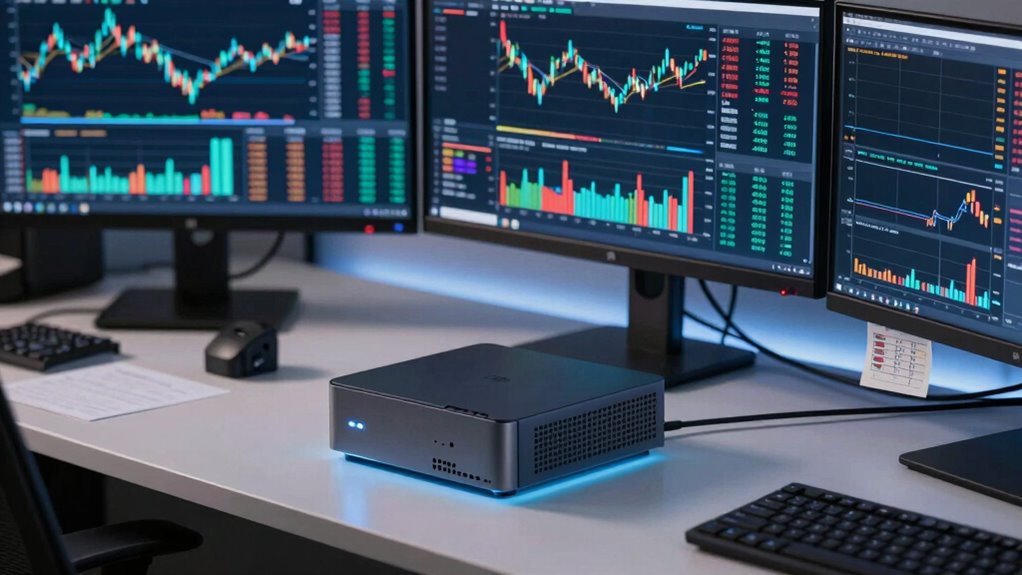

To prevent monitor overload when choosing a mini PC for trading, focus on checking its ports. Ensure it has multiple HDMI, DisplayPort, or USB-C outputs to support all your high-resolution monitors. Confirm the graphics support for multiple screens without lag. Think about an adequate number of USB ports for peripherals and fast data transfer. Proper port selection keeps your setup smooth and efficient. Keep exploring further to learn more valuable tips on building an ideal trading station.
Key Takeaways
- Verify the mini PC supports multiple high-resolution monitors with adequate HDMI, DisplayPort, or Thunderbolt outputs.
- Ensure sufficient USB-C or Thunderbolt ports for connecting monitor hubs and peripherals simultaneously.
- Confirm compatibility of graphics hardware with your monitor setup to prevent lag and display issues.
- Check internal expansion options to add or upgrade graphics cards or additional ports in the future.
- Assess cooling and noise levels to maintain system stability and minimize distractions during intensive trading sessions.
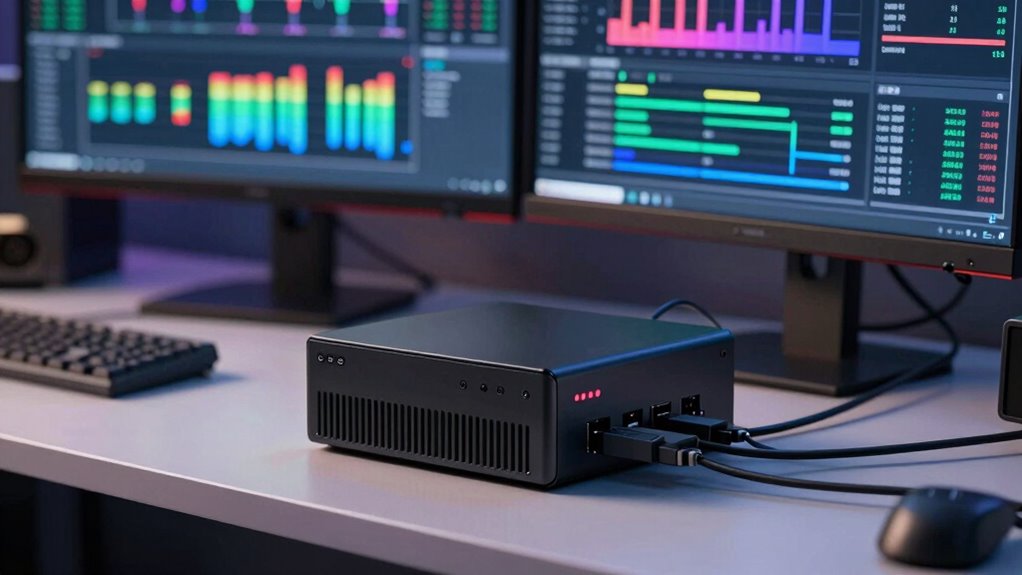
If you’re serious about trading, choosing the right hardware can make a significant difference in your performance. When it comes to mini PCs, one of the most critical aspects is guaranteeing they meet performance benchmarks that support your trading needs. You need a system that can handle multiple trading platforms, real-time data streams, and analytical tools without lag or crashes. To do that, you must pay attention to hardware compatibility—making sure the mini PC’s components work seamlessly together. A mismatch between the CPU, RAM, graphics, and storage can lead to bottlenecks, slowing down your decision-making process and potentially costing you money.
Start by evaluating the performance benchmarks that matter most for trading activities. Look for a mini PC with a robust processor—preferably an Intel i5 or i7, or AMD Ryzen equivalent—that can handle multitasking effortlessly. High clock speeds and multiple cores are essential because they guarantee your system can process vast amounts of data quickly. RAM is equally important; aim for at least 16GB to keep multiple applications and tabs open simultaneously without slowdown. Solid-state drives (SSDs) are a must-have for fast boot times and rapid access to trading software and data files. Also, consider graphics capabilities if you plan to use multiple screens, as integrated graphics might struggle to support several high-resolution monitors. Additionally, understanding hardware compatibility ensures all components work together efficiently, preventing potential conflicts or performance issues.
Next, consider hardware compatibility, which guarantees all components work together efficiently. Check whether the mini PC’s motherboard supports the latest connectivity options—such as USB-C, Thunderbolt, and HDMI—so you can easily connect multiple monitors and peripherals. The power supply should be adequate to support your hardware setup, especially if you plan to upgrade components later. Remember, some mini PCs come with limited upgrade options, so choose a model that allows future expansion if needed. Compatibility extends beyond internal parts; ensure that the mini PC’s size and port placement suit your workspace and monitor setup, preventing clutter and awkward cable management.
Finally, don’t overlook thermal performance and noise levels—trading can be intense, and overheating or excessive noise can distract or disrupt your workflow. Choose a mini PC with good cooling solutions and a quiet operation. This combination of performance benchmarks and hardware compatibility guarantees your setup is reliable and efficient, preventing monitor madness and keeping your trading desk streamlined. When you prioritize these aspects, you’ll create a stable, responsive environment that supports quick decisions and smooth multitasking—both vital for successful trading.
Frequently Asked Questions
Can Mini PCS Support Multiple High-Resolution Monitors Simultaneously?
Yes, mini PCs can support multiple high-resolution monitors simultaneously if they have robust graphics support and enough ports. Look for models with dedicated graphics cards or multiple video output options, like HDMI, DisplayPort, or USB-C, that handle high monitor resolution smoothly. This setup allows you to expand your trading workspace across several screens without sacrificing clarity or performance, ensuring you stay efficient and well-informed.
What Are the Best Cooling Solutions for Mini PCS in Trading Setups?
Imagine your mini PC as a busy trader’s heart, pounding with data. To keep it cool, you should consider liquid cooling systems that efficiently dissipate heat, much like a steady stream of calm water. Heat sinks are also essential, acting as thermal shields. Together, they prevent overheating, ensuring your trading setup runs smoothly under pressure, so you stay focused on your next big move without interruption.
How Do Mini PCS Handle Power Outages or Surges During Trading Hours?
During power outages or surges, your mini PC’s performance depends on power surge protection and battery backup systems. You should connect your mini PC to a surge protector to prevent damage from voltage spikes. Additionally, using an uninterruptible power supply (UPS) ensures your mini PC stays operational during outages, giving you enough time to save work or shut down safely. This setup keeps your trading environment stable and safeguarded.
Are Mini PCS Compatible With All Trading Software Platforms?
Yes, mini PCs are compatible with most trading software platforms, thanks to their flexible hardware integration. You can easily run popular trading applications on them, as they support essential operating systems like Windows and Linux. Just make certain your mini PC meets the software’s hardware requirements. This way, you avoid compatibility issues, streamline your setup, and focus on trading without worrying about software conflicts or hardware limitations.
What Is the Typical Lifespan of a Mini PC Used for Trading?
A mini PC used for trading typically lasts 3 to 5 years, depending on hardware durability and how well you maintain it. For example, Sarah upgraded her mini PC’s RAM and storage after three years, extending its lifespan. Regular upgrades boost performance and keep it relevant, ensuring you get the most out of your investment. With proper care and occasional upgrades, your mini PC can serve you effectively throughout its lifespan.
Conclusion
Choosing the right mini PC can boost your trading efficiency and prevent monitor madness. Did you know that traders using multi-monitor setups see a 20% increase in productivity? By selecting a compact, powerful device with the right ports, you keep your workspace organized and your focus sharp. Don’t overlook your port needs—it’s the key to a seamless trading experience. Make the smart choice today and optimize your setup for success.