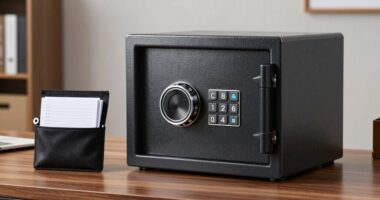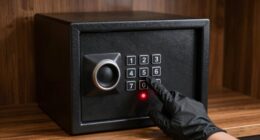
Fingerprint safes look sleek and high-tech, giving off a futuristic vibe. However, their biometric technology can fail if your fingers are wet, dirty, or damaged. Environmental factors like extreme cold or heat may also interfere, making access frustrating in emergencies. Backup keys or codes add extra security but can reduce convenience and sometimes pose vulnerabilities. If you want to understand how to keep your safe both stylish and reliable, stay tuned for some essential tips.
Key Takeaways
- Biometric fingerprint safes appear advanced but can fail if fingerprints are dirty, wet, or damaged.
- Environmental factors like extreme cold or heat may impair fingerprint scanner performance.
- Wear and tear over time can cause fingerprint sensors to malfunction or become less responsive.
- Backup keys or override codes can introduce vulnerabilities, reducing overall security.
- Regular maintenance and updated technology are essential to ensure reliability and security.
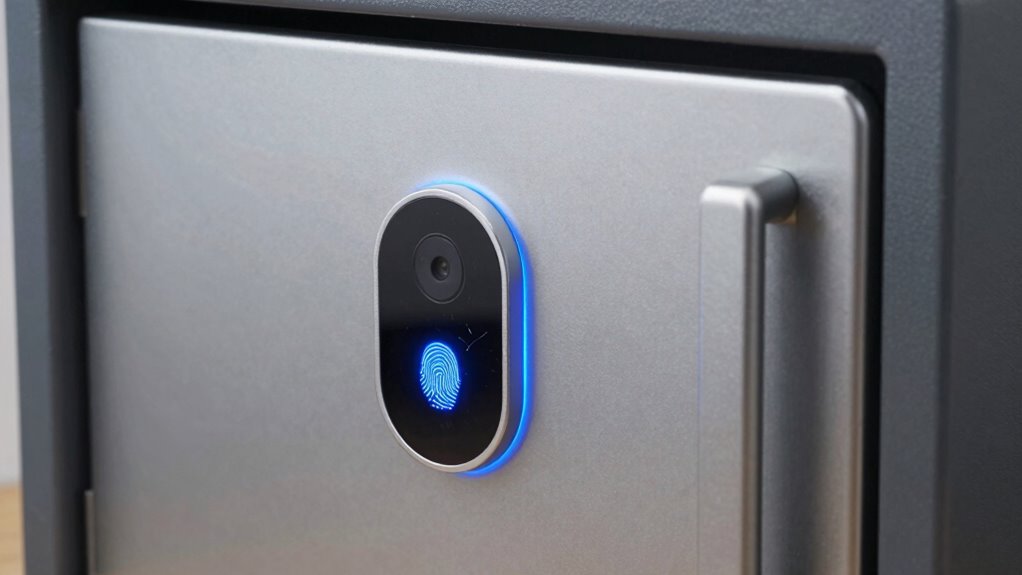
Fingerprint safes are becoming increasingly popular because they offer quick, secure access without the hassle of keys or combinations. They leverage biometric technology to identify your fingerprint accurately, granting access only to authorized users. This modern approach to security combines convenience with advanced safe security features, making them an appealing choice for protecting valuables, firearms, or important documents. You appreciate how seamless it feels to open your safe with just a touch, especially compared to fumbling with keys or memorizing complex codes.
However, despite their sleek, futuristic design, fingerprint safes aren’t infallible. Their reliance on biometric technology means they’re vulnerable to certain issues. For example, if your fingerprints are wet, dirty, or damaged, the safe might fail to recognize you. This can be frustrating, especially during emergencies when you need quick access. Additionally, environmental factors like extreme cold or heat can sometimes interfere with the scanner’s ability to read your fingerprint correctly. While most safes incorporate multiple safe security features—such as backup keys or override codes—these compromise the seamless access you expect and can introduce vulnerabilities if not properly secured.
Despite their sleek design, fingerprint safes can fail if fingerprints are dirty, damaged, or environmental factors interfere.
Another concern is the durability of the biometric scanner itself. Over time, wear and tear can cause the fingerprint reader to malfunction or become less responsive. If the sensor deteriorates, you might face difficulties opening your safe, defeating the purpose of having a biometric lock in the first place. Moreover, some safes with biometric technology are susceptible to hacking or fingerprint spoofing techniques, especially if the device’s security protocols aren’t robust enough. You might think that biometric safes are foolproof, but sophisticated methods can sometimes bypass these security layers.
Despite these potential pitfalls, many manufacturers are continually improving biometric technology to address such issues. Enhanced sensors, multi-factor authentication options, and encrypted data storage help bolster safe security features and protect against unauthorized access. Still, it’s important to remember that no security system is perfect. When choosing a fingerprint safe, you should consider not only its biometric capabilities but also its fallback options, such as traditional keys or passcodes, for times when the fingerprint scanner might fail. Regular maintenance and updates can also help guarantee that the biometric technology remains reliable.
Additionally, understanding the limitations of biometric systems can help you better evaluate whether a fingerprint safe suits your security needs. Ultimately, fingerprint safes provide a high level of convenience and security, but they aren’t immune to failure. Knowing their limitations helps you make informed decisions and prepare backup plans. While they look futuristic and function efficiently most of the time, a single malfunction can leave you locked out or vulnerable. So, it’s wise to weigh these factors carefully and choose a model with all-encompassing safe security features that match your needs.
Frequently Asked Questions
How Long Does a Fingerprint Safe Typically Last Before Needing a Replacement?
A fingerprint safe typically lasts 3 to 5 years before needing replacement, depending on factors like biometric accuracy and battery life. You should expect the biometric scanner to maintain accuracy over time, but it may degrade with frequent use. Battery life varies, usually lasting several months, but you’ll need to replace or recharge it regularly to guarantee reliable access. Keep an eye on performance to avoid unexpected failures.
Are Fingerprint Safes Vulnerable to Hacking or Digital Breaches?
Think your fingerprint safe is invincible? Think again. You’re not immune to biometric hacking or encryption vulnerabilities. Cybercriminals are clever, and they can exploit weaknesses in biometric data or encryption algorithms. While these safes seem high-tech, they aren’t foolproof. So, don’t get complacent—regularly update your security features, and remember, even futuristic gadgets can fall prey to digital breaches. Stay vigilant, or risk losing what you thought was secure.
Can Multiple Fingerprints Be Programmed Into One Safe?
Yes, you can program multiple fingerprints into one safe. During biometric enrollment, you register various fingerprints, allowing multiple users access. This setup guarantees backup access if someone’s fingerprint isn’t recognized, providing convenience and security. Just remember to update your stored prints regularly to maintain accuracy. Having multiple fingerprints programmed helps prevent lockouts, giving you peace of mind knowing you always have a backup access method if needed.
What Maintenance Is Required to Keep the Fingerprint Scanner Functioning?
To keep your fingerprint scanner working smoothly, you should regularly clean the sensor with a soft, dry cloth to remove dirt and smudges. Additionally, perform biometric calibration periodically as recommended by the manufacturer to guarantee accurate recognition. These simple steps help maintain peak performance, prevent false rejections, and extend the lifespan of your safe’s fingerprint system, making sure it stays reliable when you need it most.
How Does Extreme Weather Affect the Security Features of Fingerprint Safes?
Think of your fingerprint safe as a sturdy ship steering through stormy weather. Extreme weather tests its weather resilience and material durability, causing the scanner to falter or malfunction if the materials aren’t built for such conditions. Harsh cold, heat, or moisture can impair the sensor’s ability to read fingerprints accurately. To keep your safe secure, choose one designed with high-quality, weather-resistant materials and guarantee proper sealing against the elements.
Conclusion
Remember, even the sleekest fingerprint safe can become useless if that one thing fails. No matter how futuristic it looks, reliability is key. Keep backups and regular checks to guarantee your valuables stay protected. After all, don’t put all your eggs in one basket—trust but verify. Stay vigilant and prepared, because a safe that can’t keep its promise isn’t worth much in the end. Protect smartly, and don’t let technology lull you into false security.