

Proof of Work (PoW) requires miners to solve complex puzzles to validate transactions, consuming a lot of energy and demanding powerful hardware. In contrast, Proof of Stake (PoS) selects validators based on their staked assets, using much less energy and allowing broader participation. PoW offers strong security but can be less sustainable, while PoS promotes efficiency and scalability. If you want to understand how these mechanisms impact networks and sustainability, keep exploring the differences.
Key Takeaways
- PoW uses computational puzzles for validation, while PoS selects validators based on staked cryptocurrency.
- PoW consumes significant energy, whereas PoS offers a more eco-friendly, energy-efficient alternative.
- PoW emphasizes security through costly mining; PoS relies on stakeholder incentives and stake size.
- PoW’s hardware requirements limit participation; PoS promotes broader inclusion with lower resource needs.
- PoW suits high-security networks like Bitcoin; PoS favors scalability, sustainability, and accessibility for newer projects.
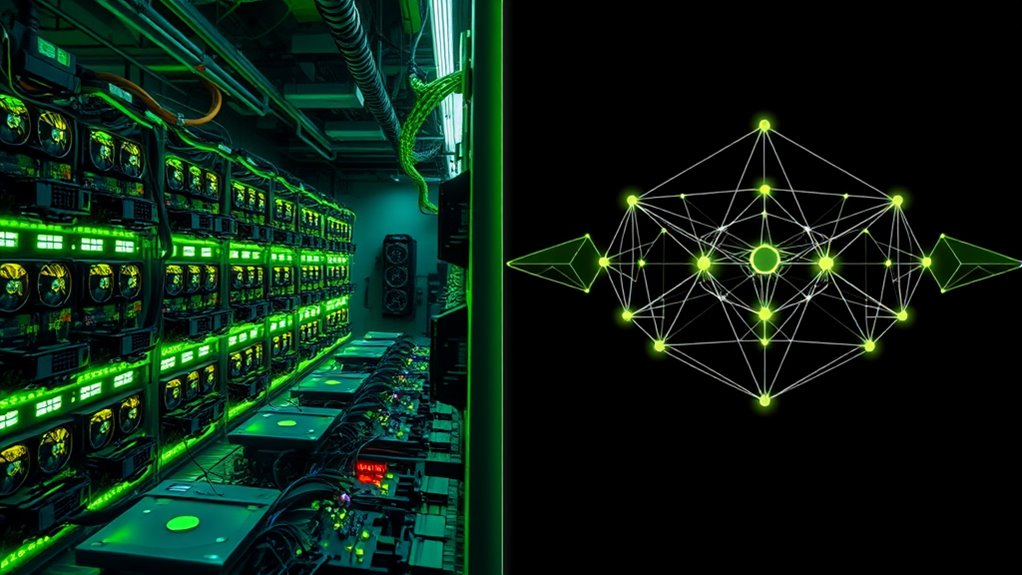
When choosing between Proof of Work and Proof of Stake, understanding their core differences is essential. These consensus mechanisms determine how blockchain networks verify transactions, maintain security, and achieve decentralization. Proof of Work (PoW) is the original method used by Bitcoin, relying heavily on cryptocurrency mining. In this process, miners compete to solve complex mathematical puzzles, and the first to find a valid solution earns the right to add a new block to the chain and receive rewards. This competitive process ensures security but comes with significant energy consumption. As miners use powerful hardware to perform these calculations, the energy required skyrockets, raising environmental concerns and making PoW less sustainable in the long run.
Proof of Work relies on mining to secure the network, but consumes large amounts of energy and raises environmental concerns.
In contrast, Proof of Stake (PoS) shifts the focus from computational power to coin ownership. Instead of miners racing to solve puzzles, validators are chosen based on the number of coins they hold and are willing to “stake” as collateral. When you participate in a PoS network, you lock up a portion of your cryptocurrency as a stake, and the network randomly selects validators to confirm transactions. This process drastically reduces energy consumption because it eliminates the need for energy-intensive mining hardware. Instead of competing against others, your chance of validating transactions depends on your stake size, incentivizing you to hold and support the network rather than pouring resources into mining equipment. This decentralization aspect is often debated but remains a key goal for many blockchain developers.
The advantages of PoS become clear when you consider sustainability and accessibility. Since it doesn’t require vast amounts of electricity, PoS networks have a lower environmental footprint. This makes it easier for more people to participate, even with modest hardware or limited resources. If you’re concerned about the environmental impact of cryptocurrency mining, PoS offers a compelling alternative that promotes decentralization without the hefty energy bills associated with PoW. Additionally, PoS networks tend to process transactions faster and with lower fees, making them more scalable and user-friendly.
However, PoW still holds advantages in security, especially in networks with significant mining power, due to the high cost and effort needed to attack the chain. While PoS can be vulnerable to certain types of attacks if large stakeholders collude, ongoing innovations aim to improve its resilience. Ultimately, your choice between Proof of Work and Proof of Stake depends on your priorities: whether you value maximum security and decentralization or prefer a more sustainable, energy-efficient approach. Understanding these core differences helps you make informed decisions in the evolving landscape of cryptocurrency.
Frequently Asked Questions
How Do Consensus Mechanisms Impact Blockchain Scalability?
Consensus mechanisms directly impact blockchain scalability by influencing blockchain throughput and network congestion. Proof of Stake generally offers higher throughput and reduces congestion because it requires less energy and computational power than Proof of Work. This allows more transactions to process quickly, enhancing scalability. Conversely, Proof of Work can cause network congestion during high activity, limiting throughput. Your choice of consensus mechanism determines how efficiently the network handles increasing transaction volumes.
What Are the Environmental Implications of Each Method?
You might be surprised to learn that Bitcoin’s Proof of Work consumes as much energy as some small countries, substantially affecting its carbon footprint. This method requires vast energy consumption, contributing heavily to greenhouse gases. Conversely, Proof of Stake uses far less energy, dramatically reducing environmental impact. If sustainability matters to you, Proof of Stake offers a greener alternative, lowering energy use and helping decrease overall carbon footprint.
Can Proof of Stake Replace Proof of Work Entirely?
Yes, proof of stake can replace proof of work entirely, as it offers greater energy efficiency and reduces environmental impact. However, you should consider decentralization trade-offs, since some argue that proof of stake might favor larger stakeholders, potentially compromising decentralization. While it’s a promising alternative, the shift depends on how well the new system balances energy savings with maintaining a decentralized network.
How Do Security Vulnerabilities Differ Between the Two?
You’ll find that proof of stake reduces the risk of cryptocurrency theft from network attacks compared to proof of work. Proof of work’s reliance on computational power makes it vulnerable to 51% attacks if a single entity controls enough mining power. Meanwhile, proof of stake can be targeted through stake-based attacks, but its economic disincentives make it harder for attackers to succeed, enhancing overall security against network attacks.
What Are the Cost Differences for Validators/Miners?
They say “you get what you pay for,” and in the world of blockchain, validators and miners face different costs. Proof of Work demands high energy consumption and expensive hardware, making it costly to participate. Proof of Stake, on the other hand, requires less energy and hardware investments, lowering entry barriers. If you want to minimize costs, staking offers a more affordable way to validate transactions without the hefty expenses of mining equipment.
Conclusion
So, whether you choose the energy-guzzling Proof of Work or the eco-friendly Proof of Stake, it’s like picking between a steam engine and a sleek Tesla. Both have their quirks, but in the end, it’s about what suits your needs. Just remember, the future’s not set in stone—think of it as the blockchain’s version of a Renaissance, where innovation keeps you on your toes. Choose wisely, and stay curious!