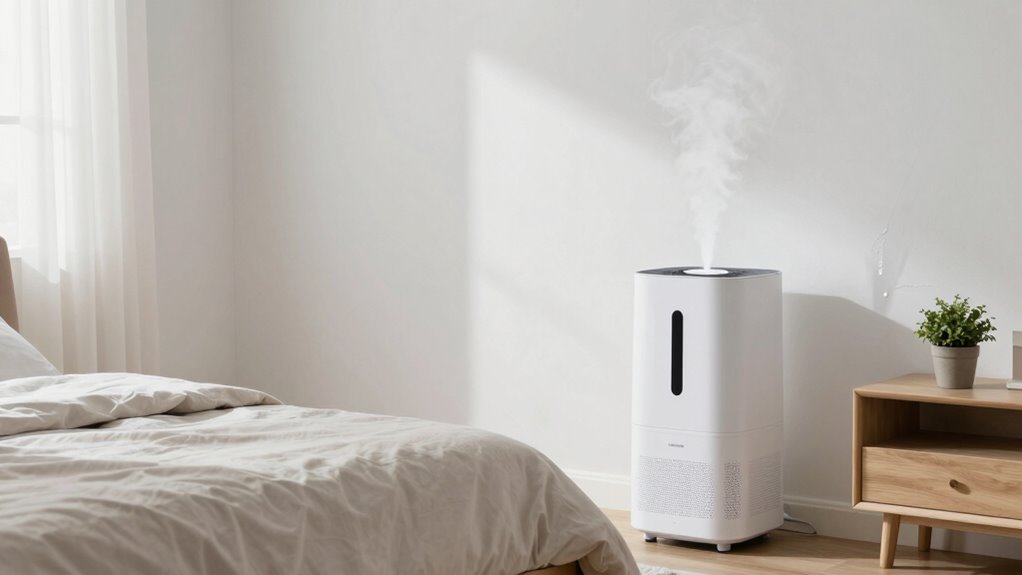
To avoid white dust and wet walls in your bedroom, choose a humidifier that uses distilled or filtered water, as tap water minerals cause residue and moisture issues. Make sure to set your humidity level between 40-50%, and clean your device weekly to prevent mineral buildup and mold. Proper placement and regular maintenance are key to keeping your space comfortable and dry. Keep going to learn how to maintain your humidifier effectively and prevent common problems.
Key Takeaways
- Use distilled or filtered water to minimize mineral content and prevent white dust buildup.
- Regularly clean and descale the humidifier weekly to avoid mineral deposits and mold growth.
- Set humidity levels between 40-50% and monitor with a hygrometer to prevent excess moisture and damp walls.
- Choose ultrasonic humidifiers with built-in filters or evaporation models for cleaner mist output.
- Maintain proper room ventilation and promptly address any signs of dampness or mold on walls.
Why Do White Dust and Damp Walls Happen in Your Bedroom?
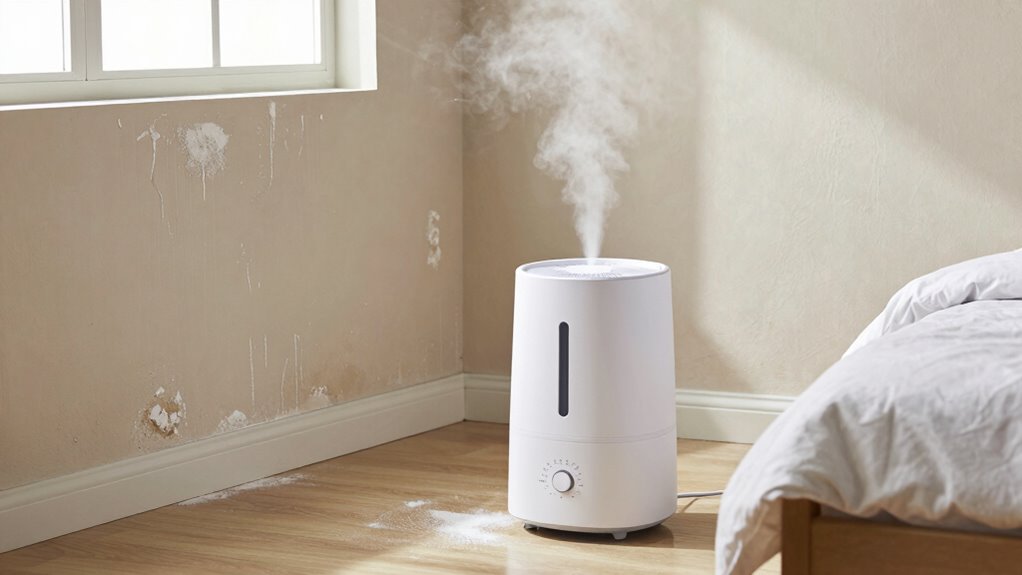
White dust and damp walls in your bedroom often result from the use of certain humidifiers, especially ultrasonic models. These humidifiers create fine mist by vibrating a metal diaphragm, which can release mineral particles from tap water into the air. This white dust settles on surfaces, affecting your air quality and potentially causing health issues. Damp walls occur when excess moisture isn’t properly managed, leading to condensation and mold growth. Poor air quality from mineral dust can hinder your sleep improvement efforts by causing irritation or allergies. To minimize these issues, using distilled or filtered water reduces mineral deposits, and maintaining proper humidity levels helps prevent excess moisture. Understanding these causes helps you create a healthier, more comfortable sleeping environment. Choosing the right humidifier can also significantly reduce white dust and prevent dampness issues.
How to Choose the Right Humidifier for Your Bedroom
Choosing the right humidifier for your bedroom depends on your specific needs and preferences, ensuring you create a comfortable and healthy environment. Start by considering air quality; if you’re sensitive to allergens or want to reduce dust, opt for an ultrasonic or evaporative model that helps filter impurities. Next, evaluate noise levels—if you sleep lightly, choose a quiet, ultrasonic humidifier that operates silently or with minimal sound. Also, think about the size of your room; larger spaces require bigger units with greater output. Ease of use and maintenance are important, so pick a model with straightforward controls and easy-to-clean components. Additionally, European cloud solutions can offer innovative and energy-efficient options for smart humidifiers that monitor and adjust humidity levels automatically. Being aware of humidifier technology can help you select a device that best suits your environment. For example, some models incorporate air quality sensors, which can further optimize humidity and improve overall indoor conditions. Furthermore, understanding wave and wind principles can assist in optimizing airflow and humidity distribution within your space. By balancing air quality improvements with noise considerations, you’ll find a humidifier that keeps your bedroom comfortable without disrupting your sleep.
How to Prevent White Dust and Damp Walls Using Proper Water and Settings?
Using the right type of water and setting your humidifier correctly can prevent white dust and damp walls. You should opt for distilled or filtered water and adjust the humidity level to stay between 30-50%. Proper choices help keep your bedroom comfortable and free from unwanted residue. Additionally, monitoring humidity levels with a hygrometer can ensure optimal air quality, further reducing the risk of issues caused by excess moisture. Implementing automatic humidity control with smart devices can also assist in maintaining ideal humidity levels automatically, enhancing your overall bedroom environment. Selecting the appropriate humidifier type can further minimize the production of white dust and moisture problems.
Correct Water Type Selection
Are you aware that the type of water you use in your humidifier can considerably impact its performance and your home’s condition? Using the right water type minimizes white dust and prevents damp walls. Ideally, opt for distilled or demineralized water, which has low mineral content and reduces residue buildup. To understand better, consider this table:
| Water Type | Mineral Content | Effect on Humidifier |
|---|---|---|
| Distilled | Very low | Prevents white dust |
| Demineralized | Low | Reduces residue |
| Tap Water | High | Causes white dust |
| Filtered Water | Moderate | Some residue risk |
| Mineral Water | High | Increased deposits |
Choosing the right water ensures efficient humidification without damaging your walls or leaving white dust. Additionally, regular maintenance of your humidifier can help prevent mineral buildup and prolong its lifespan. Using appropriate water types can significantly extend the life of your humidifier and maintain a healthier indoor environment. Proper water selection can also help mitigate the buildup of white dust, which is often caused by mineral content in the water. Being aware of water mineral levels can guide you in making the best choice for your humidifier.
Optimal Humidifier Settings
To prevent white dust and damp walls, you need to set your humidifier correctly and use the right water type. Proper sensor calibration ensures your device maintains ideal humidity levels without over-humidifying, which can cause dampness. Regularly check and adjust sensor settings to avoid excessive moisture. Keep noise levels low by choosing models with noise reduction features, so the humidifier runs smoothly without disturbance. Set the humidity between 40-50%, preventing white dust formation from mineral buildup and moisture issues on walls. Avoid running the humidifier continuously; instead, use a hygrometer to monitor levels. Using high-quality water such as distilled or filtered water reduces mineral deposits that contribute to white dust. Ensuring your humidifier is properly maintained is essential for ongoing performance and avoiding buildup issues, including mineral deposits that lead to white dust. Properly calibrated sensors and thoughtful settings help you maintain a healthy, comfortable environment while avoiding the common problems associated with improper humidifier use. Regularly inspecting your humidifier and understanding humidity levels can further help prevent issues like over-humidification and mineral buildup, and selecting a vetted humidifier brand can offer additional reliability and peace of mind.
Setting the Ideal Humidity Level to Keep Walls Dry and Dust-Free

Maintaining the right humidity level is essential for preventing walls from becoming damp and dusty. Aim for indoor humidity between 40% and 50%, which balances comfort and mold prevention. To achieve this, consider these tips:
- Use a hygrometer to monitor humidity levels accurately.
- Adjust your humidifier to maintain the ideal range, avoiding excess moisture.
- Ensure proper room ventilation to improve indoor air quality and reduce mold risk.
- Regularly inspect your walls for signs of moisture or mold to catch issues early.
- Be aware that humidity levels can fluctuate throughout the day, so consistent monitoring is key.
- Remember that maintaining appropriate humidity also helps prevent white dust caused by mineral deposits from excess moisture in the air.
- Understanding how humidifiers work can help you select and maintain the right device for your space.
- Proper maintenance of your humidifier, including regular cleaning, can prevent bacterial growth and ensure healthy indoor air quality.
Keeping humidity in check helps prevent white dust from mineral deposits and keeps walls dry. Proper humidity levels also support better indoor air quality, reducing allergens and mold growth. Regularly measuring and adjusting your humidifier guarantees a healthy, comfortable environment while protecting your walls from moisture damage.
How to Maintain and Clean Your Humidifier to Avoid Issues
To keep your humidifier running smoothly, you need to stay on top of regular maintenance. This means changing the water regularly, cleaning the unit thoroughly each week, and using distilled water to prevent mineral buildup. Proper upkeep will help you avoid mold, bacteria, and other issues that can affect your health and comfort. Regular cleaning and maintenance can also help prevent the formation of white dust, ensuring a cleaner environment in your space. Additionally, understanding wood movement and how humidity impacts it can help you maintain a stable environment and prevent damage to your furniture. Using appropriate herbal infusion techniques and tools can also enhance your experience if you use herbal infusers for aromatherapy or other purposes.
Regularly Change Water
Do you know that failing to regularly change the water in your humidifier can lead to mold growth and bacteria buildup? This not only worsens your air quality but can also cause unpleasant odors and increased noise levels. To keep your humidifier running smoothly:
- Empty the tank daily to prevent bacteria and mold from thriving.
- Refill with fresh, clean water to maintain ideal air quality.
- Clean the tank weekly to avoid mineral deposits and white dust.
Regular water changes ensure your humidifier operates quietly and efficiently, reducing noise disturbances at night. It also helps maintain cleaner, healthier air in your bedroom, preventing potential respiratory issues. Consistent maintenance keeps your device functioning properly and your environment comfortable.
Clean Weekly Thoroughly
Cleaning your humidifier thoroughly once a week is essential to prevent mineral buildup, mold, and bacteria from forming. When you keep your device clean, you improve your room’s air quality and guarantee it runs efficiently. Regular cleaning removes residue that can clog components, helping the humidifier operate more energy efficiently. Use a soft brush or cloth to scrub all accessible parts, paying special attention to the water tank and base. Disinfect with a vinegar solution to kill germs and remove mineral deposits. Dry all parts completely before reassembling. Skipping this step can lead to poor air quality, increased energy consumption, and potential health issues. Consistent cleaning helps your humidifier perform at its best, providing a healthier environment and conserving energy in the long run.
Use Distilled Water
Using distilled water in your humidifier helps prevent mineral buildup and reduces the need for frequent deep cleanings. Water impurities and minerals in tap water can settle inside the device, causing white dust and wet walls. To avoid this, consider these steps:
- Fill your humidifier with distilled water, which has fewer impurities and minerals.
- Regularly check for mineral deposits on the device’s surfaces and clean promptly.
- Replace water daily to prevent stagnation and buildup.
Using distilled water minimizes mineral residue, keeps your humidifier running smoothly, and improves air quality. It also helps prevent white dust from settling on furniture and walls, making maintenance easier and more effective.
Troubleshooting Common Problems and When to Call a Professional
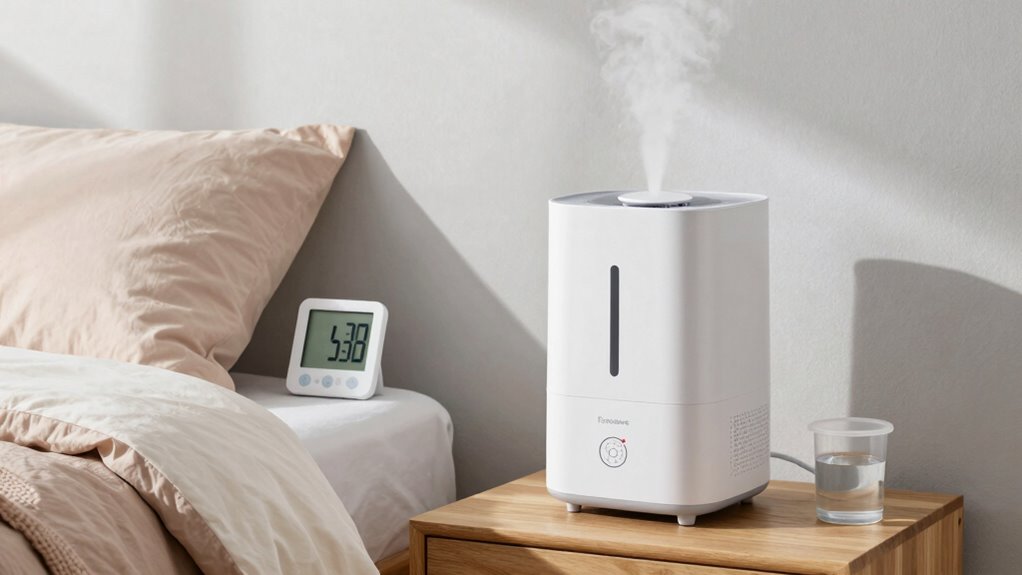
While bedroom humidifiers are generally easy to use, issues can still arise that require troubleshooting. Common problems include white dust, mold growth, or insufficient humidity. Remember, some humidifier myths might lead you astray—like over-cleaning or using harsh chemicals. To troubleshoot effectively, try these techniques first: check water quality, clean the unit regularly, and verify proper placement. If problems persist, it’s time to call a professional.
| Issue | Possible Cause | Solution |
|---|---|---|
| White dust formation | Mineral buildup from tap water | Use distilled water |
| Mold or foul odor | Bacteria or mold growth | Deep clean and disinfect |
| Low humidity levels | Humidifier malfunction | Inspect filters and parts |
| No mist output | Clogged or damaged nozzles | Clear or replace nozzles |
| Electrical problems | Power supply issues | Consult an electrician |
Frequently Asked Questions
Can Using Distilled Water Eliminate White Dust Completely?
Using distilled water can substantially reduce white dust caused by mineral deposits, but it may not eliminate it completely. Water quality varies, and even distilled water can sometimes contain trace minerals. To minimize white dust, always use high-quality distilled water and clean your humidifier regularly. This approach helps prevent mineral buildup and keeps your bedroom air cleaner, ensuring your humidifier operates efficiently without leaving white dust behind.
Are There Specific Humidifier Models Less Prone to Producing White Dust?
Think of certain humidifiers as guardians against white dust. Models with HEPA filters or those using ultrasonic technology tend to produce less white dust because they filter particles or vaporize water more precisely. Look for units designed with these features, as they act like shields, keeping your walls clear and air pure. Choosing the right model makes your humidifier a silent ally, not a culprit, in maintaining a cozy, dust-free bedroom.
How Does Room Temperature Affect White Dust Formation?
Higher room temperatures can increase white dust formation, especially if humidity levels are too high. When temperature fluctuations occur, it can cause mineral particles to settle as white dust. To minimize this, keep your room temperature stable and maintain ideal humidity levels around 40-50%. Avoid overheating your space, as warm air promotes mineral dispersion. Regularly clean your humidifier to prevent mineral buildup and white dust from spreading.
Is It Safe to Run a Humidifier Continuously Overnight?
Sure, running your humidifier overnight is safe, but don’t forget sleep safety and noise levels matter. While you might think more moisture means better sleep, excess humidity can cause discomfort or mold. Keep noise low so it doesn’t disturb your rest, and monitor humidity to prevent white dust or damp walls. An occasional break helps avoid overexposure, ensuring your sleep stays peaceful and safe.
What Are the Long-Term Effects of Excess Humidity on Bedroom Walls?
Excess humidity can lead to wall paint deterioration and mold growth over time. When walls stay damp, paint can peel or bubble, and mold spores thrive, causing health issues and damage. To prevent this, monitor humidity levels, keep them between 30-50%, and guarantee proper ventilation. Regularly check walls for signs of moisture, and fix leaks promptly to protect your bedroom walls from long-term damage.
Conclusion
Remember, “A stitch in time saves nine.” By choosing the right humidifier, setting it correctly, and maintaining it well, you can keep your bedroom walls dry and dust-free. Regular cleaning prevents issues before they start, and understanding your device helps you avoid common pitfalls. When in doubt, don’t hesitate to seek professional help. Keeping your bedroom comfortable is like tending a garden—care and attention guarantee it stays healthy and beautiful.