

A 51% attack happens when someone gains control of over half the mining power in a blockchain network, allowing them to double-spend coins and rewrite transaction history. Blockchains prevent double-spending by spreading out mining power and using consensus mechanisms like proof-of-work or proof-of-stake, which make majority control costly or difficult. To learn how blockchain security keeps money safe and details around this attack, keep exploring how decentralization and control work together.
Key Takeaways
- A 51% attack occurs when a miner or group gains control of over 50% of the network’s computing power, enabling transaction manipulation.
- It allows double-spending by rewriting transaction history and broadcasting fraudulent chains to replace legitimate ones.
- Blockchains prevent double-spending through decentralized networks, making majority control costly and difficult to achieve.
- Distributing mining power widely and implementing proof-of-stake increase security against 51% attacks.
- Checkpointing and consensus protocols help protect the blockchain’s integrity by making chain reorganizations costly or infeasible.

Have you ever wondered how blockchain networks can be compromised? It’s a question that gets to the core of cryptocurrency security and the importance of consensus mechanisms. Blockchains rely on decentralized networks where transactions are verified by multiple participants, making them inherently resistant to fraud. However, a 51% attack poses a serious threat because it exploits the way consensus mechanisms work. When a single entity gains control of over half of the network’s mining power or computational resources, it can manipulate the system. This control allows the attacker to approve fraudulent transactions, double-spend coins, or reorganize parts of the blockchain, undermining trust and integrity.
A 51% attack allows control over the blockchain, enabling double-spending and transaction manipulation.
In most proof-of-work-based blockchains, like Bitcoin, achieving consensus depends on miners solving complex puzzles to validate transactions. These puzzles ensure that no single miner or group can dominate the network easily, fostering security through decentralization. But if an attacker amasses enough hashing power—more than 50%—they can outpace honest miners. This majority control means they can broadcast a fraudulent chain that eventually replaces the legitimate one, effectively rewriting transaction history and enabling double-spending. It’s a stark example of how a flaw in the consensus mechanism can threaten cryptocurrency security.
Preventing a 51% attack involves designing blockchain networks that distribute mining power widely. When no single participant or coalition holds enough control, it becomes prohibitively expensive and technically difficult for any malicious actor to execute such an attack. Many networks implement measures like proof-of-stake, where validators are chosen based on the amount of cryptocurrency they hold and are willing to “stake” as collateral. This shifts the attack vector because acquiring a majority stake is often more costly and less feasible than gaining majority hashing power. Additionally, some blockchains employ checkpointing and finality protocols, which make it harder to reorganize the chain after a certain point, further safeguarding against double-spending attempts.
Moreover, the distribution of mining power plays a crucial role in maintaining network security, as decentralization reduces the risk of majority control. Ultimately, the security of a blockchain hinges on the robustness of its consensus mechanisms and the distribution of control across participants. When designed properly, these systems make it extremely difficult for any single entity to attain the majority needed for a 51% attack. That’s why decentralization and well-structured consensus rules are essential—they serve as the first line of defense against attacks that threaten the integrity of cryptocurrency transactions. While no system is entirely immune, understanding how these mechanisms work helps you appreciate the ongoing efforts to keep blockchain networks secure and trustworthy.
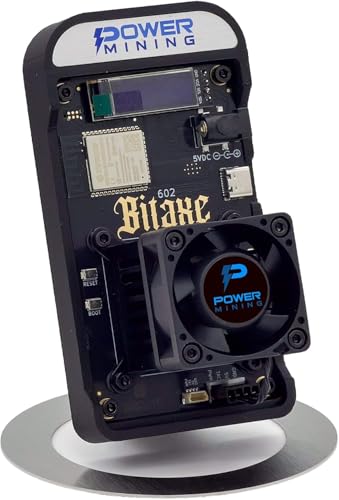
POWER MINING Bitaxe Gamma 602 ASIC Bitcoin Miner | 1.1 TH/s @ 18W | BM1370 Chip (Antminer S21 Pro) | Wi-Fi | USB-C | AxeOS | Open Source | Made in Europe | Incl. Power Supply & Stand
⚡ Efficient Home ASIC Miner – Up to 1.1 TH/s hashrate with just 18W power consumption (15 J/TH),…
As an affiliate, we earn on qualifying purchases.
As an affiliate, we earn on qualifying purchases.
Frequently Asked Questions
Can a 51% Attack Target Specific Transactions?
Yes, a 51% attack can target specific transactions, enabling you to perform targeted double-spending or transaction censorship. By gaining majority control, you can selectively reverse or block certain transactions, disrupting trust and transparency. This vulnerability allows malicious actors to manipulate particular transfers, potentially causing financial harm or undermining the blockchain’s integrity. Protecting against such attacks requires decentralization and vigilant network participation.
How Long Does a 51% Attack Typically Last?
A 51% attack can last from minutes to days, depending on the attacker’s resources and blockchain vulnerability. During this attack duration, they control the network’s consensus, risking double-spending. The longer it persists, the greater the damage. Usually, miners or attackers try to minimize this window to avoid detection. Your best safeguard is a robust, decentralized network that reduces attack duration and makes such threats nearly impossible to sustain.
Are Smaller Blockchains More Vulnerable to 51% Attacks?
Yes, smaller blockchains are more vulnerable to 51% attacks because they often have less network centralization and lower hash rate dominance. When a few miners control a significant portion of the network’s hash rate, they can manipulate transactions more easily. In smaller networks, this concentration increases the risk, making it easier for malicious actors to execute a 51% attack and compromise the blockchain’s integrity.
What Are the Economic Incentives Behind Executing a 51% Attack?
A penny saved is a penny earned, and in blockchain security, miners may see a 51% attack as worth the risk. You execute one to potentially double-spend coins or manipulate transactions, especially if miner collusion offers quick gains. Still, you weigh the economic risk—if caught, you could face hefty penalties or loss of trust, making the attack less attractive despite the tempting rewards.
How Do Miners Coordinate to Prevent 51% Attacks?
You can see that miners coordinate through consensus mechanisms like Proof of Work or Proof of Stake, which guarantee they follow the same rules and validate transactions honestly. Miner collaboration is essential to maintaining network security, as it makes it difficult for any single miner to dominate and execute a 51% attack. These mechanisms create a decentralized trust system, encouraging miners to act in the network’s best interest.

D'CENT Hardware Wallet | Biometric Cold Storage, Bluetooth, Multi-Crypto
EAL5+ CERTIFIED SECURE ELEMENT + FINGERPRINT PROTECTION — Your private keys stay encrypted offline on a certified EAL5+…
As an affiliate, we earn on qualifying purchases.
As an affiliate, we earn on qualifying purchases.
Conclusion
Understanding a 51% attack helps you see how blockchain security relies on decentralization. For instance, if a single miner or group gains majority control, they could double-spend coins or manipulate transactions. Imagine a hacker hijacking over half the network’s power to rewrite transaction history—similar to a real-world case in 2018 with Bitcoin Gold. By spreading out mining power and implementing safeguards, blockchains work hard to prevent these attacks, keeping your digital assets safe.

TANGEM Crypto Wallet Pack of 3 – Trusted Cold Storage Hardware Wallet
Proven security at scale: Over 9 years and millions of cards issued with no known remote hacks, while…
As an affiliate, we earn on qualifying purchases.
As an affiliate, we earn on qualifying purchases.

Learn Blockchain Programming with JavaScript: Build your very own Blockchain and decentralized network with JavaScript and Node.js
As an affiliate, we earn on qualifying purchases.
As an affiliate, we earn on qualifying purchases.