

Governments are taking varied approaches to crypto mining regulation, with some cracking down due to environmental concerns and energy consumption, while others embrace it for economic growth and innovation. Stricter policies can raise costs and limit growth, but responsible regulation—like promoting renewable energy use—can balance industry benefits with sustainability. If you want to explore how these regulatory strategies impact the industry’s future, there’s more to uncover about the ongoing global debate.
Key Takeaways
- Governments are imposing stricter regulations to curb environmental impacts and ensure sustainable industry growth.
- Some nations embrace crypto mining through incentives and supportive policies to boost economic development.
- Regulatory approaches vary, balancing environmental concerns with fostering innovation and industry expansion.
- Tight regulations aim to prevent ecological damage while encouraging responsible energy use and transparency.
- The industry’s future depends on policies that promote sustainable practices without stifling technological progress.
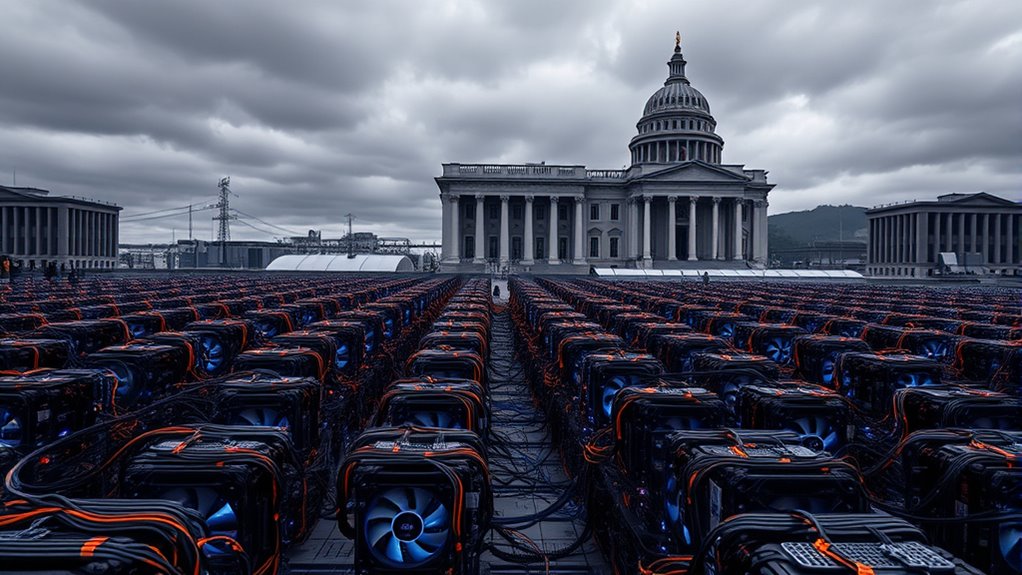
Mining regulation plays a critical role in managing how natural resources are extracted and protected. When it comes to crypto mining, regulations directly influence not only the industry’s growth but also its environmental footprint. Governments often grapple with balancing economic incentives and environmental concerns. On one side, crypto mining can generate significant revenue, create jobs, and stimulate local economies. On the other, the energy-intensive nature of many mining operations raises serious environmental impact issues. As you consider how regulations shape this landscape, it’s clear that policy decisions can either encourage responsible growth or lead to environmental degradation.
Regulations that are too lax might allow miners to operate without adequate oversight, increasing energy consumption and emissions. This unchecked growth can harm ecosystems and contribute to climate change, which is increasingly a concern for communities and governments alike. Conversely, strict regulations can impose higher costs on miners, potentially stifling innovation and discouraging investment. But these rules can also promote cleaner, more sustainable practices, aligning economic incentives with environmental stewardship. For example, governments might incentivize miners to use renewable energy sources through tax breaks or subsidies. Such policies help reduce the environmental impact while maintaining economic benefits, creating a win-win scenario.
Lax regulations risk environmental harm, while strict rules can promote sustainable mining practices and economic growth.
You, as someone observing or participating in this industry, should recognize that effective mining regulation requires a nuanced approach. It’s not just about setting rules but designing policies that motivate miners to adopt environmentally friendly practices without sacrificing economic growth. Clear standards on energy efficiency, waste management, and emissions control can steer the industry toward sustainability. Additionally, regulations that promote transparency and accountability ensure miners adhere to environmental standards, fostering public trust and investment. Incorporating vertical storage solutions and other innovative techniques can further enhance industry practices and reduce environmental degradation.
Incentivizing environmentally responsible behavior is essential. Governments can offer tax incentives for using renewable energy or implementing energy-efficient equipment. They can also impose penalties for violations that cause environmental harm, deterring irresponsible practices. These measures align economic incentives with environmental goals, encouraging miners to innovate and adopt greener technologies. At the same time, a well-regulated industry can attract responsible investors who prioritize sustainability, ultimately benefiting the economy and the environment.
Ultimately, your understanding of mining regulation’s role in balancing environmental impact and economic incentives reveals that thoughtful, balanced policies are indispensable. They can help ensure that crypto mining remains a profitable industry while minimizing its ecological footprint. With the right regulations in place, you can support an industry that grows responsibly, benefits local economies, and protects the environment for future generations.
Frequently Asked Questions
How Do Mining Regulations Impact Global Cryptocurrency Prices?
You’ll see that mining regulations impact global cryptocurrency prices by increasing market volatility and creating regulatory uncertainty. When governments impose stricter rules or crack down on mining activities, prices often drop due to fear and unpredictability. Conversely, embracing regulations can stabilize the market, boosting investor confidence. Your awareness of these regulatory shifts helps you understand price swings and adapt your strategies accordingly, steering the complex landscape of crypto investments effectively.
What Are the Environmental Effects of Crypto Mining Regulations?
Crypto mining regulations can markedly impact environmental effects by encouraging renewable energy initiatives and reducing carbon footprints. When regulations favor eco-friendly practices, you’ll see miners adopting cleaner energy sources, lowering greenhouse gas emissions. Conversely, strict regulations might limit energy-intensive operations, helping to protect ecosystems. Overall, well-designed policies help you support sustainable crypto mining, balancing innovation with environmental responsibility, and promoting a greener future for the industry.
Which Countries Have the Strictest Mining Laws?
You’ll find China has the strictest mining laws, enforcing tight regulatory compliance and all-encompassing legal frameworks that heavily restrict or ban crypto mining activities. Additionally, countries like India and Morocco implement rigorous regulations, requiring permits and monitoring environmental impact. These nations prioritize legal frameworks that control energy consumption and protect ecosystems, making it challenging for miners to operate without complying fully with local laws.
How Do Regulations Influence Small-Scale Miners’ Operations?
Like Icarus soaring too close to the sun, you might find regulations overwhelming. They influence your small-scale mining operations by demanding strict regulatory compliance and licensing requirements, which can increase costs and complexity. These rules aim to ensure safety and fairness but may also limit your flexibility. Managing these regulations requires diligence, patience, and understanding, as they directly shape how you mine, invest, and grow in the crypto space.
Are There Any Upcoming International Agreements on Mining Regulation?
Yes, upcoming international treaties aim to establish regulation standards for crypto mining, though details are still evolving. These agreements will likely focus on reducing environmental impact and promoting transparency across borders. As someone involved in mining, you should stay informed about these developments because they could influence your operations, compliance requirements, and the global landscape. International collaboration might lead to more consistent rules, making it easier to navigate the regulatory environment.
Conclusion
As you consider the future of crypto mining, remember it’s like a delicate balance on a tightrope—too strict, and innovation falters; too lenient, and chaos ensues. Governments’ decisions act as the guiding lighthouse, illuminating the path ahead. Whether they embrace or crack down, they hold the key to shaping the industry’s destiny. Ultimately, your role is to navigate this shifting landscape wisely, knowing that each move reflects the broader tide of progress and caution.