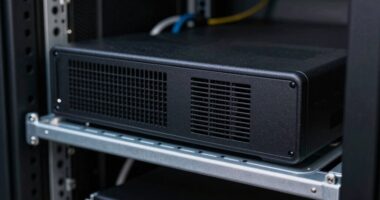
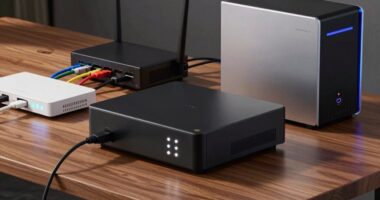
A pure sine wave UPS is essential for sensitive electronics, medical devices, and high-end equipment that need stable, noise-free power to prevent malfunctions or damage. Devices like servers, audio/video gear, and sophisticated components benefit most from this clean power source. On the other hand, basic household appliances such as lights or chargers often tolerate less refined power without issues. Keep exploring to discover which devices truly need a pure sine wave power source and which don’t.

Get hardware and tech essentials delivered free with Prime
- Fast, free delivery on millions of items
- Prime Video, Amazon Music and more included
- Member-only deals all year
Key Takeaways
- Sensitive electronics, medical equipment, and high-end audio/video gear benefit most from pure sine wave UPS power.
- Most standard household devices, like lamps and chargers, typically do not require pure sine wave UPS support.
- Devices with sensitive components may malfunction or degrade when powered by modified sine wave UPS units.
- High inverter efficiency in a pure sine wave UPS extends runtime and reduces energy waste for critical devices.
- Choosing the right UPS enhances system reliability, protects expensive equipment, and ensures stable power during outages.

A pure sine wave UPS provides a clean, stable power output that mimics the electricity from your utility grid. This means your sensitive electronics receive power that’s consistent and free from fluctuations or noise, reducing the risk of damage. When choosing a pure sine wave UPS, one of the most critical factors to consider is battery compatibility. Not all batteries work seamlessly with these units, so it’s essential to select batteries that can handle the UPS’s power demands and charging requirements. Proper battery compatibility ensures your system remains reliable and efficient, especially during extended outages. Furthermore, the inverter efficiency of a pure sine wave UPS plays a significant role in its overall performance. An efficient inverter converts the battery’s DC power into AC power with minimal loss, maximizing runtime and reducing energy waste. When you prioritize high inverter efficiency, you get a more reliable power supply, longer battery life, and lower operational costs. Additionally, selecting a UPS with advanced inverter technology can further optimize performance and energy conservation. Your choice of a pure sine wave UPS should also be guided by the devices you plan to protect. High-end electronics, medical equipment, servers, and audio/video gear all benefit from the clean power this type of UPS provides. These devices often have sensitive components that can malfunction or degrade if exposed to power irregularities common with cheaper, modified sine wave units. On the other hand, if your setup includes only basic devices like LED lights or simple chargers, a less expensive UPS with a modified sine wave might suffice. However, if you’re serious about safeguarding your investment and ensuring ideal performance, investing in a pure sine wave UPS is wise. Another aspect to consider is the overall system design. A well-chosen UPS with compatible batteries and high inverter efficiency operates more smoothly, providing peace of mind during power disruptions. It ensures your critical devices stay online without interruption or damage from power surges and fluctuations. Additionally, a system with good inverter efficiency consumes less energy, which translates to longer-lasting batteries and lower electricity bills over time. This makes a pure sine wave UPS not just a safeguard but also an economical investment in the longevity of your equipment.
Products Worth Considering

LG UltraGear 27G640A-B 27-Inch QHD IPS Gaming Monitor, 300Hz, 1ms, G-SYNC Compatible, FreeSync Premium, DisplayHDR 400

Apple MacBook Air 13-inch Laptop with M5 Chip, 16GB Memory, 512GB SSD, 12MP Center Stage Camera, and Wi-Fi 7, Sky Blue

LG UltraGear 32GX870A-B 32-inch 4K OLED Gaming Monitor
As an affiliate, we earn on qualifying purchases.
Frequently Asked Questions
Can a Pure Sine Wave UPS Power All Types of Electronics?
Yes, a pure sine wave UPS can power all types of electronics, but you should check its battery compatibility to make certain it can handle your devices’ power needs. It provides cleaner, more stable power, which reduces noise levels and prevents damage, especially for sensitive electronics like computers and audio equipment. However, some simpler devices may work just fine with a modified sine wave UPS, so verify your device requirements first.
How Does a Pure Sine Wave UPS Differ From a Modified Sine Wave?
A pure sine wave UPS provides a waveform quality that closely mimics utility power, ensuring better power compatibility for sensitive devices. In contrast, a modified sine wave UPS delivers a rougher, stepped waveform, which can cause issues like noise or overheating in some electronics. You’ll notice that pure sine wave models support high-end equipment smoothly, while modified sine wave units are suitable for less sensitive devices, offering a more affordable but less precise power supply.
Is a Pure Sine Wave UPS Necessary for Gaming Setups?
A pure sine wave UPS isn’t essential for gaming setups, but it can considerably improve your gaming performance and audio quality. When power fluctuates, a pure sine wave provides cleaner, more stable electricity, reducing lag and audio glitches. If you want the best gaming experience, especially with high-end equipment, investing in one is worthwhile. Otherwise, a modified sine wave UPS may suffice for less demanding setups.
What Is the Typical Lifespan of a Pure Sine Wave UPS?
A pure sine wave UPS typically lasts 3 to 5 years, but battery longevity and maintenance requirements greatly influence this. You should regularly check the batteries, replace them when they weaken, and keep the unit in a cool, dry place. Proper maintenance helps extend its lifespan, ensuring reliable backup power when you need it most. With good care, your UPS can serve you well beyond the average lifespan.
Are Pure Sine Wave UPS Units More Expensive Than Other Types?
Pure sine wave UPS units tend to be more expensive than other types, but their cost comparison depends on your needs. If you require clean, stable power for sensitive equipment, investing in a pure sine wave unit is worth it. Affordability factors include the device’s quality, capacity, and features. While initial costs are higher, you often save money long-term by avoiding equipment damage and ensuring reliable operation.
Conclusion
In the end, understanding whether your devices truly need a pure sine wave UPS can save you time and money. If you’re dealing with sensitive electronics, it’s better to play it safe than sorry. Don’t put all your eggs in one basket—invest in the right power supply to keep your gear running smoothly. When it comes to protecting your valuable equipment, it’s better to be safe than sorry.