To master technical analysis for crypto trading, you need to understand how to interpret charts, identify trends, and recognize key patterns like support, resistance, and breakouts. Use indicators such as moving averages, RSI, and MACD to confirm signals. Keep in mind that discipline and emotional control are essential for acting on your analysis calmly. If you keep exploring, you’ll gain deeper insights into making smarter trading decisions and managing risks effectively.
Key Takeaways
- Technical analysis involves studying price charts, patterns, and indicators like moving averages, RSI, and MACD to forecast future crypto price movements.
- Recognizing trends, support/resistance levels, and chart formations helps traders identify strategic entry and exit points.
- Breakouts above resistance with high volume signal potential bullish moves, while patterns like double tops warn of reversals.
- Combining technical signals with risk management strategies, including stop-loss and take-profit levels, reduces emotional trading and protects capital.
- Developing discipline and emotional control alongside technical skills enhances consistency and long-term success in crypto trading.
Have you ever wondered how trading works and how people make money in the markets? It’s not just about picking the right coin or timing the perfect entry; it’s also about understanding the fundamentals of technical analysis and managing your emotions. When you delve into crypto trading, you quickly realize that success depends on more than just luck. You need a solid grasp of risk management and a strong trading psychology to stay disciplined, especially during volatile swings. These elements are vital because they help you control losses and stay focused on your long-term goals, rather than reacting impulsively to every price movement.
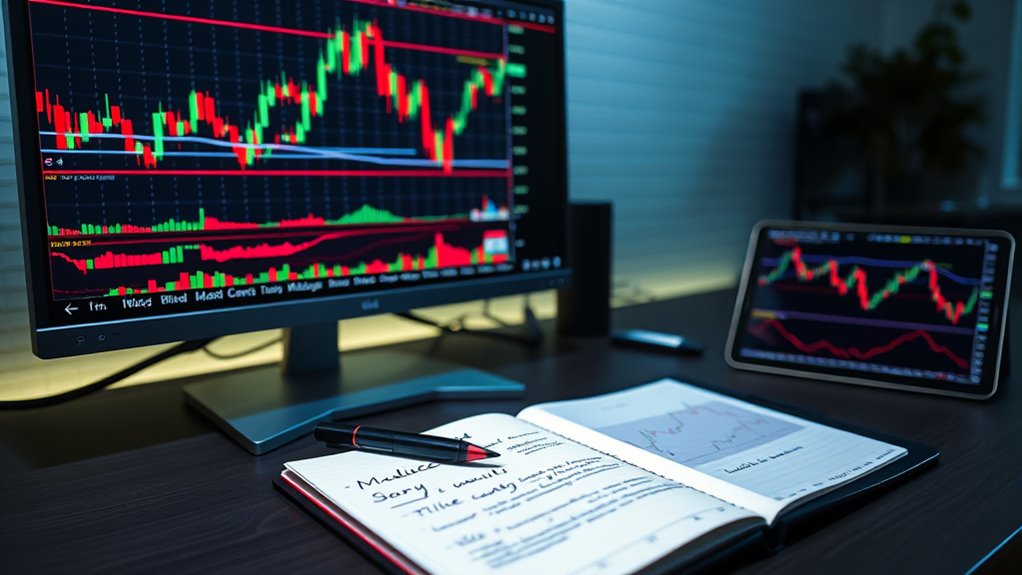
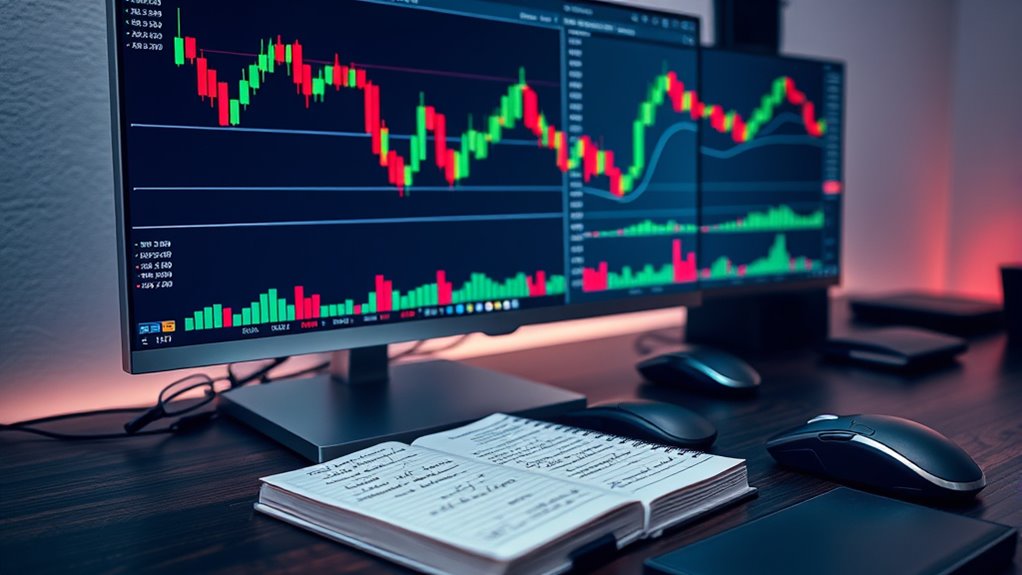
Technical analysis involves reading charts and patterns to predict future price directions. Instead of relying on news or opinions, you look at historical price data, volume, and various indicators like moving averages, RSI, or MACD to inform your trades. By identifying trends, support and resistance levels, and chart formations, you can make more informed decisions. For example, if a coin breaks above a resistance level with high volume, it might signal a bullish move, prompting you to contemplate entering a trade. Conversely, spotting a double top pattern could warn you of a potential reversal. It’s about reading the signs that the market is giving you, so you can align your trades with the prevailing trend.
However, even with the best technical setups, your trading psychology plays a huge role. Emotional discipline keeps you from chasing losses or getting greedy during a winning streak. When prices swing wildly, it’s easy to panic sell or buy impulsively, but that’s often how traders lose money. Instead, stick to your plan, set clear stop-loss and take-profit levels, and don’t deviate based on fear or excitement. Successful traders understand that losses are part of the game; managing risk through position sizing and stop orders helps protect your capital. Maintaining a calm, rational mindset allows you to analyze charts objectively, rather than making decisions based on emotions. Additionally, understanding the importance of high refresh rates and low input lag can give you an edge when executing trades swiftly in volatile markets.
In the end, mastering technical analysis combined with strong risk management and trading psychology forms the backbone of successful crypto trading. You don’t need to be perfect, but you do need consistency and discipline. As you learn to interpret charts and control your emotions, you’ll find that your trades become more strategic and less impulsive. Over time, this approach increases your chances of turning small movements into profitable opportunities, all while keeping your capital safe. Remember, the market is a marathon, not a sprint, and a solid mental game paired with technical skills will serve you well on your trading journey.
Frequently Asked Questions
How Do I Choose the Best Technical Indicators for Crypto Trading?
To choose the best technical indicators for crypto trading, focus on your trading style and goals. Use indicator selection that confirms trends, like moving averages or RSI, to help identify entry and exit points. Experiment with different tools, but avoid cluttering your charts. Stick to a few reliable indicators that suit your strategy, and always verify trend confirmation with multiple signals for more accurate decisions.
Can Technical Analysis Predict Exact Price Points Accurately?
No, technical analysis can’t predict exact price points accurately. It helps you with price pattern recognition and indicator interpretation to identify potential trends and reversals. While you can anticipate likely areas where prices might move, precise predictions are impossible because markets are influenced by many unpredictable factors. Focus on using technical analysis as a tool for better decision-making rather than expecting pinpoint accuracy in your forecasts.
How Often Should I Update My Technical Analysis?
Imagine catching a wave just as it starts to crest—that’s how often you should update your technical analysis. You need to modify your timeframe and increase your analysis frequency during high volatility or when signals change rapidly. Typically, update your analysis daily or whenever significant price movements occur. Staying adaptable ensures you’re always making decisions based on the freshest data, helping you stay ahead in the fast-paced crypto market.
Are There Common Mistakes to Avoid in Technical Analysis?
You should avoid common mistakes like ignoring risk management and falling for false signals. Always set stop-loss orders to protect your capital and don’t rely solely on one indicator; cross-check signals for confirmation. Avoid emotional trading and overtrading, which can lead to losses. Remember, technical analysis isn’t foolproof, so staying disciplined and managing risk helps you stay resilient against inevitable market fluctuations and false signals.
How Does Market Volatility Affect Technical Analysis Reliability?
Market volatility turns your charts into a wild roller coaster, making technical analysis less reliable. You’ll find market noise drowning out true signals, leading you to false signals that tempt you into bad trades. As prices jump unpredictably, your indicators become shaky, and patterns lose their meaning. So, when the market’s bouncing like a hyperactive pinball, remember: your analysis is more about guesswork than certainty.
Conclusion
Now that you’ve grasped the basics of technical analysis, you’re better equipped to navigate the crypto market. Remember, mastering these tools takes time, so don’t put all your eggs in one basket. Stay patient, keep learning, and don’t be afraid to test your strategies. With consistent effort, you’ll be able to spot opportunities before they fly the coop. Keep your eyes open and your wits about you — success favors the prepared.