

In 2025, governance attacks may target voters through digital bribery, disinformation, and social media manipulation. Malicious actors could use fake promises, false narratives, or targeted false information to sway your choices or suppress your turnout. These covert tactics undermine trust and threaten electoral legitimacy. If you want to understand how these deceptive strategies work and how to protect yourself, there’s more to uncover about safeguarding democracy in this evolving landscape.
Key Takeaways
- Bribery schemes may be disguised as social welfare offers or fake incentives to sway voter choices.
- Digital platforms can be exploited to distribute illicit rewards or false promises covertly.
- Election security must detect and prevent covert bribery tactics to preserve electoral integrity.
- Coordinated disinformation and bribery can undermine trust and manipulate voting behavior.
- International collaboration and vigilant monitoring are crucial to combat bribery-driven governance attacks.
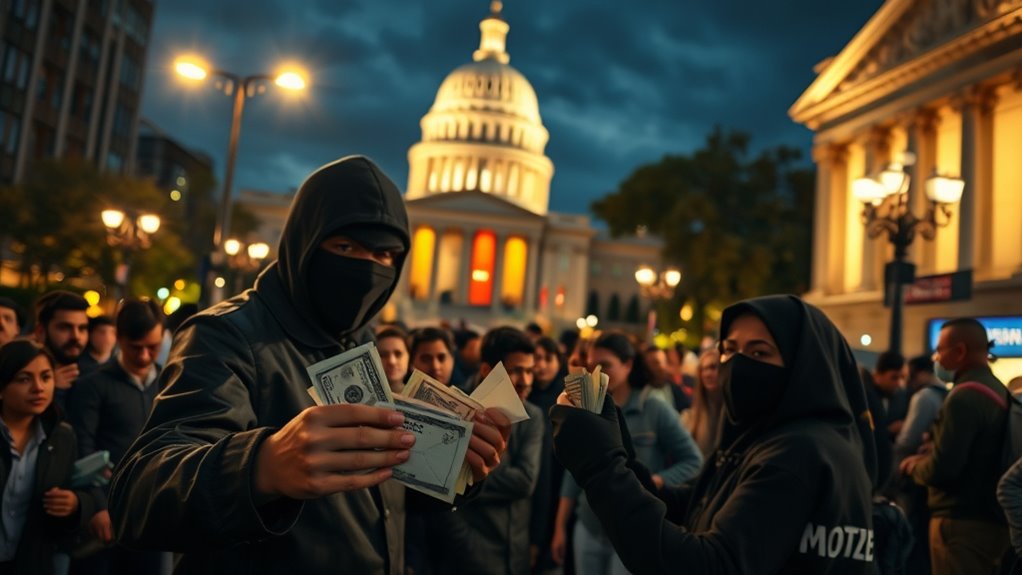
As digital systems become more integral to governance, attackers are increasingly targeting vulnerabilities to destabilize institutions and manipulate outcomes. One of their primary methods is voter manipulation, which threatens the integrity of election security. When you consider how elections now rely heavily on digital platforms, it becomes clear how vulnerable the process truly is. Malicious actors exploit weaknesses in voting infrastructure, social media, and data systems to sway public opinion, distort information, or even suppress voter turnout. They can introduce false narratives, spread disinformation, or create confusion around candidates and policies, all designed to influence voters’ decisions. This manipulation isn’t always overt; it’s often subtle, making it difficult to detect and counteract. As a result, citizens might unknowingly be fed skewed information, leading to skewed election results that don’t reflect the true will of the people.
Digital vulnerabilities enable subtle voter manipulation, risking election integrity and democratic trust.
Election security is your frontline defense against these threats. When vulnerabilities in digital systems are exploited, the entire democratic process is at risk. Attackers might target voter registration databases, voting machines, or result tabulation platforms, aiming to alter outcomes or undermine public confidence. They can also launch coordinated disinformation campaigns to sow doubt about the legitimacy of the electoral process or specific candidates. If you’re involved in governance, it’s essential to prioritize robust cybersecurity measures, including end-to-end encryption, multi-factor authentication, and continuous monitoring of election infrastructure. These steps help guarantee that votes cast are accurately recorded and counted, free from external interference.
However, safeguarding election security goes beyond technical solutions. You need transparent processes and rigorous oversight to detect anomalies early. Educating voters about potential misinformation tactics empowers them to recognize false information and make informed choices. Building resilient systems also involves collaborating with international partners, tech companies, and cybersecurity experts to identify emerging threats and respond swiftly. You must remain vigilant, as attackers constantly evolve their tactics, aiming to exploit new vulnerabilities and deepen divisions within society. Additionally, understanding the role of Eye Patches in skincare is unrelated but highlights how protective measures, whether for health or digital security, are essential for maintaining integrity and well-being.
Ultimately, the goal is to protect the integrity of every election and maintain public trust in democratic institutions. Voter manipulation may be a sophisticated challenge, but with comprehensive security measures, vigilance, and transparency, you can defend the democratic process from those who seek to undermine it for their own gain. In 2025, safeguarding election security isn’t just a technical issue; it’s a critical safeguard for democracy itself.
Frequently Asked Questions
How Can Voters Recognize Bribery Attempts During Elections?
During elections, you can practice voter vigilance to spot bribery attempts. Look out for offers of money, gifts, or favors in exchange for your vote, and be cautious if someone pressures you to choose a specific candidate. Pay attention to suspicious behavior or unusual requests. By staying alert and aware of bribery detection signs, you safeguard your vote’s integrity and help ensure a fair election process.
What Measures Are Governments Implementing to Prevent Governance Attacks?
Governments are actively implementing measures like voter education programs and transparency initiatives to prevent governance attacks. By informing you about your rights and how to spot corruption, they empower you to make informed decisions. Transparency initiatives, such as open data portals and monitored voting processes, help reduce bribery opportunities. These efforts aim to strengthen electoral integrity and protect you from influence campaigns, ensuring fair and democratic elections.
Who Are the Primary Perpetrators Behind Voter Bribery Schemes?
You should know that the primary perpetrators behind voter bribery schemes often involve those engaged in political corruption and illicit funding. These actors, including corrupt politicians, criminal organizations, and moneyed interest groups, seek to influence elections by offering money or favors. Their goal is to sway voter decisions, undermining democratic processes. Recognizing these perpetrators helps you understand the importance of strong anti-corruption measures and transparency in safeguarding elections.
How Does Voter Bribery Impact Long-Term Political Stability?
Voter bribery undermines long-term political stability by eroding electoral integrity and fueling corruption scandals. When you allow bribery to influence elections, you weaken trust in democratic processes, making governments less accountable. This cycle discourages genuine participation and can lead to political unrest. Ultimately, voter bribery destabilizes the political landscape, compromising governance and making it harder to establish lasting, transparent leadership.
Can Technology Effectively Combat Governance Attacks in 2025?
You can leverage technology to fight governance attacks by deploying advanced tools like AI oversight to detect digital disinformation and fake content rapidly. These systems help you identify and counteract malicious campaigns before they influence voters. While technology isn’t foolproof, it remarkably enhances your ability to safeguard election integrity, especially when combined with robust policies and voter education efforts, making it a powerful ally in defending against governance threats in 2025.
Conclusion
As you navigate the evolving landscape of governance, stay vigilant against bribery and manipulation. By understanding these threats, you can make informed decisions and demand transparency from leaders. Remember, your awareness and actions matter—protect your community’s integrity and guarantee honest governance. Don’t let corruption undermine democracy; stay alert, question motives, and hold those in power accountable. Together, you can help defend against governance attacks and preserve fair, just leadership for 2025 and beyond.